Key takeaways:
- A 4.6-magnitude aftershock struck near Caraballeda on Venezuela’s Caribbean coast, with no immediate reports of additional damage.
- Last week’s 7.2- and 7.5-magnitude earthquakes killed more than 1,400 people and left tens of thousands believed missing.
- Venezuelan authorities said 24 countries have sent more than 500 tonnes of supplies, 2,700 rescue and support personnel and about 86 search-dog teams.
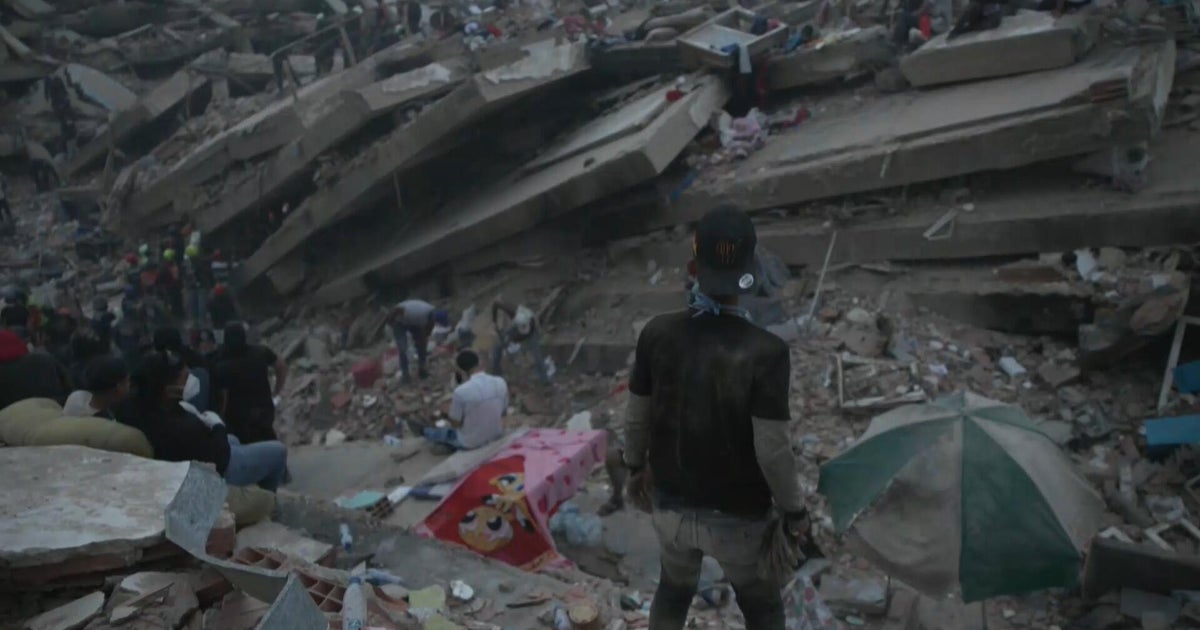
A 4.6-magnitude aftershock jolted Venezuela on Monday, sending residents into the streets as rescue crews kept digging for survivors five days after twin earthquakes killed more than 1,400 people and left tens of thousands presumed missing.
The United States Geological Survey said the aftershock struck at a depth of 10 kilometers, or 6 miles, with an epicenter north of Caraballeda on Venezuela’s Caribbean coast. Jorge Rodriguez, the leader of Venezuela’s National Assembly, said there were no immediate reports of additional damage.
Still, the tremor rattled people already shaken by last week’s disaster. “Here we are again, back in the street. I don’t know when we’ll have a moment of true peace,” Concepcion Hernandez, 51, told The Associated Press as she evacuated her apartment building in the Chacao municipality of Caracas, according to Al Jazeera.
The disaster began last Wednesday, when back-to-back 7.2- and 7.5-magnitude earthquakes struck northwestern Venezuela. Al Jazeera reported that close to 1,500 people have been confirmed dead, while CBS News put the toll at more than 1,400. Hundreds of buildings have collapsed, and tens of thousands of people are still believed to be missing.
The rescue effort has focused on La Guaira, the northern port city and coastal region described in the reports as the hardest-hit area. In the rubble of collapsed homes and apartment buildings, CBS News reported, remnants of daily life remained visible: stuffed animals, a passport and a kindergarten graduation diploma.
Rescue teams continued to search even after the critical 72-hour window for finding trapped people alive passed Saturday evening. Al Jazeera reported that 30,000 Venezuelan rescue workers and 2,700 foreign experts were involved in the operation. Venezuelan authorities said they had received support from 24 countries, including more than 500 tonnes of supplies, 2,700 rescue and support personnel and about 86 teams with search dogs.
“Today we have recovered people alive and, therefore, operations are not being suspended. We always maintain hope,” interim President Delcy Rodriguez said Sunday, according to Al Jazeera.
Some rescues have lifted hopes. CBS News reported that a U.S. search team helped rescue a mother and her 9-month-old baby from the debris of a collapsed building. “Against impossible odds, hope endures,” the U.S. State Department wrote on social media, adding that “every life saved is a victory.”
In another case, Salvadoran President Nayib Bukele shared the story of the rescue of 21-year-old Aaron Levi from a collapsed building in La Guaira. “This rescue was made possible thanks to the coordinated efforts of rescue teams from Venezuela, Mexico, and El Salvador,” Bukele wrote on X, according to Al Jazeera.
For many families, the search has brought grief. Outside a hospital in Caracas, CBS News reported, families scanned lists of patients for missing relatives. Genesis Fonseca was there bringing soup to her 6-year-old nephew, who survived the earthquakes. His mother did not. Fonseca said she would miss “everything” about her sister, including the love they had for each other.
Keyla Zerpa told CBS News that her two nephews and sister lived in a building that collapsed. Her 11-year-old nephew, Kenger, was rescued Saturday and was the only survivor. “We need more support, more help,” Zerpa said, directing her appeal to the United States.
U.S. diplomat John Barrett told CBS News there are more than 300 American rescuers on the ground in Venezuela. “We were with Venezuela before the earthquake and we’re even closer to Venezuela after, after the earthquake,” he said.
Secretary of State Marco Rubio said last week that he spoke with Venezuela’s Acting President Delcy Rodriguez and offered the full assistance of the United States. Al Jazeera reported that Rodriguez assumed the presidency after what it described as the U.S. military’s abduction of President Nicolas Maduro in January.

Be First to Comment