Key takeaways:
- Polish Prime Minister Donald Tusk said a Russian citizen was arrested Aug. 7 over an alleged plot to kill a U.S. citizen of Ukrainian origin in Warsaw.
- Tusk said the intended target was considered “inconvenient” to the Putin government and called the alleged plot a “very dangerous signal.”
- Polish minister Tomasz Siemoniak said the arrest was carried out in cooperation with U.S. authorities.
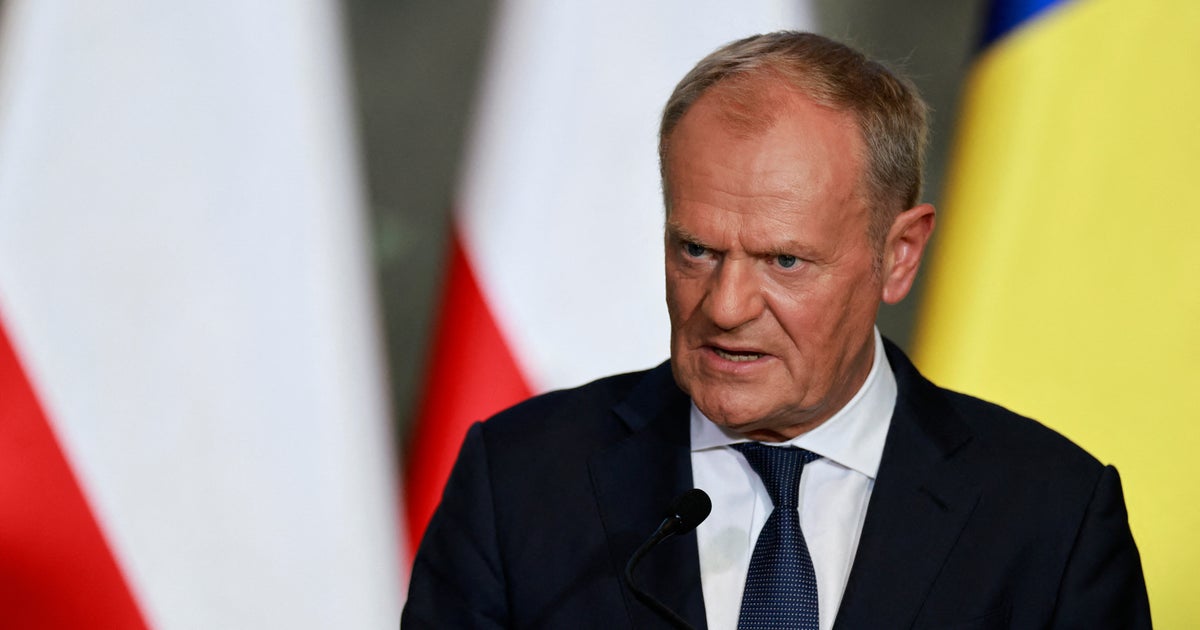
Polish authorities have arrested a Russian citizen accused of planning to kill a U.S. citizen of Ukrainian origin in Warsaw, Prime Minister Donald Tusk said Thursday, describing the alleged plot as an unprecedented attempt to attack an American on NATO territory on Moscow’s orders.
Tusk said the suspect, whom he accused of being recruited by Russian secret services, was arrested Friday, Aug. 7, before the attack could be carried out. Polish officials did not name the suspect or the intended victim, and they released few details about the alleged plan.
“At the last minute, thanks to the action of the Internal Security Agency and the police, we managed to prevent this execution, this attack,” Tusk said, according to Al Jazeera.
Tusk said the targeted person was “inconvenient” or “uncomfortable” for President Vladimir Putin’s government. “He was inconvenient from the point of view of the Putin regime, and at the last moment… we managed to prevent this execution,” Tusk said, according to CBS News.
“This is the first situation of its kind in which someone, acting on Russian orders, decided to carry out an attack against an American citizen on the territory of another NATO country,” Tusk said. He called the case a “very dangerous signal” and thanked Poland’s security services.
Tomasz Siemoniak, the Polish minister overseeing intelligence services, said the operation was carried out in cooperation with U.S. authorities. He said the intended target was a U.S. citizen “of Ukrainian origin.” The Russian Foreign Ministry did not immediately respond to a request for comment, CBS News reported.
The arrest comes as Western officials have warned that Russia has intensified a campaign of targeted killings and disruption since launching its full-scale invasion of Ukraine on Feb. 24, 2022. Russia has denied waging a sabotage campaign against Europe; Putin said in May that Moscow was not carrying out such operations.
According to CBS News, intelligence officials previously told The Associated Press that Russian security services have become more brazen in choosing targets, including Russian activists, foreign supporters of Ukraine and military defectors. The AP has mapped about 200 acts of sabotage, arson and other disruption across Europe since the start of the war that officials have linked to Russia.
Several European countries have reported disrupted plots in recent years. French officials last year broke up a plot they believed was aimed at killing Vladimir Osechkin, a Russian exile who lives under police protection and helps military defectors flee the war. Lithuanian officials also disrupted plots against a Lithuanian supporter of Ukraine and a Russian activist, while German authorities have broken up two alleged plots: one targeting the head of a German weapons company supplying Ukraine and another against a Ukrainian military official.
Polish authorities arrested a man in 2024 in what they said was a plot to assassinate Ukrainian President Volodymyr Zelenskyy. That same year, a Russian helicopter pilot who defected was killed in Spain, with Russian operatives considered the prime suspects, CBS News reported.
Russia has previously been accused of targeting enemies abroad. British authorities accused Moscow of being behind the 2006 killing of former FSB officer Alexander Litvinenko in London with radioactive polonium and the 2018 attempted killing of former Russian military intelligence officer Sergei Skripal in Salisbury with the nerve agent Novichok. German authorities said Russia organized the 2019 killing of Zelimkhan Khangoshvili, a former Chechen rebel commander, in a Berlin park.
Al Jazeera reported that Poland and several Baltic states bordering Russia recently said they were watching threats from Moscow and had increased security at key infrastructure sites. German authorities said earlier this month they faced “a new level of danger” after finding an explosives-laden quadcopter drone near an airport, though officials have not identified Russia as responsible. Lithuanian Defence Minister Robertas Kaunas also alleged last week that Moscow was planning “false flag” attacks on infrastructure in the region using captured Ukrainian drones to “frame” Kyiv.












Be First to Comment