Key takeaways:
- The Supreme Court ruled 5-4 to overturn Terry Pitchford’s murder conviction due to racial discrimination in jury selection.
- Prosecutors excluded four of five Black prospective jurors using peremptory strikes, which the court found improperly handled.
- The ruling revives a federal judge’s invalidation of the conviction and allows Mississippi to retry Pitchford.
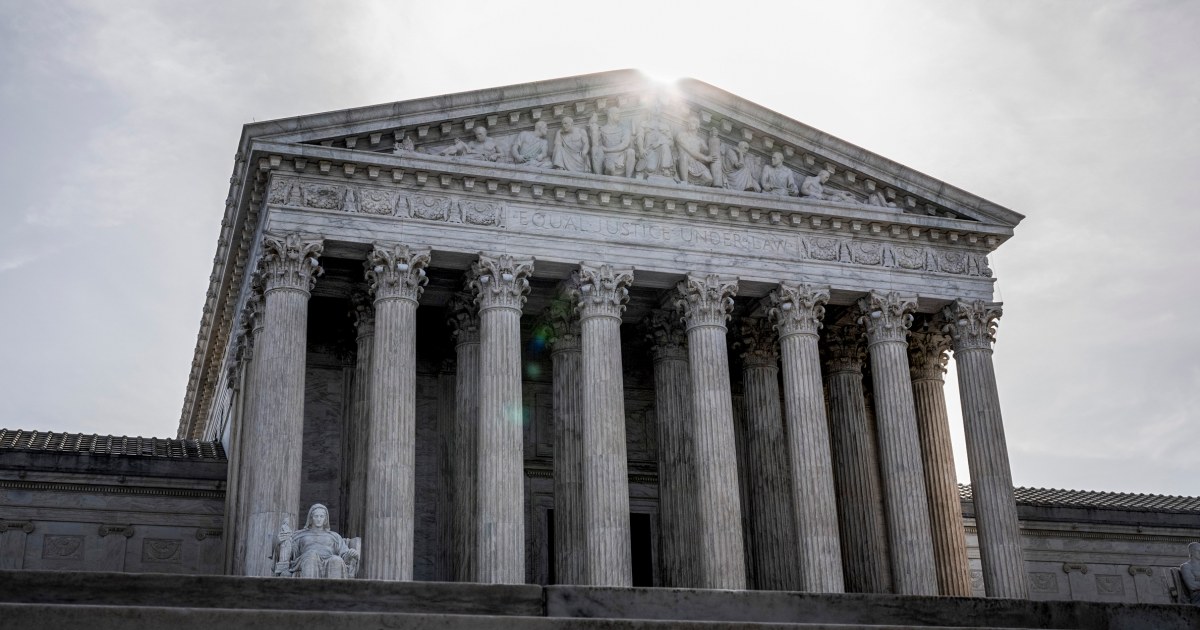
The U.S. Supreme Court on Thursday overturned the murder conviction of Terry Pitchford, a Black death row inmate from Mississippi, ruling that racial discrimination tainted the jury selection process in his 2004 trial. The 5-4 decision marks a significant ruling on racial bias in the criminal justice system and revives a federal judge’s earlier invalidation of Pitchford’s conviction.
Pitchford was convicted of killing grocery store owner Reuben Britt during a robbery when he was 18 years old. Although his accomplice, Eric Bullin, fired the fatal shots, Bullin was ineligible for the death penalty because he was 16 at the time and later pleaded guilty to manslaughter. Pitchford was sentenced to death.
The case centered on the jury selection, where prosecutors, led by then-District Attorney Doug Evans, used peremptory strikes to exclude four of five Black prospective jurors. The trial ended with a jury of 11 White members and one Black member, despite the county’s population being about 40% Black. Pitchford’s defense argued that the exclusion violated the 1986 Supreme Court precedent Batson v. Kentucky, which prohibits race-based juror exclusion.
Justice Brett Kavanaugh, writing for the majority, emphasized that Pitchford’s lawyer was not given a fair chance to challenge the prosecution’s race-neutral reasons for striking Black jurors. “Whether due to confusion, oversight, an overly hurried jury selection process, or some other cause, things broke down,” Kavanaugh wrote. He added that the defense must have an opportunity to argue that the stated reasons were pretextual.
The prosecution had justified the strikes by citing reasons such as a juror’s tardiness, family criminal history, and similarities to Pitchford’s background. The trial judge accepted these reasons without allowing further questioning, a point the Supreme Court found problematic.
The ruling aligns with a 2019 Supreme Court decision that overturned the conviction of Curtis Flowers, another Black defendant prosecuted by Evans, who was found to have unlawfully excluded Black jurors. Evans, who is white and no longer in office, has faced scrutiny for such practices.
Pitchford’s conviction was initially overturned by a federal district court but reinstated by the 5th U.S. Circuit Court of Appeals before reaching the Supreme Court. The high court’s decision means the state of Mississippi can retry Pitchford.
The dissenting justices, led by Neil Gorsuch, argued that the court overstepped its authority and that Pitchford did not meet the stringent federal standards for relief. Gorsuch acknowledged, however, that the ruling’s impact is limited to Pitchford’s case.
Chief Justice John Roberts and the court’s three liberal justices joined Kavanaugh in the majority, while Justices Clarence Thomas, Samuel Alito, Neil Gorsuch, and Amy Coney Barrett dissented.






Be First to Comment