Key takeaways:
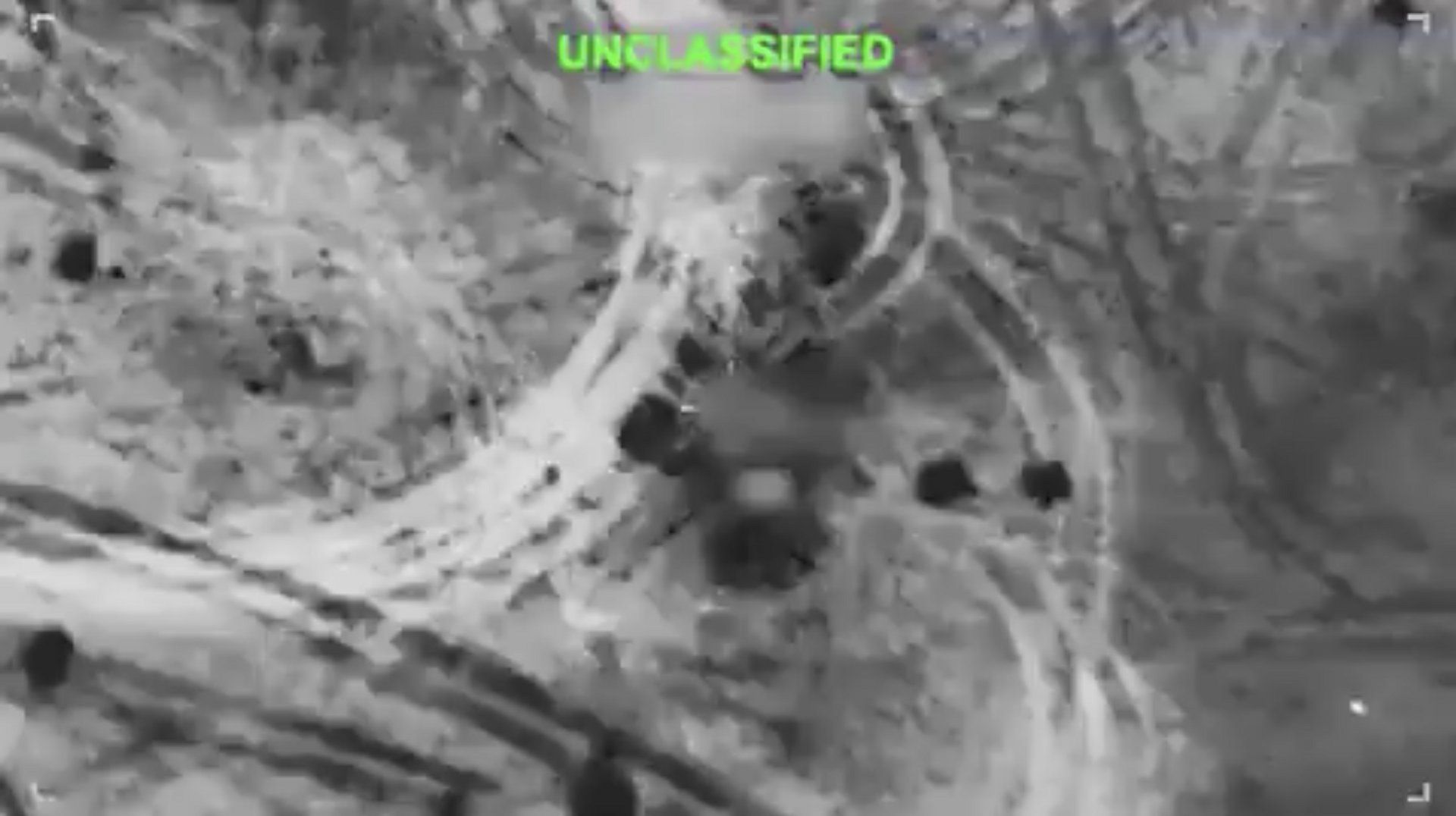
- U.S. Central Command said American forces hit about 140 Iranian targets after the M/V GFS Galaxy was attacked in the Strait of Hormuz.
- Qatar said three people, including one child, were injured by falling shrapnel, while air defenses were activated in Qatar, the UAE, Kuwait, Bahrain and Jordan.
- Iran said the Strait of Hormuz would remain closed until further notice and warned it could target additional enemy bases if attacked again.
The United States struck about 140 targets in Iran early Sunday after an Iranian attack set a container ship ablaze in the Strait of Hormuz, triggering a new wave of missile and drone fire across Gulf states and Jordan.
U.S. Central Command said the strikes hit missile and drone launch sites, ammunition dumps, communications equipment and other military targets, in the third night of U.S. attacks on Iran. The strikes were intended to “degrade Iran’s ability to attack civilian mariners and commercial vessels freely transiting the strait,” the command said.
U.S. Defense Secretary Pete Hegseth wrote online: “Iran made a poor choice. Now they pay.”
Iranian state media reported that the U.S. attacks targeted Bandar Abbas, Sirik and other areas along the shores of the strait. Iran did not immediately provide information on casualties or damage from Sunday’s strikes.
The latest escalation followed an attack on the Cyprus-flagged M/V GFS Galaxy, a 300-meter container ship traveling off Oman. Central Command said Iran’s Islamic Revolutionary Guard Corps attacked the vessel, causing a fire and “significant engine room damage.” The United Kingdom Maritime Trade Operations agency said the crew abandoned the ship and was rescued by local authorities. India’s Ministry of External Affairs said 11 Indian citizens were aboard; 10 were rescued and one was missing.
Iran’s Revolutionary Guard said multiple vessels had “disregarded our warnings and instructions to correct their course and proceed along the approved route,” and that one was “struck by a warning shot and brought to a stop.” Iran said the Strait of Hormuz would remain closed “until further notice” and warned it could target “additional enemy bases in the region” if attacked again.
After the U.S. strikes, air defense systems in several Gulf states and Jordan responded to incoming Iranian missiles and drones. Qatar said it intercepted incoming fire, while its Interior Ministry said three people, including one child, were injured by falling shrapnel. In Bahrain, missile alerts and warning sirens sounded; the island kingdom hosts the U.S. Navy’s 5th Fleet. The United Arab Emirates warned residents of incoming missiles and drones, and air defenses there were activated. Kuwait said its military responded to attacks on its territory early Sunday. Jordanian authorities said three Iranian missiles fell in Jordan without causing casualties.
The Revolutionary Guard said it targeted a U.S. radar site in Kuwait and destroyed a command-and-control center and drone hangars at a military base in Jordan used by U.S. forces. It also said it destroyed a fighter jet maintenance facility at a U.S.-used base in Qatar, though Qatar said all projectiles were intercepted. Iran said it targeted a U.S. aircraft carrier support and refueling platform at the Omani port of Duqm; Oman’s state news agency reported that Musandam was targeted with drones Sunday.
The Strait of Hormuz has become the central obstacle in negotiations between Iran and the United States over a permanent end to the war that began Feb. 28. About one-fifth of traded oil and natural gas moved through the strait before the war. Iran’s control of the waterway during the conflict contributed to a global energy crisis, though oil prices have fallen sharply from wartime highs of $120 a barrel.
The violence came after Iran and Oman’s foreign ministers met Saturday to discuss the strait. Oman said the two countries agreed to continue talks “at the technical and political levels,” but Iran did not say the waterway would be open to all vessels.
Iran’s new supreme leader, Ayatollah Mojtaba Khamenei, said in his first statement since the funeral of his father, Ayatollah Ali Khamenei, that Iranians would avenge his killing in the war’s opening strikes. Such revenge “is the will of our nation and must certainly be carried out,” he said in remarks carried on state television.






Be First to Comment