Key takeaways:
- U.S. Central Command said Tuesday’s strikes were in response to attacks on three commercial vessels transiting the Strait of Hormuz.
- UK Maritime Trade Operations reported one tanker fire, one vessel hit while exiting the strait and another vessel with minor structural damage; no casualties were reported.
- The U.S. revoked a temporary waiver allowing Iranian oil sales and set a July 17 wind-down deadline, earlier than the original Aug. 21 expiration.
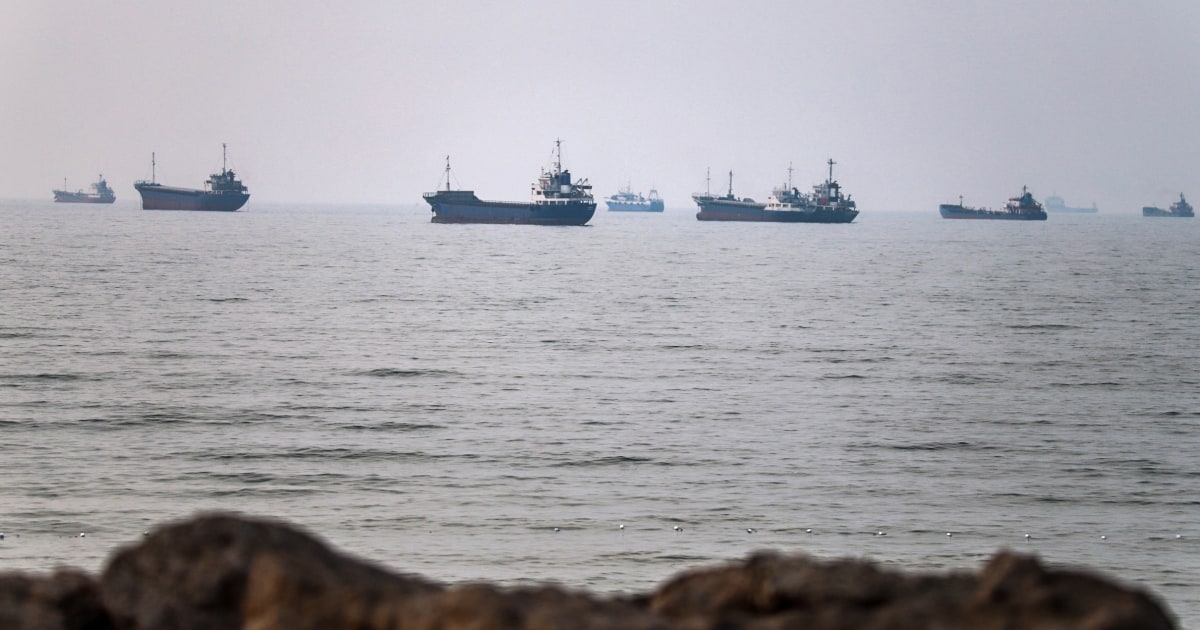
The U.S. military launched a series of strikes against Iran on Tuesday after attacks damaged three commercial vessels in the Strait of Hormuz, escalating tensions around one of the world’s most important oil shipping routes.
U.S. Central Command said its forces had begun “a series of powerful strikes against Iran to impose heavy costs for targeting and attacking commercial shipping crewed by innocent civilians in an international waterway.”
“The U.S. strikes are in response to Iranian attacks on three commercial vessels that were transiting the Strait of Hormuz,” CENTCOM said in a statement posted on X. “Iran’s demonstrated aggression was unwarranted, dangerous, and a clear violation of the ceasefire.”
The United Kingdom Maritime Trade Operations agency issued warnings about one attack Monday and two more Tuesday. It said one tanker reported a fire after an unknown projectile hit an engine room Monday. In two separate incidents Tuesday, one tanker reported being hit as it exited the strait but was able to continue to its next port, while another reported minor structural damage after being struck. No casualties were reported.
CBS News reported, citing two U.S. officials, that the attacks were carried out by Iran’s Islamic Revolutionary Guard Corps over the past two days. The BBC reported that Iran has not claimed responsibility for the strikes on the vessels.
Saudi Arabia and Qatar condemned the attacks. Saudi Arabia’s Foreign Ministry said Iran targeted a Saudi tanker as it crossed the strait, calling the assaults “an attack on the security and safety of international navigation, and the security of global energy supplies.” Qatar’s foreign ministry spokesperson Majed Al Ansari said Qatar held Iran “fully responsible” for an apparent targeted attack on a Qatari vessel near the strait and demanded that Iran “immediately cease all practices that undermine regional security.”
Iranian Foreign Ministry spokesman Esmail Baghaei responded to Qatar’s accusations by calling them “contrary to the principle of good neighbourliness,” according to the BBC. He said commercial vessels using routes not coordinated with Iran or tampering with tracking systems risk collision and disrupt Iranian efforts to “facilitate safe transit” in the strait.
Al Jazeera reported that Iranian media described explosions Tuesday in several southern locations, including the port city of Sirik, Qeshm Island and Bandar Abbas. Its correspondent in Tehran reported that state TV said six explosions were heard on Qeshm Island and at least seven near Sirik Port.
The military action came as Washington and Tehran had been negotiating over maritime traffic in the Strait of Hormuz, where about 20% of the world’s oil passed before the war. Iran has argued it has a right to charge a fee for ships passing through the waterway.
The U.S. also revoked a temporary sanctions waiver Tuesday that had allowed Iranian oil sales on the global market. A notice on the Treasury Department website said the revocation was effective immediately and that any production, delivery or sale of Iranian oil allowed under the waiver must be wound down by July 17. The waiver had originally allowed sales until Aug. 21.
“The Office of Foreign Assets Control is revoking GL X, which authorized the sale of Iranian oil,” a U.S. official told CBS News. “As President Trump and the administration have repeatedly affirmed, the MOU in effect with Iran is entirely performance-based.” The official said Iran’s actions in the strait were “wholly unacceptable” but that U.S. negotiators continued to work “in good faith towards a final deal.”
Iran’s deputy foreign minister for legal and international affairs, Kazem Gharibabadi, said the U.S. revocation of the oil license was “a blatant violation of Article 10” and that the U.S. military operations were “a serious violation of Articles 1 and 2 of the Islamabad Memorandum of Understanding.” He said Iran would take “decisive actions to safeguard its national interest and security.”




Be First to Comment