Key takeaways:
- Trump said he was “very disappointed with NATO” and criticized Italy, Germany, France and the United Kingdom over their responses to the U.S.-Israel war on Iran.
- Updated NATO data showed only five alliance members are projected to meet the 3.5 percent GDP core defense spending goal in 2026.
- Ukraine signed defense cooperation agreements with Estonia, the Netherlands and Denmark, while Norway pledged $306.2 million for Ukrainian air defenses.
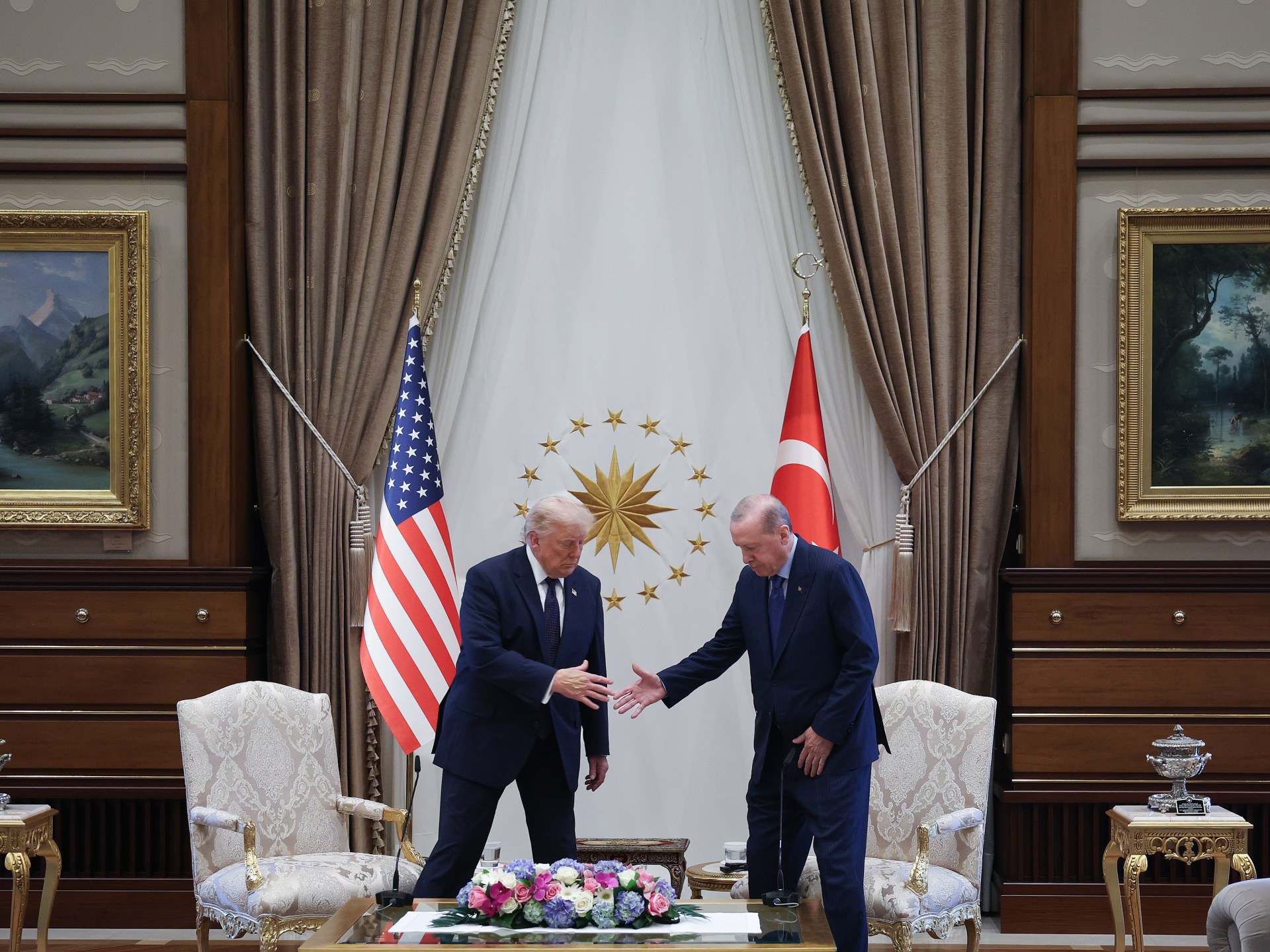
Donald Trump arrived at NATO’s summit in Ankara with a ceremonial welcome from Turkish President Recep Tayyip Erdogan — and quickly put alliance tensions on display, criticizing allies over Iran, reviving his demand for control of Greenland and questioning whether Europe would stand with Washington.
The two-day summit in Turkey is focused on defense spending, military production and the war in Ukraine. But the U.S. president’s remarks on the first day underscored strains inside the 77-year-old alliance as European governments face pressure to rearm and prepare for a reduced U.S. role in continental defense.
Trump said he was “very disappointed with NATO” and suggested he attended largely because Erdogan was hosting. “If the summit weren’t held in Turkiye, where my friend happens to be a very strong leader, a very strong person, it’s possible that I wouldn’t have attended,” he said at a news conference with the Turkish leader.
He also criticized allies for not joining the U.S.-Israel war on Iran earlier this year. “Why are we spending hundreds of billions of dollars when they’re not there for us? We’ve always been there for them,” Trump said, naming Italy, Germany and France as countries he said had turned Washington down.
The BBC reported that Trump also singled out British Prime Minister Keir Starmer despite Starmer allowing the United States to launch airstrikes on Iranian missile sites from British airbases. “He said no we’ll help after the war is over,” Trump said of Starmer. “I said I don’t want that kind of help. We didn’t need any help at all. In a way I was testing people.”
Trump’s comments came as NATO leaders debate plans to increase military spending. Under an agreement reached in The Hague last year, alliance members pledged to spend 3.5 percent of gross domestic product on core defense, such as weapons and soldiers, and another 1.5 percent on broader defense-related areas including cybersecurity. Updated NATO data published before the summit showed only five members are projected to meet the 3.5 percent goal in 2026.
NATO Secretary General Mark Rutte called for “clear, concrete and credible plans” on spending, while saying the evidence so far was “impressive.” Speaking at a defense industry forum, Rutte warned of threats from Russia, China, North Korea and Iran. “We must remain vigilant,” he said. “These countries are increasingly working together.”
The summit has also highlighted new defense contracts and cooperation. The BBC reported that large contracts have been announced for a new fleet of transport aircraft to be built by Airbus, while NATO’s aging AWACS early warning aircraft are to be replaced by Sweden’s GlobeEye planes. Delegates have also discussed joint missile projects.
Ukrainian President Volodymyr Zelenskyy used the summit to press for stronger air defenses after recent Russian ballistic missile attacks on residential buildings in Kyiv killed dozens of civilians, the BBC reported. “Europe needs its own effective anti-ballistic system and missiles,” Zelenskyy said. “This cannot wait until 2030 or beyond, Europe needs affordable mass-produced anti-ballistic systems as soon as possible.”
Zelenskyy said on Facebook that Ukraine had signed agreements with Estonia, the Netherlands and Denmark covering joint production, defense technology development, expertise-sharing and the export of Ukrainian battlefield-tested systems. Further deals are expected with Germany, Norway, Finland and Canada, Al Jazeera reported. Norway said it would provide 3 billion Norwegian crowns, or $306.2 million, for Ukrainian air defenses, specifically against ballistic missiles.
Trump also renewed his claim that Greenland “should be controlled by the United States, not by Denmark,” drawing a firm response from Danish Prime Minister Mette Frederiksen. “I hope that it is equally well-known everywhere that this is not going to happen,” she said, adding that allies should respect Denmark’s sovereignty and that Greenland is not for sale. Greenland’s Foreign Minister Mute Egede wrote on Facebook that Greenland’s future should be decided by its people: “That’s how it has always been. And that’s how it always will be.”






Be First to Comment