Key takeaways:
- Graham, 71, died Saturday evening after a “brief and sudden illness,” according to his office.
- Trump, Zelenskyy, Netanyahu, Rutte and South Carolina leaders were among those who paid tribute to Graham on Sunday.
- Graham served in the Senate since 2002 and was known for hawkish foreign policy views, strong support for Israel and Ukraine, and a close alliance with Trump after initially opposing him.
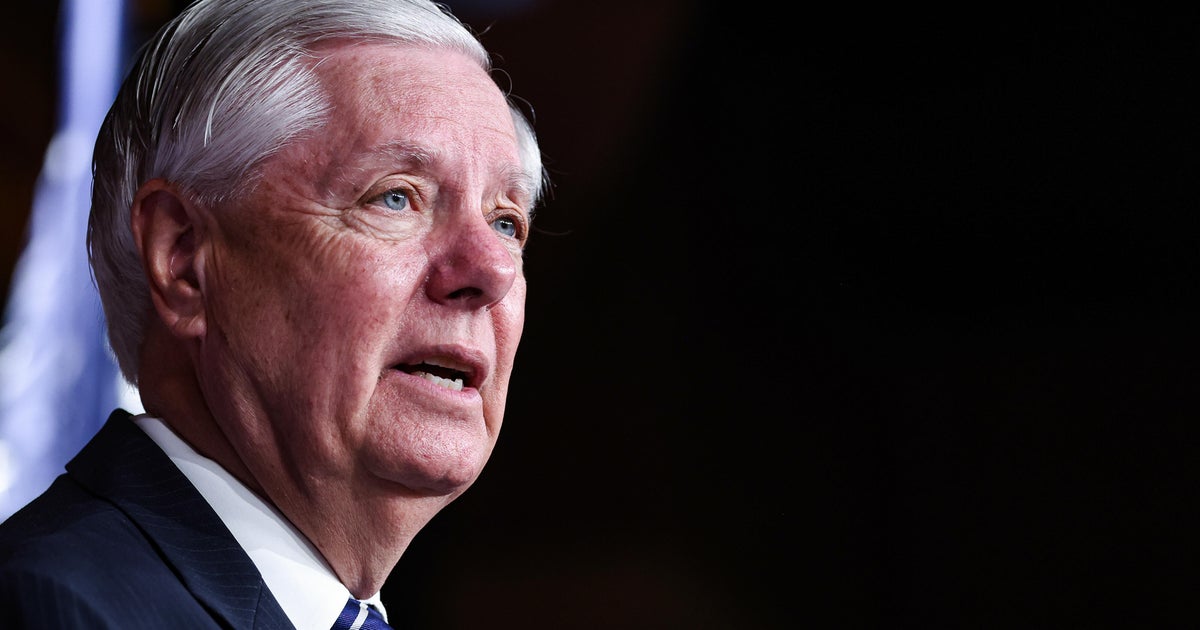
Tributes from Washington and world capitals poured in Sunday after Republican Sen. Lindsey Graham of South Carolina died following what his office called a “brief and sudden illness.”
Graham, a four-term senator and one of Congress’ most prominent foreign policy hawks, was 71. His office said he died Saturday evening and asked for prayers and privacy for his family. No further details were immediately released.
President Trump, one of Graham’s closest political allies, called him “one of the greatest people and Senators I have ever known” in a post on Truth Social. “He was always working, and was a true American Patriot. Lindsey will be greatly missed!!!” Trump wrote, adding that details and arrangements would follow.
The Guardian, citing a Washington Post report based on police scanner audio, reported that emergency medical services received a call at about 8:30 p.m. Saturday for a person with chest pains at Graham’s Capitol Hill home. About 25 minutes later, emergency personnel said CPR was underway and a man was suffering cardiac arrest, according to the report.
Senate Majority Leader John Thune said his “heart is heavy” over the death of his friend and colleague. Thune said Graham’s service in the Air Force and in Congress took him to “far-flung regions of the world” and called him “a strong advocate for the United States and a strong ally to freedom-loving countries across the globe.”
“He believed in the might of America to achieve good in the world and dedicated his life to advancing that cause,” Thune wrote on X, adding that Graham’s influence on the federal judiciary, national defense and South Carolina “will be felt for generations.”
Graham grew up in Central, South Carolina, where his parents ran a restaurant and pool hall. He was the first member of his family to attend college, earning undergraduate and law degrees from the University of South Carolina. He served as an Air Force lawyer and later joined the South Carolina Air National Guard. Elected to the House in 1994, he served as a manager during President Bill Clinton’s 1999 impeachment trial before winning election to the Senate in 2002.
Graham supported the Iraq War, opposed the Iran nuclear agreement negotiated under President Barack Obama and long advocated a hard line toward Tehran. He also became a leading supporter of Ukraine after Russia’s full-scale invasion.
Ukrainian President Volodymyr Zelenskyy, who met with Graham in Kyiv days before his death, called him “a true defender of freedom and the values that make our world safer.” Zelenskyy said Graham visited Ukraine 10 times during the war and added, “We remained in constant dialogue, and I will miss our conversations. We met twice in just the past week.”
While in Kyiv, Graham announced that lawmakers had reached an agreement with the White House on a Russian sanctions bill the president would support, CBS News reported.
Israeli Prime Minister Benjamin Netanyahu called Graham “a great friend of Israel and a cherished friend of mine.” He wrote that Graham “understood that the security of Israel and America are inseparable.” In a Fox News interview, Netanyahu said he valued Graham’s “candor” and “honesty,” adding, “There was no BS. He just was so direct.”
NATO Secretary General Mark Rutte said Graham was “a powerful advocate for America who believed strongly in the NATO Alliance and was actively working to bring an end to Russia’s war against Ukraine.”
At home, South Carolina Gov. Henry McMaster called Graham “irreplaceable” and “the fiercest of fighters for South Carolina and America.” Sen. Tim Scott said the state “lost a statesman and I’ve lost a friend.”
Graham briefly ran for the Republican presidential nomination in 2016 and initially denounced Trump, calling him a “jackass,” “a race-baiting bigot” and “the most flawed nominee in the history of the Republican party.” Their relationship later shifted, and Graham became a close Trump adviser and defender, including during the confirmation fight over Supreme Court nominee Brett Kavanaugh. After the Jan. 6, 2021, attack on the Capitol, Graham said, “count me out,” but later declined to vote to convict Trump at his impeachment trial and endorsed him again in 2024.










Be First to Comment