Key takeaways:
- Venezuela’s National Assembly head Jorge Rodríguez said the earthquake death toll had reached 920, with at least 3,360 injured and 172 believed trapped.
- La Guaira, north of Caracas and home to Venezuela’s main airport, is among the hardest-hit areas, with extensive damage to buildings and infrastructure.
- International rescue teams and aid have been sent or promised by countries including the United States, the United Kingdom, Switzerland, Mexico, Turkey and Chile.
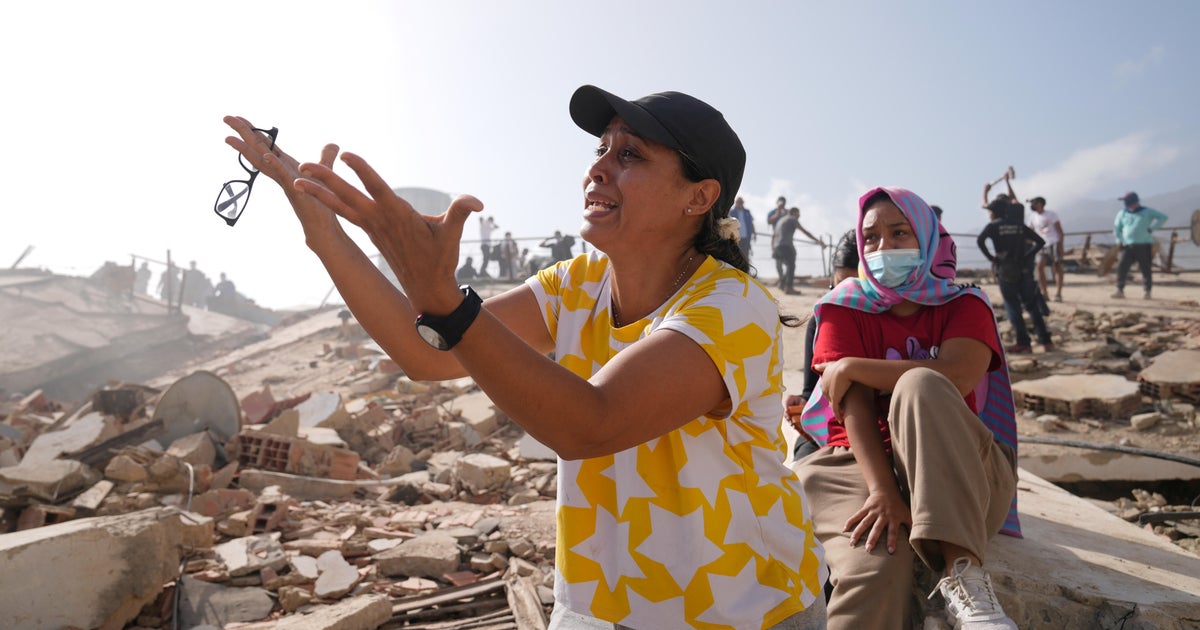
Rescue crews searched through collapsed buildings across northern Venezuela on Friday as the death toll from two powerful earthquakes rose to at least 920, with thousands injured and families still waiting for word of missing relatives.
Jorge Rodríguez, the head of Venezuela’s National Assembly, announced the latest toll on state television, saying at least 3,360 people were injured and 172 were still believed to be trapped. Health officials had said late Thursday that thousands had been reported missing, CBS News reported.
The back-to-back earthquakes struck Wednesday evening within seconds of each other. Officials and seismic experts gave magnitudes of 7.2 and 7.5 for the quakes, among the strongest to hit Venezuela in more than a century. Acting President Delcy Rodríguez said there had been 214 aftershocks since the initial tremors.
La Guaira, the coastal state north of Caracas, has suffered some of the heaviest damage. The region is home to Simón Bolívar International Airport in Maiquetía, Venezuela’s main airport, and one of the country’s two main ports. CBS News reported the airport was closed because of damage, complicating aid deliveries.
Buildings were flattened, roads cracked and hospitals, shopping centers and other infrastructure were damaged or destroyed. Jorge Rodríguez said hundreds of buildings and at least 1,000 other infrastructure sites had been damaged. In Caracas, officials identified Los Palos Grandes and Altamira as among the worst-hit neighborhoods.
In La Guaira, Natacha Diaz told the BBC her daughters, ages 22 and 23, were trapped under the rubble of a collapsed shopping center where they worked as manicurists. “They were with their friends,” she said. “I just want them to be found. I have faith and hope that they are there.”
“I just want them back with me. They are all I have, please,” she said.
Residents joined rescue efforts, in some places digging by hand as communications failures, damaged roads and limited resources slowed the early response. “I want to know where my child is, if he’s trapped or in a shelter,” Dayana Delgado told CBS News as she searched for her missing 8-year-old son.
Some rescues brought moments of hope. Venezuelan state television showed three young siblings emerging from rubble in La Guaira, covered in dust. In another rescue reported by CBS News, Caracas metropolitan rescue team head José Luis Núñez said a girl was pulled from a 10-story building in La Guaira that collapsed and flattened “like a pancake.”
“We want to highlight this girl’s strength, determination and will to live,” Núñez said.
Medical facilities that survived the quakes were overwhelmed. “All our hospitals lack supplies, lack medicines, we are not able to provide medical attention to our people in a normal day,” doctor Pedro Javier Fernandez told the BBC. “Now with this tragedy, the emergency is even bigger and it’s more difficult to face than in other countries.”
International aid began arriving as Venezuela appealed for help. A senior government official said hundreds of foreign rescue workers had reached the country, with more on the way. Teams and supplies have been sent or promised by the United States, the United Kingdom, Switzerland, Mexico, the Netherlands, Turkey, Chile, El Salvador, the Dominican Republic and others. The U.S. announced $150 million in aid, along with warships and transport planes, while Britain sent search-and-rescue specialists, dogs and drones.
United Nations humanitarian chief Tom Fletcher said the disaster “needs an international global response and we’ll co-ordinate that and we will deliver.” He added: “I want people to know in Venezuela that help is coming.”
The quake struck a country already facing more than a decade of economic crisis and deteriorating infrastructure. Jan Egeland, secretary general of the Norwegian Refugee Council, told the BBC that Venezuela was vulnerable because of “crumbling infrastructure” after years of underinvestment.
Acting President Delcy Rodríguez declared a state of emergency and, according to CBS News, said the government was creating a $200 million reconstruction fund for damaged hospitals and homes. “We hope to rescue as many living people as possible,” she said.

Be First to Comment