Key takeaways:
- Andras Baka was elected president by Hungary’s parliament in a 140-6 secret ballot and is due to take office on August 19.
- Fidesz lawmakers boycotted the vote, accusing the governing Tisza party of authoritarian tactics as it reshapes the political system.
- The Magyar government has passed 27 laws and two constitutional amendments, including ending Orban-era emergency powers and limiting prime ministers to two terms.
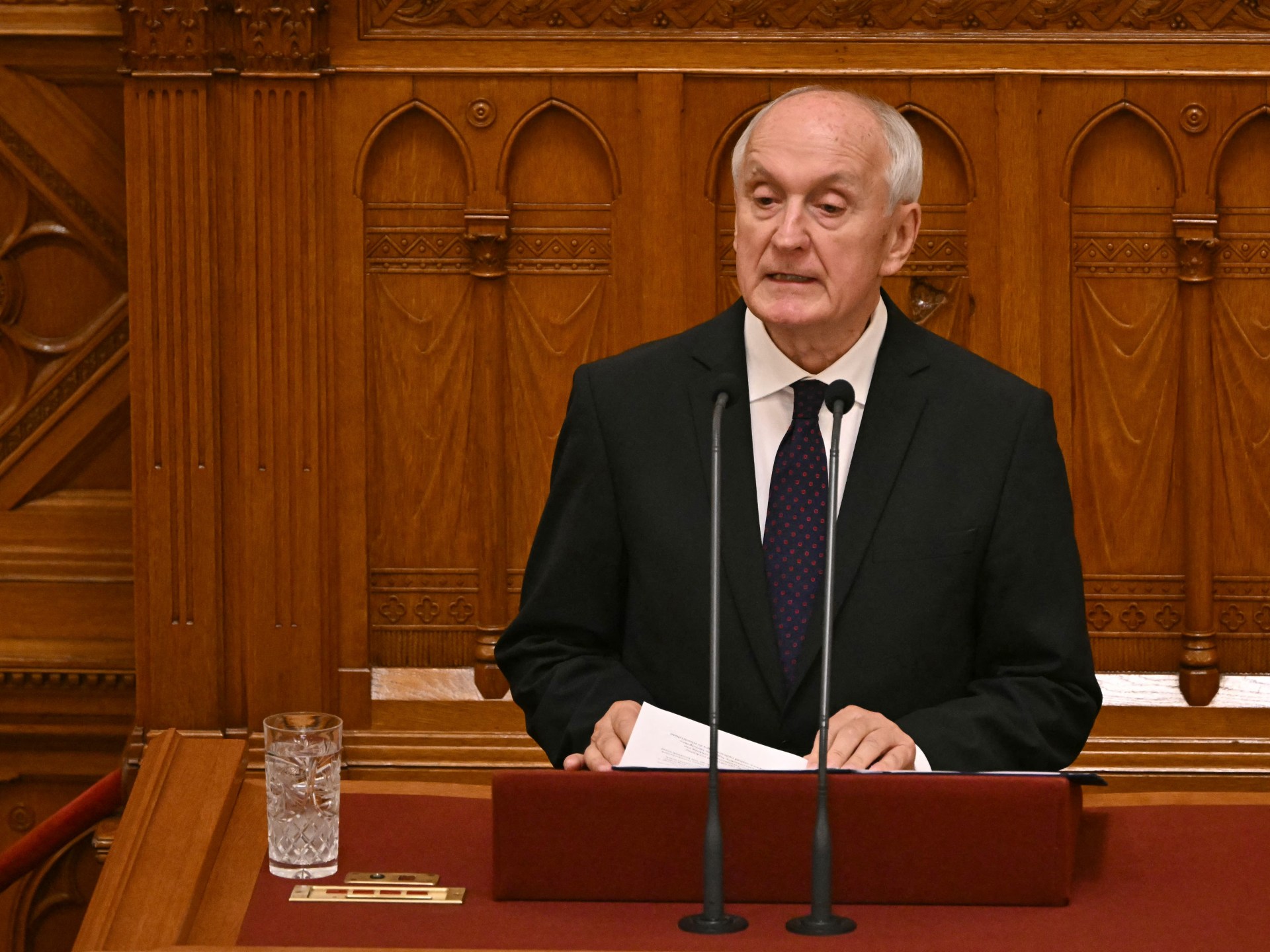
Hungary’s parliament has elected Andras Baka, a former Supreme Court chief removed under Viktor Orban’s government, as the country’s new president, placing a longtime judge at the center of the new leadership’s drive to remake Hungary’s political system.
The National Assembly confirmed Baka, 73, in a secret ballot on Tuesday by 140 votes to six, with no abstentions. He is due to assume office on August 19. The presidency is largely ceremonial, with limited powers to veto or refer legislation, but Baka will oversee a politically charged period that includes plans for a new constitution to replace the one adopted under Orban in 2011.
“We cannot build the new Hungary on revenge,” Baka told parliament after the vote.
“The majority of society now feels a sense of liberation and hope. Others feel disappointment and uncertainty,” he said. “In a democratic society, this is not an anomaly, but a natural state of affairs.”
Baka was nominated by the governing Tisza party, which holds a constitutional majority of more than two-thirds in parliament. Tisza lawmakers said during the nomination that his experience would be “a significant asset” as the party lays “the foundations for Hungary’s new constitutional order.”
Fidesz, Orban’s party, boycotted the vote. The BBC reported that all 51 Fidesz lawmakers walked out of the chamber before balloting began in protest over the removal last month of their preferred president, Tamas Sulyok. Al Jazeera reported that Fidesz accuses Tisza of using authoritarian tactics to reshape the country’s political system, a charge Tisza denies.
Baka replaces Sulyok, an Orban appointee who was ousted weeks ago by constitutional amendment. His election is the latest move by Prime Minister Peter Magyar’s government to dismantle the political and economic structures built during Orban’s 16 years in power.
Since taking office in early May, the Magyar government has passed 27 laws and two constitutional amendments, according to the BBC. It has canceled states of emergency related to migration, Covid and the war in Ukraine that Orban used to govern by decree. It has abolished the Sovereignty Protection Office, which the previous government used against critical journalists and nongovernmental organizations, and created a National Asset Recovery and Protection Office with broad powers to investigate and prosecute people accused of stealing state funds under the former government.
The government has also moved to reform the media and establish an anticorruption task force, Al Jazeera reported. Public service radio and television have been off air since July 9 while news programs are revamped, with officials saying the goal is to restore independence after what they describe as a Fidesz-era role as government propaganda outlets.
Two recent constitutional amendments limit prime ministers to two terms and members of parliament to three, while restoring the Constitutional Court’s ability to review acts of parliament, a power removed under Fidesz. Al Jazeera said the prime ministerial limit amounts to an eight-year cap that effectively bars Orban from returning to the office.
Baka served for 17 years as Hungary’s judge at the European Court of Human Rights in Strasbourg, or two terms according to Al Jazeera, before being elected head of Hungary’s Supreme Court in 2009. He was removed in 2011 after publicly criticizing Orban government reforms that he said threatened judicial independence.
“I am not a political man,” Baka told the BBC last month. “I got involved in politics through my professional, legal way of thinking.”
His presidency is expected to be transitional. Under the constitutional amendment that made his election possible, he is likely to serve until a new constitution takes effect, or for a maximum of five years. Baka told parliament he would seek the broadest possible debate on the new constitution and warned against excessive faith in strong leaders.
“The state is not there for itself,” he said. “It is there for the people.”








Be First to Comment