Key takeaways:
- The Supreme Court ruled 6-3 that children born in the United States to undocumented or temporarily present parents are citizens at birth under the 14th Amendment.
- Trump called the decision “too bad for our country” and urged Congress to pass legislation restricting birthright citizenship.
- The court also issued rulings on transgender athletes in school sports, party campaign spending limits and upcoming review of semiautomatic rifle bans.
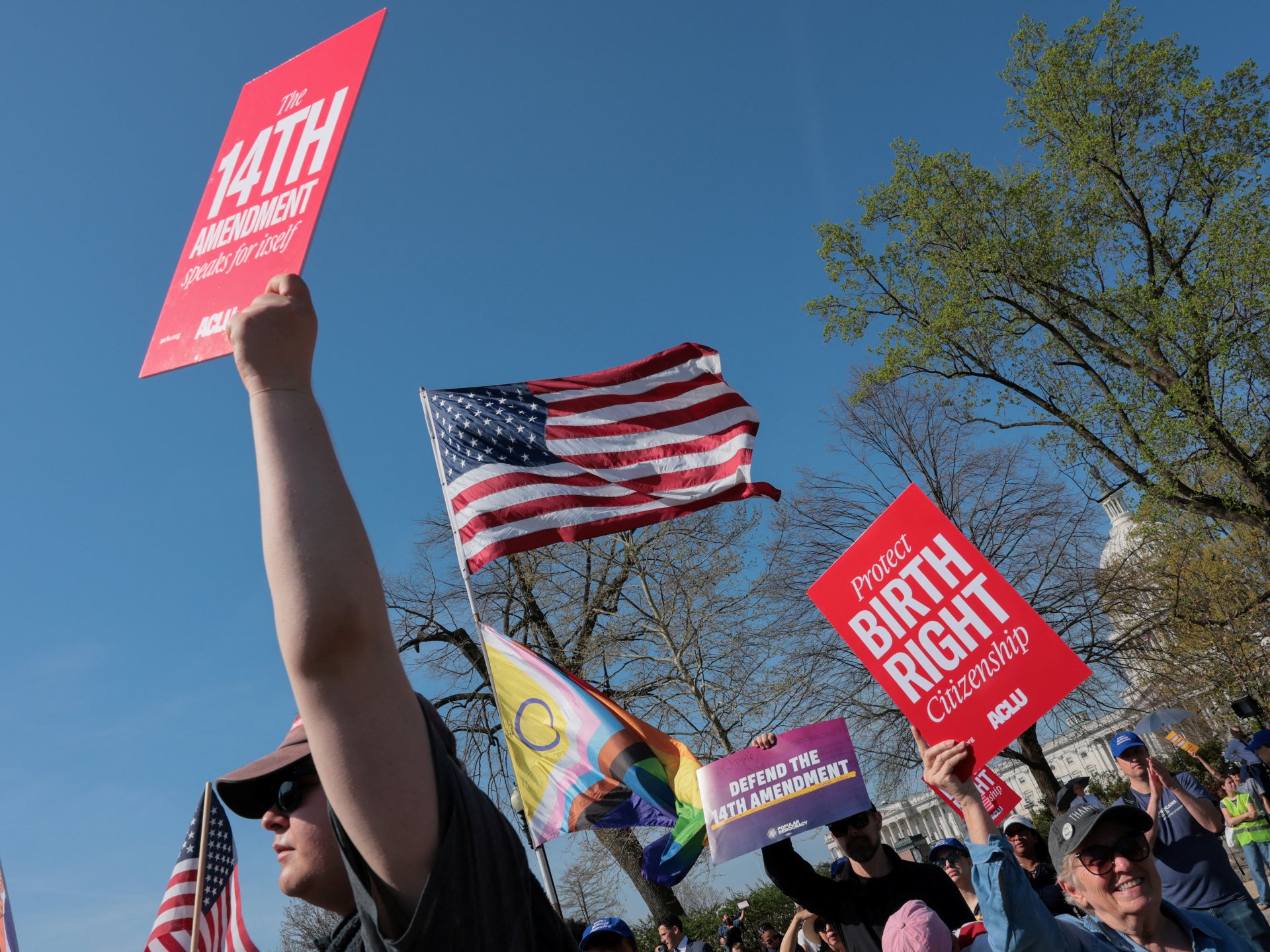
The U.S. Supreme Court upheld birthright citizenship Tuesday, rejecting President Donald Trump’s attempt to deny automatic citizenship to children born in the United States to parents who are undocumented or in the country temporarily.
The 6-3 ruling was a major defeat for one of Trump’s central immigration proposals. The justices ruled that the administration violated the 14th Amendment, which provides citizenship to nearly all people born in the United States and was affirmed by the court 128 years ago.
“Children born in the United States to parents unlawfully or temporarily present are ‘subject to the jurisdiction’ of the United States and are citizens at birth under the Fourteenth Amendment’s Citizenship Clause,” the ruling said.
Al Jazeera reported that the majority said birthright citizenship is rooted in the Constitution and in longstanding practice dating back to English common law. Three justices sided with the Trump administration, arguing that the 14th Amendment does not clearly grant citizenship to the children of all immigrants in the country.
Trump called the decision “too bad for our country” and quickly urged Congress to act. “Congress should start TODAY to work on ending expensive and unfair to our Country, Birthright Citizenship. They will have my Complete and Total Support!” he wrote on Truth Social.
Any legislative effort would face major hurdles. The Guardian reported that such legislation would need to overcome the Senate’s 60-vote filibuster. The BBC reported that Democrats would almost certainly block such a measure in the Senate and that it is unclear whether any enacted law could survive constitutional scrutiny.
Stephen Miller, Trump’s top immigration adviser, condemned the ruling as “one of the most destructive and outrageous decisions” in Supreme Court history. “American citizenship is not the birthright of the world,” he wrote on X. “It belongs only and solely to Americans. No provision of the Constitution can be read to require our national self-obliteration.”
The Justice Department said after the ruling that it would prioritize prosecutions of “birth tourism schemes across the country,” saying actors who exploit loopholes to obtain automatic citizenship for their children “pose a national security threat and will be brought to justice.”
Immigration and civil rights groups welcomed the decision. The NAACP called it a “powerful affirmation of the constitution and the enduring promise of equality it represents.” Voto Latino said “the court drew a permanent line in the sand – defeating a radical attempt to divide our families and strip away any doubt that our community belongs here.”
Anthony Romero, executive director of the American Civil Liberties Union, called the case “one of the most important constitutional cases of the past 100 years.” He said, “The president bet his legacy trying to secure this policy win – even attending the argument in person, and he lost.”
Kica Matos, president of the National Immigration Law Center, called the ruling “an important victory for our democracy and the communities who courageously challenged Trump’s egregious abuse of power to rewrite the Constitution,” adding: “The 14th Amendment is clear and definitive, and this decision should never have been this close.”
Lawmakers split largely along party lines. Republican Senator Lindsey Graham said he would keep pushing restrictions, writing that he would “continue to push to fix this major pull factor for birth tourism and illegal immigration into the US.” Senator Eric Schmitt said Justice Brett Kavanaugh’s opinion “MAY have left Congress a door” and pledged to file legislation. Democratic Senator Alex Padilla said the ruling was personal because he is “a proud son of immigrants” and “a proud citizen of the United States.”
The birthright citizenship decision came as the court issued several other major rulings. The justices ruled that schools may determine eligibility for women’s and girls’ sports teams based on biological sex, effectively upholding bans affecting transgender women and girls in Idaho and West Virginia. In another 6-3 decision, the court struck down limits on coordinated campaign spending by political parties in federal elections, finding that the limits violated the First Amendment. The court also declined to take up laws restricting firearm access for people ages 18 to 20, but said it would consider whether bans on semiautomatic rifles violate the Second Amendment.




Be First to Comment