Key takeaways:
- The Supreme Court ruled 6-3 against Trump’s executive order restricting birthright citizenship.
- Five justices found the order violated the 14th Amendment, while Justice Brett Kavanaugh said it violated federal law.
- Trump’s order would have denied citizenship to babies born to parents in the U.S. illegally or on temporary legal status.
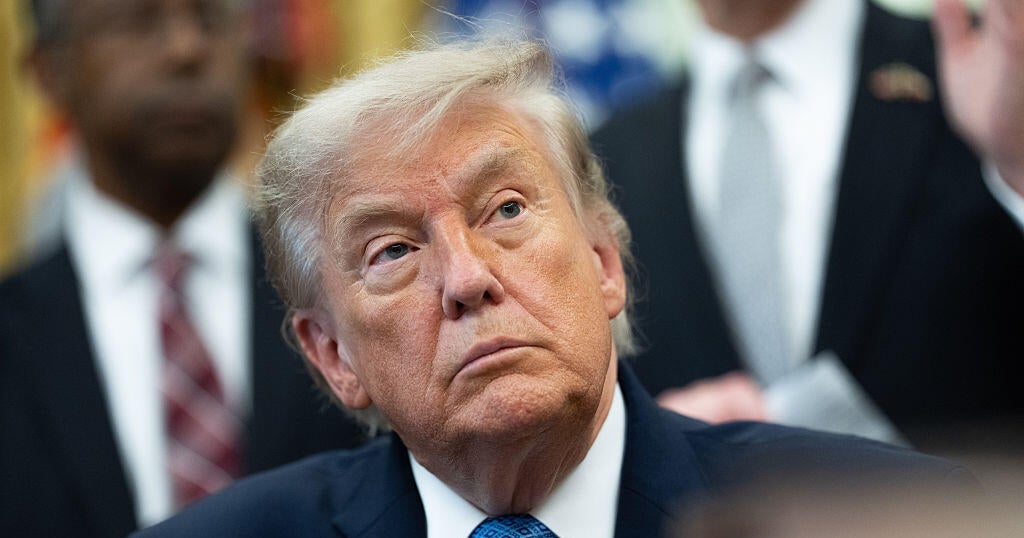
The Supreme Court on Tuesday struck down President Donald Trump’s attempt to restrict birthright citizenship, ruling 6-3 that his first-day executive order from his second term was unlawful and reaffirming that nearly all people born on U.S. soil are citizens.
The decision blocks a central part of Trump’s immigration agenda and preserves the long-standing interpretation of the 14th Amendment, which says: “All persons born or naturalized in the United States, and subject to the jurisdiction thereof, are citizens of the United States.”
Chief Justice John Roberts wrote the majority opinion in Trump v. Barbara. He was joined by Justices Sonia Sotomayor, Elena Kagan, Amy Coney Barrett and Ketanji Brown Jackson in finding that the order violated the Constitution. Justice Brett Kavanaugh wrote separately, saying the order violated federal law. Justices Clarence Thomas, Samuel Alito and Neil Gorsuch dissented.
“Citizenship, then and now, was the right to have rights — to freely participate in our political community,” Roberts wrote. “The Framers of the Fourteenth Amendment extended that promise to ‘every free-born person in this land.’ We keep that promise today.”
Roberts also wrote that the administration and dissenting justices had not shown enough support for their reading of the law. “The trouble is that there is scant evidence for this dramatically revisionist view,” he wrote, according to Al Jazeera.
Trump signed the executive order on Jan. 20, 2025, seeking to deny automatic citizenship to babies born in the United States if neither parent was a U.S. citizen or lawful permanent resident. The order would have applied to children born to parents in the country illegally and to parents with temporary legal status. It was never enforced because lower courts blocked it.
The administration argued that the phrase “subject to the jurisdiction thereof” excluded children of people who were not lawfully present or who were in the country temporarily. Solicitor General D. John Sauer argued during oral arguments that such parents lacked “domicile” in the United States or allegiance to the country. “Unrestricted birthright citizenship contradicts the practice of the overwhelming majority of modern nations,” Sauer said. “It demeans the priceless and profound gift of American citizenship.”
Challengers, including Democratic state attorneys general and the American Civil Liberties Union, argued that the Constitution’s rule is clear. Cecillia Wang, who argued for the ACLU, told the justices that Americans have long understood that everyone born in the country is a citizen. “The 14th amendment’s fixed bright line rule has contributed to the growth and thriving of our nation,” Wang said. “It comes from text and history. It is workable and it prevents manipulation.”
The 14th Amendment was adopted in 1868 after the Civil War, reversing the Supreme Court’s 1857 Dred Scott decision and securing citizenship rights for Black Americans. The Supreme Court later addressed birthright citizenship in the 1898 case United States v. Wong Kim Ark, ruling that a man born in San Francisco to Chinese parents was a U.S. citizen.
Federal law later codified similar language, including in the Nationality Act of 1940 and the Immigration and Nationality Act of 1952. The rule has had limited exceptions, including children of foreign diplomats. CBS News reported that an estimated 250,000 babies born in the U.S. each year would have been denied citizenship under Trump’s order, according to the Migration Policy Institute and Penn State’s Population Research Institute.
The ruling marks another major Supreme Court loss for Trump in his second term, following decisions against his sweeping tariffs and, according to NBC News, a ruling barring him from immediately firing Lisa Cook from the Federal Reserve.



Be First to Comment