Key takeaways:
- Trump said the ceasefire with Iran was “over” and called dealing with Iran “a waste of time,” while saying talks could continue.
- The U.S. struck Iranian targets after attacks on three ships in the Strait of Hormuz; Iran retaliated against U.S. military installations in Bahrain and Kuwait.
- Oil prices jumped more than 5%, with Brent crude reaching $78.09 a barrel and West Texas Intermediate rising to $74.23.
President Trump said Wednesday that a ceasefire with Iran was effectively finished after the United States and Iran traded strikes across the Gulf, rattling a fragile interim agreement and sending oil prices sharply higher.
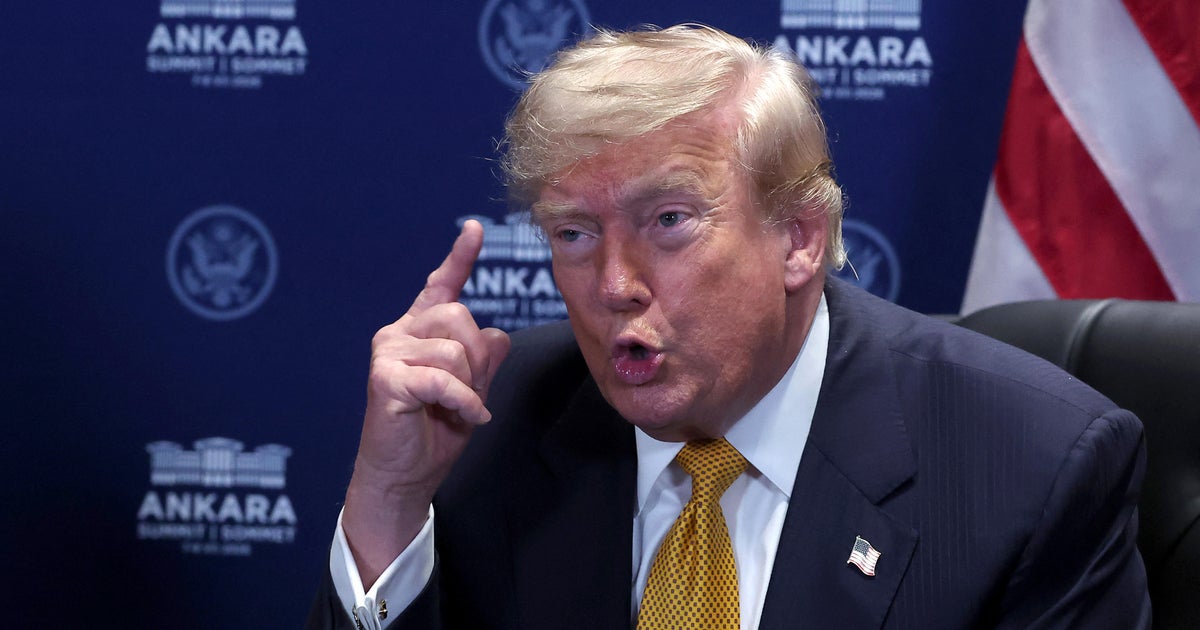
“For me, I think it’s over,” Trump said when asked about the status of the ceasefire on the sidelines of a two-day NATO summit in Ankara, Turkey. Referring to Iran’s leadership as “sick,” he added, “It’s just a waste of time dealing with them.” He said he would allow talks to continue, CBS News reported.
The escalation followed attacks Tuesday on three commercial ships in the Strait of Hormuz, a critical waterway for global energy shipments. The U.S. military said it struck Iranian targets early Wednesday “to impose heavy costs for targeting and attacking commercial shipping crewed by innocent civilians in an international waterway,” according to NPR.
U.S. Central Command said American forces hit air defense systems, radars and more than 60 small boats used by Iran’s paramilitary Revolutionary Guard. CBS News, citing AFP, reported that the United States said it hit more than 80 Iranian targets overnight. Iran acknowledged the strikes but did not report losses, NPR reported.
Iran did not claim the ship attacks. Iranian state television said at least one vessel, a liquefied natural gas tanker, came under attack after ignoring warnings. The United Kingdom Maritime Trade Operations center said one tanker was hit off Oman and caught fire, while two other ships sustained some damage but continued through the strait. No injuries were reported, according to NPR.
Iran retaliated Wednesday with strikes targeting U.S. military installations in Bahrain and Kuwait. Bahrain, home to the U.S. Navy’s 5th Fleet, sounded missile alerts, as did Kuwait, where U.S. Army forces are based. Iran’s Revolutionary Guard said the “child-killing and terrorist U.S. army” had “openly violated the ceasefire and violated the Islamabad understanding” by striking coastal bases and civilian stations in Hormozgan and Mahshahr provinces. The statement did not address the ship attacks.
Iranian Parliament Speaker Mohammad Bagher Qalibaf wrote on X, “The era of bullying and extortion is over. It leads nowhere. We don’t fold.” Kuwait said the Iranian attacks on its soil undermined efforts to de-escalate regional tensions, AFP reported.
The Treasury Department also revoked a waiver Tuesday that had allowed Iran to sell oil and petrochemicals, cutting off a significant revenue source negotiated during recent talks. A U.S. official said, “Iran’s actions in the Strait were wholly unacceptable to the United States and will be met with consequences.” NPR reported that the license had allowed Iran, for the first time in years, to conduct oil sales openly on the international market for U.S. dollars.
The new fighting cast doubt on negotiations that had been expected after the burial of Iran’s Supreme Leader Ayatollah Ali Khamenei, who was killed Feb. 28 in the opening moments of the war at age 86, NPR reported. The talks were to focus on fully reopening the Strait of Hormuz and rolling back Tehran’s disputed nuclear program.
Iranian media also reported explosions Wednesday in the port city of Bushehr. Mehr news agency said blasts were heard in and around the city, while a provincial official told FARS news agency that two military bases in Bushehr province were targeted and no casualties had been reported, according to Reuters. Bushehr hosts Iran’s only civilian nuclear power plant and lies near Kharg island, the main oil terminal through which 90% of the country’s crude exports transit.
Oil markets reacted quickly. Brent North Sea crude rose 5.3% to $78.09 a barrel, while West Texas Intermediate climbed 5.4% to $74.23, CBS News reported.













Be First to Comment