Key takeaways:
- Children born between Jan. 1, 2025, and Dec. 31, 2028, who open a Trump Account will receive a $1,000 Treasury Department contribution invested in the stock market.
- Annual contributions are capped at $5,000 per child, with employer contributions limited to $2,500 and counted toward that cap.
- Michael and Susan Dell are contributing $6.25 billion for 25 million children, while Gwynne Shotwell announced a $350 million contribution tied to the initiative.
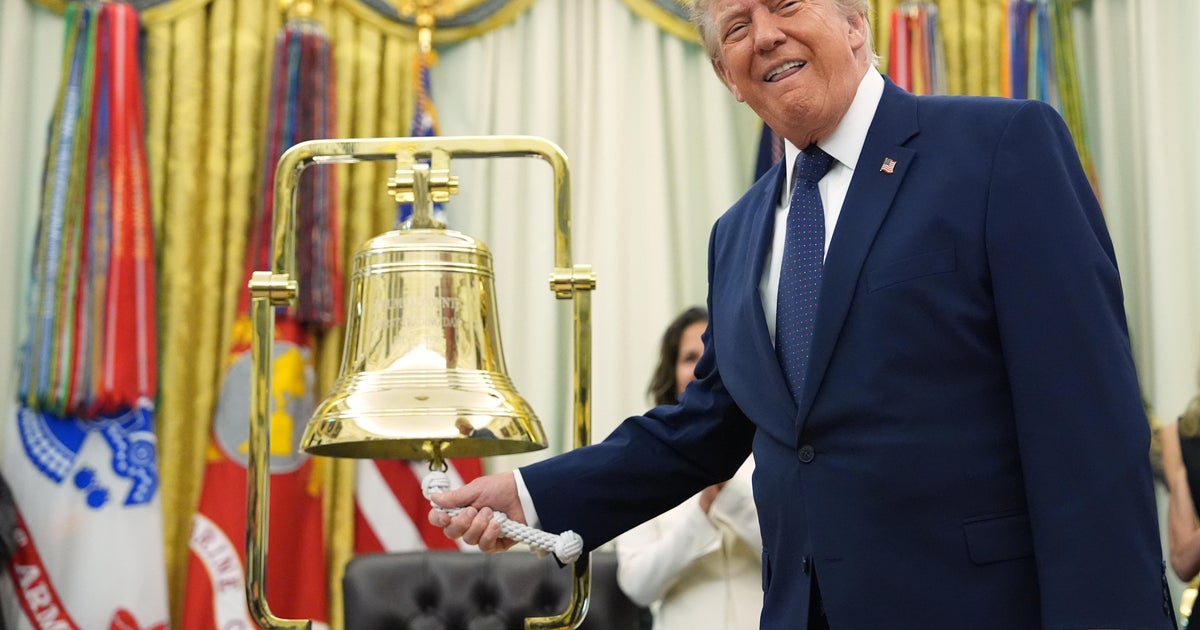
President Trump marked the launch of Trump Accounts on Monday by ringing the opening bell for the New York Stock Exchange and Nasdaq from the Oval Office, promoting a new tax-deferred investment program meant to help children build savings before adulthood.
The event brought leaders of both exchanges to the White House and featured what The Guardian reported was the first joint opening of the exchanges and the first time the bell had been rung at the White House. Trump said he wanted to keep the bell and display it in the new White House ballroom when it is completed.
“The American dream belongs to every child, and today, we are equipping the next generation with the right to claim their rightful share of it,” Treasury Secretary Scott Bessent said. “Through Trump Accounts, our president is creating an ownership economy, an ownership economy where all citizens become shareholders.”
Trump said the accounts would help children who otherwise might start life with no savings. “Think of it,” he said. “Children that are born without money, without any money, great parents, they can have everything can be great, but they have no money. They could become very wealthy children at 18.”
Created under the One Big Beautiful Bill Act, the accounts, also known as 530A accounts, are designed for children under 18. Children born between Jan. 1, 2025, and Dec. 31, 2028, who open an account will receive a $1,000 Treasury Department contribution invested in the stock market. A Treasury Department spokesperson told CBS News that 6 million people have signed up so far.
Parents, guardians, employers and other contributors can deposit money into the accounts. Contributions are capped at $5,000 per child each year, excluding the $1,000 government payment and charitable contributions. Employer contributions are capped at $2,500 annually and count toward the $5,000 limit.
During the account’s growth period, which runs until the year the beneficiary turns 18, contributions must be invested in mutual funds or exchange-traded funds that track large indexes such as the S&P 500. The administration says deposited funds will be invested in a broad stock-market index, and investments default to a diversified index fund. Parents can sign up through the Trump Accounts app, trumpaccount.com or the IRS. Republican Sen. Ted Cruz said a contributor needs only a QR code to put money into a child’s account.
Bank of New York Mellon will initially administer the accounts with online brokerage Robinhood, CBS News reported, citing the Bipartisan Policy Center. Accounts can be rolled over to another financial institution for the same beneficiary during the growth period.
Private donors and companies have also pledged support. Michael and Susan Dell are contributing $6.25 billion for 25 million children born before 2025 who are under 10 and do not qualify for the federal $1,000 seed payment. CBS News reported the money is intended to ensure children born before Trump’s second term are not left out; The Guardian reported the children are in low-income areas and will receive an extra $250. Dell Technologies, Bank of America, JPMorgan Chase and Micron Technology have committed to matching the government’s $1,000 contribution.
The Guardian also reported that Ray and Barbara Dalio donated so about 300,000 children in lower-income areas of Connecticut receive an additional $250. Gwynne Shotwell, president and CEO of SpaceX, announced a $350 million contribution for children in areas with lower average household incomes, with more emphasis near SpaceX’s central Texas home. CBS News reported Shotwell and her husband are gifting a share of SpaceX stock to Trump Accounts for more than 2 million children.
Funds generally cannot be withdrawn before age 18 except in limited circumstances. After that, beneficiaries may keep the money invested or use it for qualified expenses such as education, buying a home or starting a business. Emerson Sprick of the Bipartisan Policy Center told CBS News that unqualified withdrawals before age 59½ would face a 10% early withdrawal penalty, as with traditional IRAs. Contributions from individuals are not tax-deductible.
“The person making those contributions receives no tax benefits from those contributions because the tax benefit is realized down the road by the account beneficiary,” Sprick said.








Be First to Comment