Key takeaways:
- The U.K. Ministry of Defence said a Russian Bear-F plane passed low and “unnecessarily close” to HMS Prince of Wales and is believed to have dropped 10 sonobuoys nearby.
- Two British F-35 jets launched from the carrier and escorted the Russian aircraft away after it did not respond to contact attempts on international frequencies, the BBC reported.
- The carrier strike group is deployed off Iceland under NATO command with 1,500 British personnel, marking NATO’s first air policing operations from a European aircraft carrier, according to the BBC.
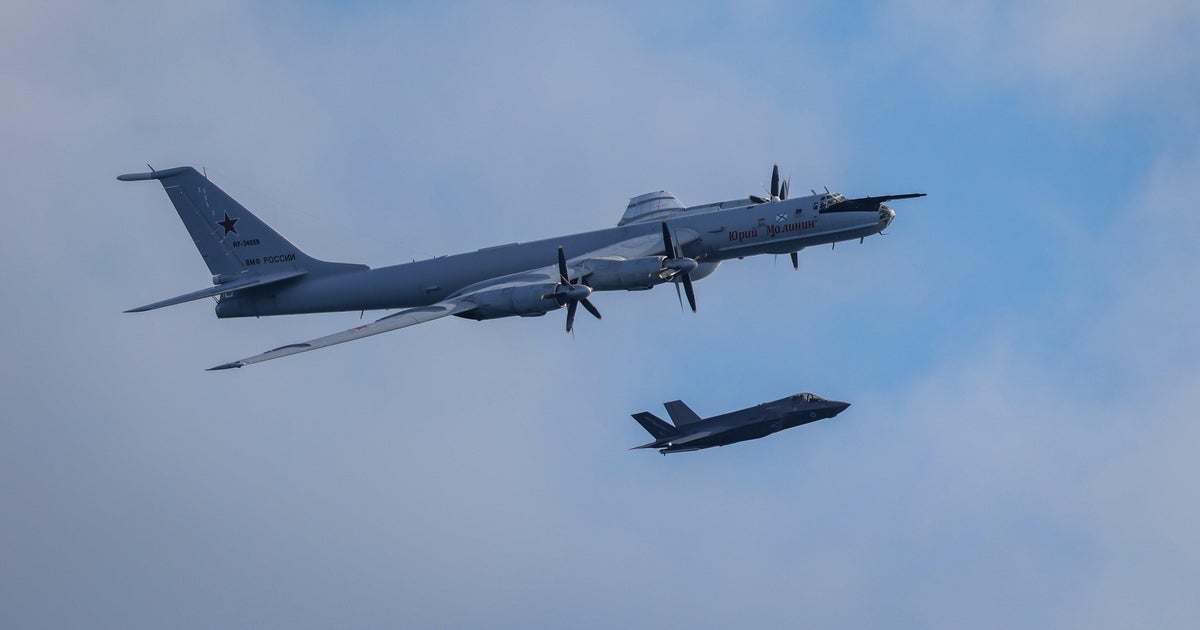
British F-35 fighter jets intercepted a Russian maritime patrol aircraft after it repeatedly approached the U.K.’s flagship aircraft carrier during NATO operations in the Norwegian Sea, the Ministry of Defence said Monday.
The Russian Bear-F plane passed at low altitude and “unnecessarily close” to HMS Prince of Wales on Thursday and is believed to have dropped 10 sonobuoys into the water near the carrier strike group, the ministry said. The monitoring devices float on the surface and use sonar to detect submarines and other vessels.
British forces tried to contact the Russian aircraft on international frequencies, but it did not respond, the BBC reported. Two F-35 jets then launched from HMS Prince of Wales to intercept the aircraft and escort it away from the carrier group.
“This activity was unsafe and unprofessional,” a Ministry of Defence spokesperson said.
The carrier strike group is deployed off Iceland under NATO command, with 1,500 British personnel on board. It includes HMS Prince of Wales, the Type 45 destroyer HMS Duncan, F-35 jets, Merlin and Wildcat helicopters, and support from RFA Tidespring, a replenishment tanker. The ministry said the mission is intended to defend the North Atlantic “against increasing Russian threats.”
The deployment marks the first time NATO has conducted air policing operations from a European aircraft carrier, according to the BBC. CBS News reported that it is the first time F-35 jets have conducted NATO air defense operations from a European aircraft carrier.
Defence Secretary Dan Jarvis and Icelandic Foreign Minister Thorgerdur Katrin Gunnarsdottir visited HMS Prince of Wales over the weekend after the incident.
“We live in an increasingly dangerous and uncertain time, and it’s deployments like this, supported by allies and partners including Iceland, that improve our deterrence and defence as part of Nato,” Jarvis said in a statement.
Jarvis also told Channel 4 News: “We should be clear-eyed about the fact that the threat from Russia exists in every domain, under the water, on the water, on the land, in the sky, in space and in cyberspace as well.”
Gunnarsdottir said the deployment was “a clear demonstration of NATO’s enhanced presence in this strategically important region.”
The encounter comes amid heightened tension with Russia and recent warnings from military leaders about growing threats to the U.K. Chief of the Defence Staff Sir Richard Knighton told the BBC in June that Russia had been “probing, challenging, testing our defences” and was “raising the stakes and risks crossing a line.” NATO has warned that Russia could be ready to use military force by 2030.
The Ministry of Defence has cited other recent encounters involving Russia. In April, it said two Russian jets “repeatedly and dangerously” intercepted a British surveillance aircraft over the Black Sea. CBS News reported that in June, a Russian frigate fired warning shots at a yacht crewed by a retired couple in the English Channel. The BBC also reported that Royal Marines boarded a Russian shadow fleet oil tanker in the English Channel weeks before the latest incident.
The incident has added to scrutiny of the U.K. government’s defence plans. Outgoing Prime Minister Sir Keir Starmer last week set out a long-delayed Defence Investment Plan, including a £15 billion increase in military spending, the BBC reported. CBS News reported the plan would involve nearly $397 billion in spending over the next four years and an extra $20 billion for defence up to 2030, below the reported $37 billion requested by the Ministry of Defence.
Opposition MPs and military figures have said the investment does not go far enough. Shadow defence secretary James Cartlidge said Russia’s actions showed Labour needed to explain how it would fund what he called its “shambolic” Defence Investment Plan.








Be First to Comment