Key takeaways:
- Obama said the U.S. has spent billions, strained the military and lost lives in the Iran war, only to return to roughly where it started.
- Trump signed a memorandum of understanding with Iran at the Palace of Versailles that sets a 60-day deadline for a more permanent deal.
- Vice President JD Vance said the peace plan is lowering gas prices and that Trump will see the agreement through, while Iran’s negotiator warned talks must respect Tehran’s red lines.
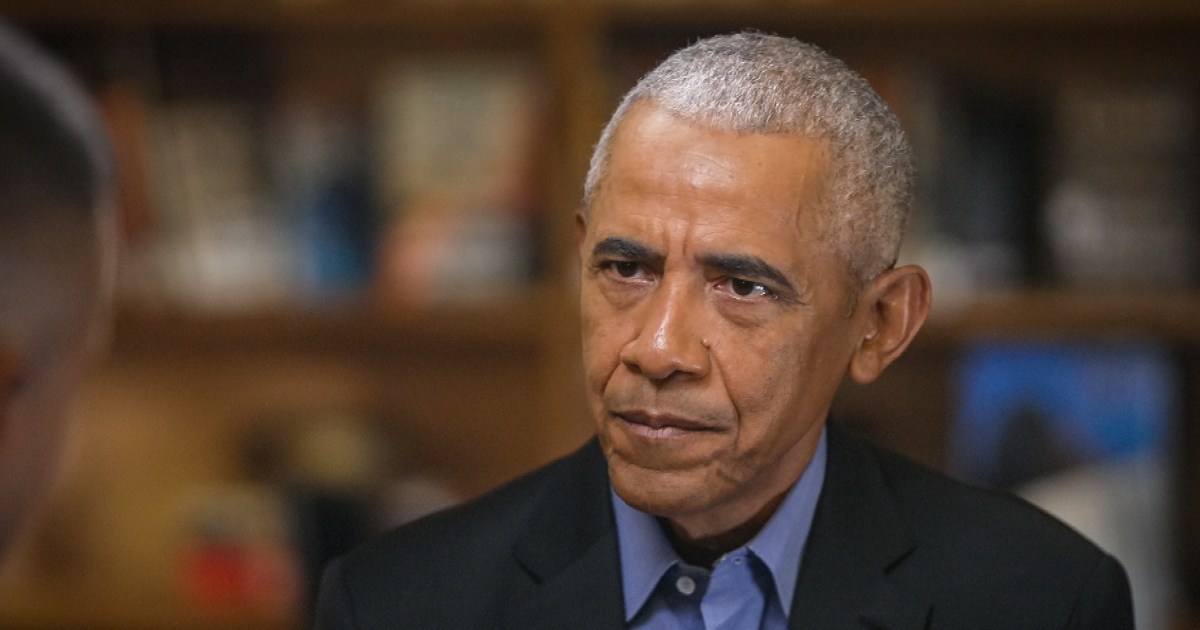
Former President Barack Obama said the United States appears to be back where it started — or “maybe a little bit worse off” — after 15 weeks of war with Iran, even as he welcomed a new ceasefire agreement signed by President Donald Trump.
“We’ve now fought a war, spent billions and billions of dollars, you know, put enormous strain on our military. A lot of people have died. And it feels like we’re back where we were before we started the war, except maybe a little bit worse off,” Obama told NBC News in an interview with “TODAY” co-host Craig Melvin that aired Friday.
Obama spoke ahead of the public opening of the Obama Presidential Center in Chicago, responding to questions about the memorandum of understanding between the United States and Iran. Trump signed the memorandum Wednesday night during a dinner at the Palace of Versailles in Paris. The agreement sets a 60-day deadline for negotiators to reach a more permanent deal to end the conflict.
“I am very happy to see a ceasefire,” Obama said. “And I’m hopeful that it holds.”
The former president also questioned the rationale for the war and pointed to the 2015 Iran nuclear agreement negotiated during his administration. Known as the Joint Comprehensive Plan of Action, or JCPOA, the deal restricted Iran from obtaining or developing a nuclear weapon in exchange for lifting international economic sanctions.
Obama said that under the agreement, “Iran had agreed not to develop nuclear weapons.” Trump withdrew from the deal in 2018 during his first term, a move Obama said “caused then Iran to develop more nuclear capacity.”
The current memorandum does not fully address the fate of Iran’s nuclear program, NBC News reported.
The White House said Vice President JD Vance delayed a planned trip to Switzerland to lead a new round of talks with Iran focused on the nuclear issue, The Guardian reported. Vance praised the agreement Thursday at the White House and asked for “a little bit of faith” in Trump.
“The peace plan is already bearing fruit for America, as gas prices fall,” Vance said. “Iran’s nuclear program is destroyed, their conventional military is destroyed and their capacity to threaten their neighbors is still largely gone.”
Vance said Trump “believes in this deal, he is going to see it to completion, and if the Iranians don’t comply, we still have every single tool and point of leverage that we have today.”
Iran’s chief negotiator, Mohammad Bagher Ghalibaf, said Friday that future talks with the United States must respect Tehran’s “red lines,” The Guardian reported, citing Iran’s official IRNA news agency. “As we have demonstrated throughout previous negotiations, we remain steadfast in respecting the established conditions and red lines, and in defending the interests of the Iranian nation,” Ghalibaf said. “If the enemy becomes excessive [in its demands], we have proven that we are ready to retaliate and will not hesitate to deliver a stinging response.”
The Guardian also reported that some energy executives believe demand for oil to restore strategic reserves depleted during the conflict, which largely halted shipments through the Strait of Hormuz, could push global oil prices higher. Neil Chapman, a senior vice president at Exxon, said at a conference in New York that physical oil prices could rise as high as $150 or $160 a barrel if oil stocks hit critical levels, according to The Wall Street Journal.
“You can debate whether that’s going to hit those really low levels in two weeks or three weeks. But once you get to that point, then you’ll see prices shoot up,” Chapman said.
Obama also said his new presidential center should serve as a reminder of civic responsibility, not simply as a reflection on the past. “There’s no doubt that we are going through a period right now of disruption, polarization,” he said, adding that people may “feel as if our democracy, our civic habits and virtues, our shared understanding of how we treat each other has started to crumble.”
“We all play a part in assuring that our elected officials are accountable,” Obama said. “And that’s not something that I think we can afford to suggest is behind us.”

Be First to Comment