Key takeaways:
- Trump’s order calls for universal childhood vaccine recommendations to focus on 11 diseases, including measles, mumps, rubella, polio, HPV and chickenpox.
- The order recommends separate medical visits for childhood immunizations and calls for splitting the combined MMR vaccine, though separate measles, mumps and rubella shots are not currently FDA-approved or available in the U.S.
- Trump and Kennedy referenced autism during the signing despite multiple studies finding no link between vaccines and autism.
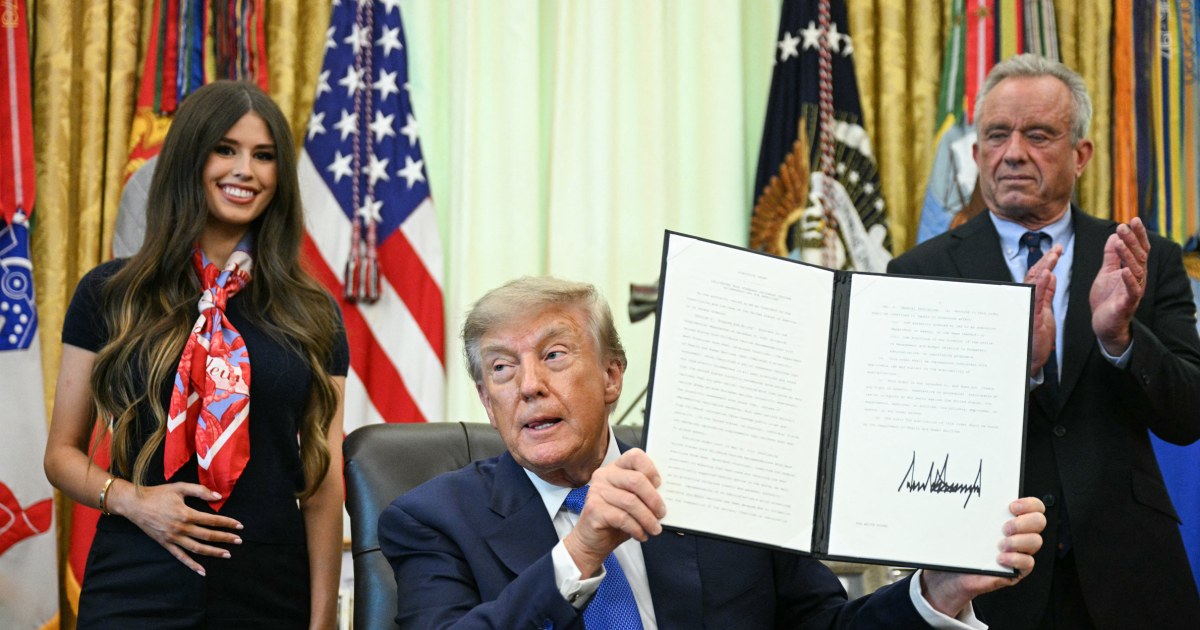
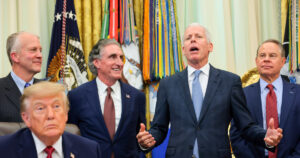
President Donald Trump signed an executive order Monday calling for a narrower childhood vaccination schedule, including fewer shots universally recommended for children and separate injections for measles, mumps and rubella — changes that seek to revive a vaccine overhaul announced earlier by Health Secretary Robert F. Kennedy Jr. and blocked in court.
The order attempts to direct vaccine policy that is normally set through the Centers for Disease Control and Prevention, the federal agency responsible for recommending vaccines. The federal government does not set school vaccine requirements, which are determined by state and local authorities, and executive orders do not carry the force of laws passed by Congress.
Speaking in the Oval Office, Trump said his administration “is recognising gold standard childhood vaccine recommendations for only 11 core vaccinations against the most serious and dangerous diseases.”
“We’re reducing them,” Trump said. “It’s not only that you’re doing fewer vaccines, or jabs, as they say, but you’re doing them in a series of visits to the doctor.”
The immunizations recommended for all children under the order are for measles, mumps, rubella, diphtheria, tetanus, pertussis, polio, Haemophilus influenzae type B, pneumococcal disease, human papillomavirus and varicella, or chickenpox, according to the BBC. NBC News reported that the change would reduce the list of diseases for which all children should be vaccinated from 18 to 11, citing a fact sheet it obtained.
The Guardian reported that only six of the 17 vaccines routinely recommended for all U.S. children would continue to have full recommendations, listing vaccine groupings that cover measles, mumps and rubella; diphtheria, tetanus and pertussis; polio; Hib; pneumococcal disease; HPV; and varicella.
Other shots would be shifted into more limited categories. The Guardian reported that monoclonal antibodies for respiratory syncytial virus, or RSV, as well as vaccines against hepatitis A, hepatitis B and meningococcal ACWY, would be recommended only for people at high risk. Dengue and meningococcal B vaccines are also in that category, though dengue was already recommended only for people at risk and meningococcal B was already handled through shared clinical decision-making. The Guardian also reported that hepatitis A, hepatitis B, rotavirus, meningococcal disease, influenza and Covid-19 shots would be moved to shared clinical decision-making, meaning parents and providers would weigh risks and benefits.
Kennedy said Monday the changes are intended to give parents choices. The recommended childhood immunization schedule in the United States has never been mandatory.
The order also recommends that “to the maximum extent feasible” childhood immunizations be administered at separate medical visits. It further calls for the combined MMR vaccine to be broken into three separate shots once separate versions are available in the United States. NBC News reported that no individual measles, mumps or rubella vaccines are currently approved by the Food and Drug Administration or available. The combined MMR shot has been available since 1971 and is recommended at ages 12 to 15 months and 4 to 6 years; splitting it would mean six injections instead of two.
Trump and Kennedy repeatedly referenced autism during the signing, echoing a discredited link between vaccines and autism. Multiple studies have found no such link.
“While we do not know exactly what the cause is with respect to autism, it is essential to our research efforts that we have the very best vaccine recommendations in the entire world, so we’re reducing them,” Trump said, according to NBC News.
The order directs the U.S. attorney general to challenge state laws that conflict with it, The Guardian reported. Dorit Reiss, a vaccines expert at UC Law San Francisco, told The Guardian the order “should have no direct operational effects,” but said Trump’s influence could increase “political pressure on states” to change school requirements.





Be First to Comment