Key takeaways:
- Netanyahu said Israel does not accept the 15-point Gaza roadmap and will not withdraw forces until Hamas is fully disarmed.
- Trump said his relationship with Netanyahu is “very good” despite the Israeli leader’s rejection of the plan.
- A Board of Peace official told Reuters the roadmap remains operative and is based on implementation and verification, not trust.
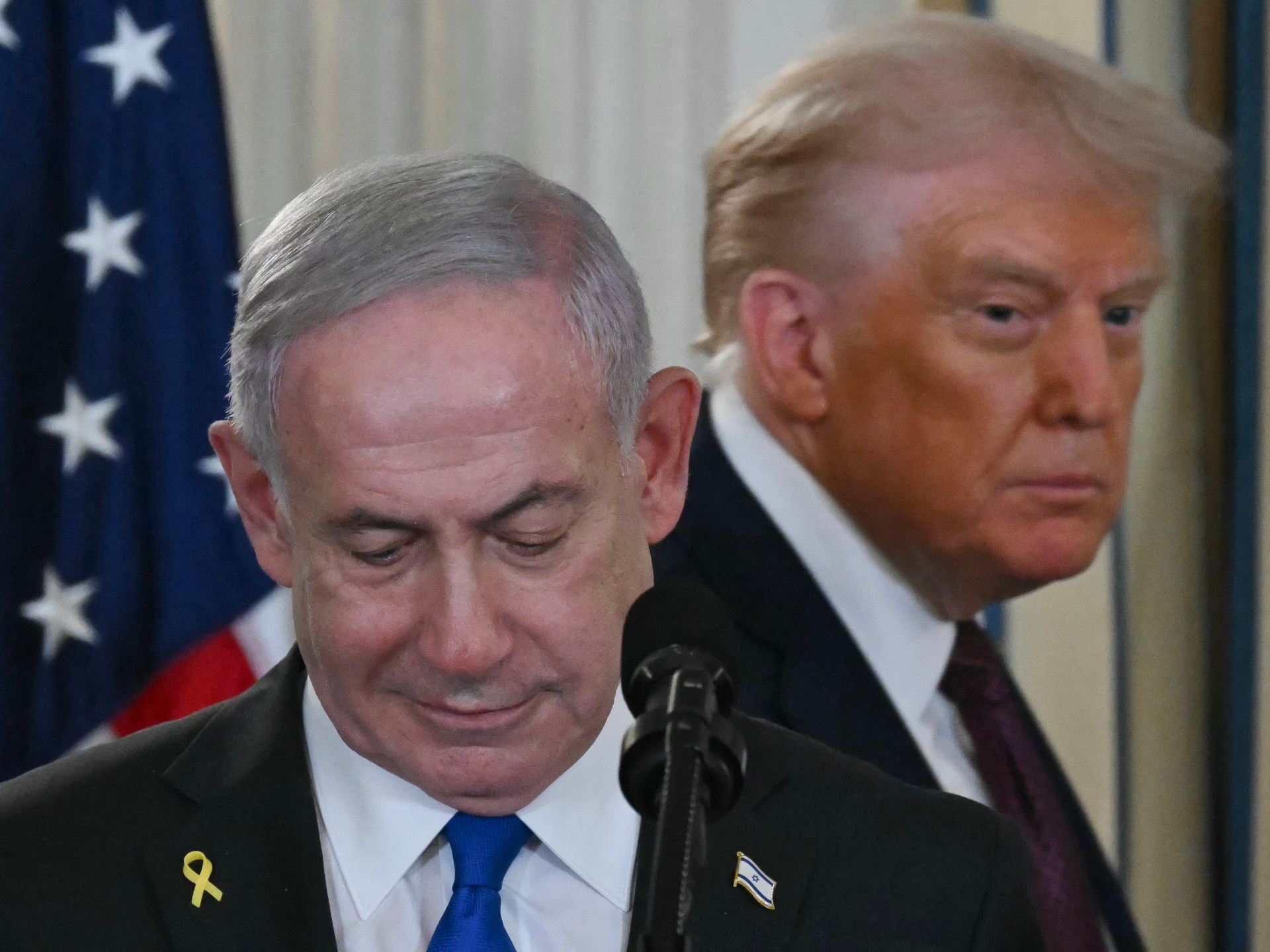
President Donald Trump said his relationship with Israeli Prime Minister Benjamin Netanyahu remains “very good” even after Netanyahu formally rejected a U.S.-backed 15-point roadmap for Gaza that calls for Hamas to disarm and Israeli forces to withdraw in phases.
“The relationship is very good,” Trump said Monday in response to a shouted question from a journalist at the end of an Oval Office event at the White House.
Netanyahu told his cabinet Sunday that Israel would not accept the plan drafted by the U.S.-led Board of Peace, marking his clearest public refusal after more than a week of Israeli hesitation and criticism.
“I wish to be precise here: Israel does not accept the 15-point document,” Netanyahu said. “The IDF will not carry out any withdrawal until Hamas is disarmed. And when I say the disarming of Hamas, it means heavy weaponry, lighter weaponry, all weaponry. And we are talking about genuine disarmament, not fictitious disarmament.”
He described Trump as “the greatest of our friends in the White House” but said Israel knew “how to stand firm” against proposals it considered unacceptable. According to Al Jazeera, Netanyahu also vowed that “no Palestinian state will arise as long as I am prime minister.”
Trump announced in July what he called a “major milestone” in his plan to end Israel’s war in Gaza, saying the Board of Peace had reached an agreement for the complete disarmament of Hamas and other Palestinian armed groups. Under the phased roadmap, weapons would be decommissioned and stored by a new Palestinian administration in Gaza that reports to the Board of Peace, while Israeli forces would withdraw from the more than 60% of Gaza they currently control.
Senior Hamas officials confirmed they had agreed to the framework, conditioned on mutual compliance by Israel. The United Kingdom welcomed the move, and the European Union called it a “crucial step.” Hamas has since indicated it remains committed to the roadmap and called on mediators and the Board of Peace to press Israel to follow the agreed terms.
A Board of Peace official told Reuters on Monday that the plan remains active. “The process is based on implementation and verification on the ground,” the official said. “Discussions with Israel are continuing, and the framework is designed so that each stage only moves forward once the required commitments have been met. The roadmap is between the Board of Peace and Hamas and discussions with Israel are continuing. Israel is not being asked to rely on trust or to make irreversible moves before verified steps are taken on the ground.”
Nickolay Mladenov, the High Commissioner for Gaza, made a similar case in an interview with Israel’s Channel 12. He said the plan’s goal is to ensure “that Gaza is never again a threat to Israeli security and that what happened before, [on] October 7, never happens again.” He said the roadmap takes “a step-by-step approach” in which verified weapons decommissioning would be followed by Israeli withdrawal, adding that nothing was being built “on the basis of trust” but on “verification.”
The BBC reported that the White House is “not bothered” by Netanyahu’s rejection and sees it as campaign rhetoric ahead of Israel’s general election, scheduled for Oct. 27. Israeli journalist Barak Ravid quoted a senior U.S. official as saying, “We understand Bibi’s political needs. We have no problem with it as long as he continues to do what we ask — especially regarding restraining attacks in Gaza.”
Recent days have seen an apparent pause in Israeli strikes on Gaza, something Hamas had demanded when signing on to the roadmap, the BBC reported. Israeli public radio Kan News reported that construction of the first International Stabilization Force base is still scheduled to begin in the ruins of Rafah in southern Gaza at the end of the month. The force is expected to include international troops working with a new Palestinian police force to secure the territory.
Inside Israel, skepticism remains widespread over whether Hamas intends to surrender its weapons. Fleur Hassan-Nahoum, an Israeli commentator and former deputy mayor of Jerusalem, told the BBC that Israel could “never agree to retreating anywhere where the terrorist group that caused the worst massacres since the Holocaust is still there and is still ruling the Strip.”
Netanyahu is also under pressure from his right-wing base and far-right cabinet members, who had urged him to reject the plan. Former U.S. diplomat Aaron David Miller told the BBC that Netanyahu is facing “the most consequential election” of his political life and is “navigating a very fine line between keeping his constituents happy and not angering or alienating President Trump.”






Be First to Comment