Key takeaways:
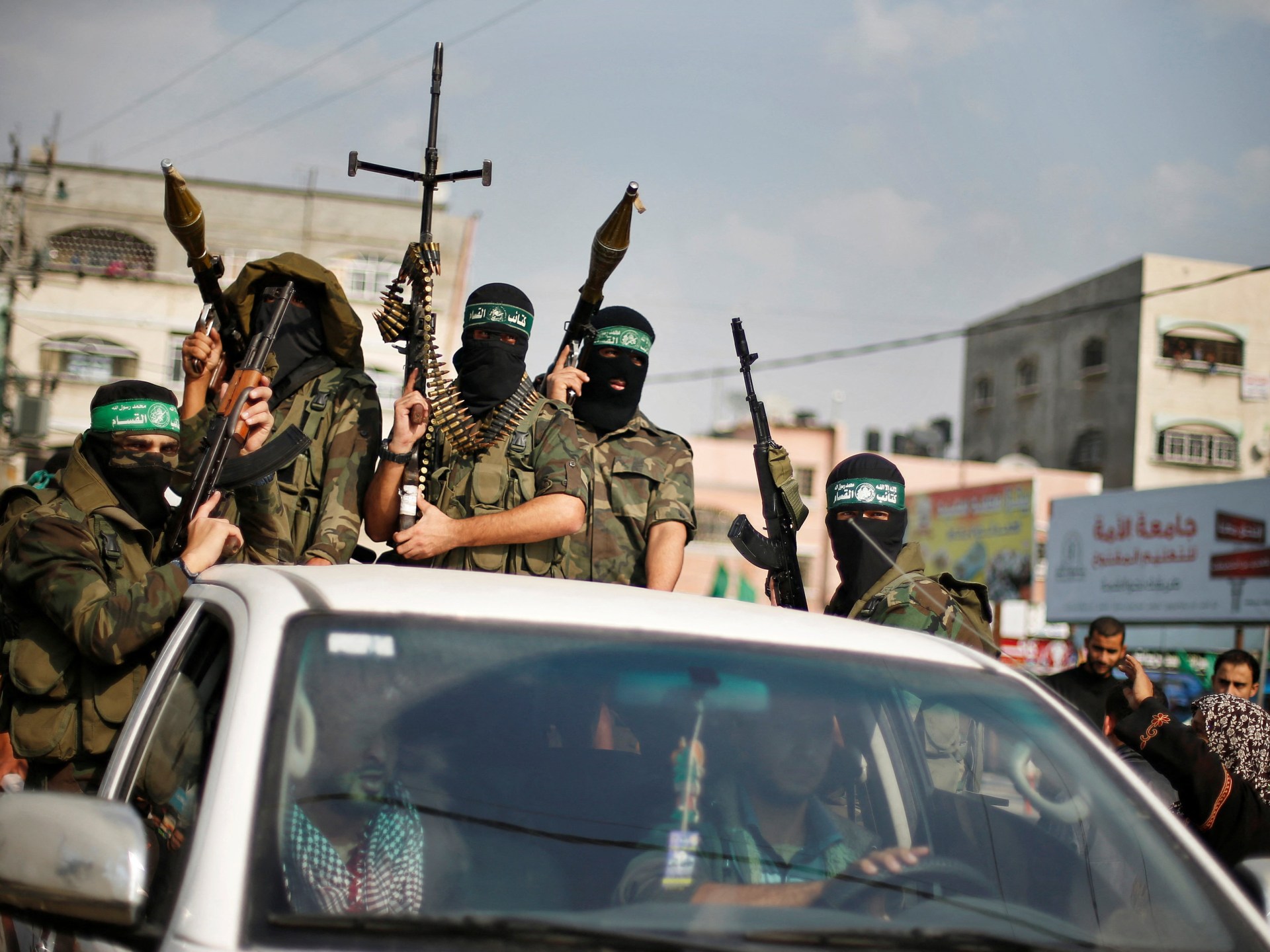
- The agreement calls for Hamas and other armed groups in Gaza to surrender weapons in stages while Israel withdraws its forces from Gaza.
- Hamas says implementation depends on Israel halting the killing, withdrawing, allowing a Gaza administrative committee to enter and accepting an international stabilisation force.
- Israel’s government had not issued an official response by Friday evening, while Itamar Ben-Gvir rejected the draft as unacceptable and Gadi Eisenkot warned against allowing Hamas to survive and rearm.
A new plan for Hamas to disarm in stages in exchange for an Israeli withdrawal from Gaza has drawn cautious international support, offering a possible path toward ending a war that has devastated the enclave while leaving major questions over implementation.
The agreement, confirmed Thursday and Friday by the United States and other mediators, calls for Hamas and other armed groups in Gaza to surrender their weapons in phases as Israel pulls back its forces. The BBC reported that the core bargain is for Israel to withdraw from the roughly 70% of Gaza it occupies as Hamas hands over its weapons.
President Donald Trump announced the agreement after the US-led Board of Peace and International Stabilization Force for Gaza said mediators from Egypt, Qatar, Turkiye and the United States had finalized a roadmap for the next phase of the ceasefire. Trump called it “a historic agreement for the complete disarmament of Hamas and all other armed groups in Gaza” and “a monumental step toward lasting peace and security.”
On Truth Social, Trump described the deal as “a critical step towards Gaza finally being governed by a new Palestinian government that will work closely with the Board of Peace.” He added: “Israel will have the security it deserves, with Gaza no longer used as a base for terror attacks.”
Hamas has never previously agreed to disarm, the BBC reported, but the plan faces steep obstacles after nearly three years of war, deep mistrust and the failure of an earlier truce struck last October to halt hostilities fully.
Hamas said moving forward depends on Israel ending the killing and withdrawing from Gaza. “The occupation’s commitment to halting the killing is the fundamental prerequisite for proceeding with implementing and establishing a timeline for what has been agreed upon,” the group said. It also listed the entry of the National Committee for the Administration of Gaza, deployment of an international stabilisation force and disbanding of Israeli-backed militias as necessary conditions.
Hamas negotiator Ghazi Hamad told Al Jazeera the deal was a “comprehensive package,” not a simple weapons handover. He said it would include an end to Israel’s offensive, a full troop withdrawal, deployment of the National Committee and international forces, and reconstruction. Hamas, he said, “made concessions for the sake of our Palestinian people,” with the “primary objective” being “to protect our people in the Gaza Strip from the ongoing hostile measures and criminal plans pursued by the Israeli occupation.”
Israel’s government had made no official response by Friday evening, Al Jazeera reported. Far-right National Security Minister Itamar Ben-Gvir rejected the draft as “unacceptable to Israel” and said a required commitment “to stop the assassinations” of Hamas members was “tantamount to agreeing to Hamas organising for the next massacre.” Former army chief Gadi Eisenkot said Israel “must not accept a reality in which Hamas survives, rearms and waits for the opportunity to carry out the next massacre.”
The war began after Hamas and other Palestinians attacked Israel on Oct. 7, 2023, killing almost 1,200 people, about two-thirds of them civilians, including children, and taking 251 hostages into Gaza, according to the BBC. Israel’s campaign has killed more than 70,000 Palestinians during the war and more than 1,000 since the ceasefire, according to the Hamas-run health ministry, whose figures the BBC said are regarded as reliable by the United Nations. UNICEF says more than 20,000 children have been killed since Oct. 7, 2023, including at least 1,000 babies among the dead and wounded.
Nickolay Mladenov, director general of the Board of Peace, said talks had nearly collapsed several times. “There were several points when I did not believe we would make it,” he wrote on X, adding that what happens next “matters even more” than the agreement itself. He said implementation and verification mechanisms must be “real and effective” and that Israeli withdrawal must proceed alongside weapons dismantling.
The National Committee for the Administration of Gaza said it was ready to govern the enclave and restore essential services. Palestinian Islamic Jihad, however, said reports of an agreement were “inaccurate” and that it had “reservations about it in its currently circulated form.”
International reaction was supportive but guarded. EU foreign policy chief Kaja Kallas called the plan, “if fully implemented,” a “constructive step towards peace,” while warning that “a lot needs to fall in place for this to work.” British Foreign Secretary Ed Miliband urged full implementation of the 20-point plan, including Israeli withdrawal and respect for the ceasefire, and called on Israel to “immediately end the unacceptable restrictions on aid.”
Germany, Belgium and Pakistan also welcomed the roadmap, with Pakistan’s prime minister, Shehbaz Sharif, saying he hoped it would lead toward Palestinian self-determination and an independent state based on pre-1967 borders.





Be First to Comment