Key takeaways:
- Iran’s Revolutionary Guard said it targeted Israel’s Nevatim and Tel Nof airbases after Israeli strikes on radar sites in Iran.
- Israel confirmed strikes in Iran, including at a petrochemical plant in Mahshahr, while Iranian media reported explosions in Tehran, Isfahan, Karaj and Tabriz.
- Yemen’s Houthis said they fired at Israel and warned Israel-affiliated vessels would again be targets in the Red Sea and nearby waterways.
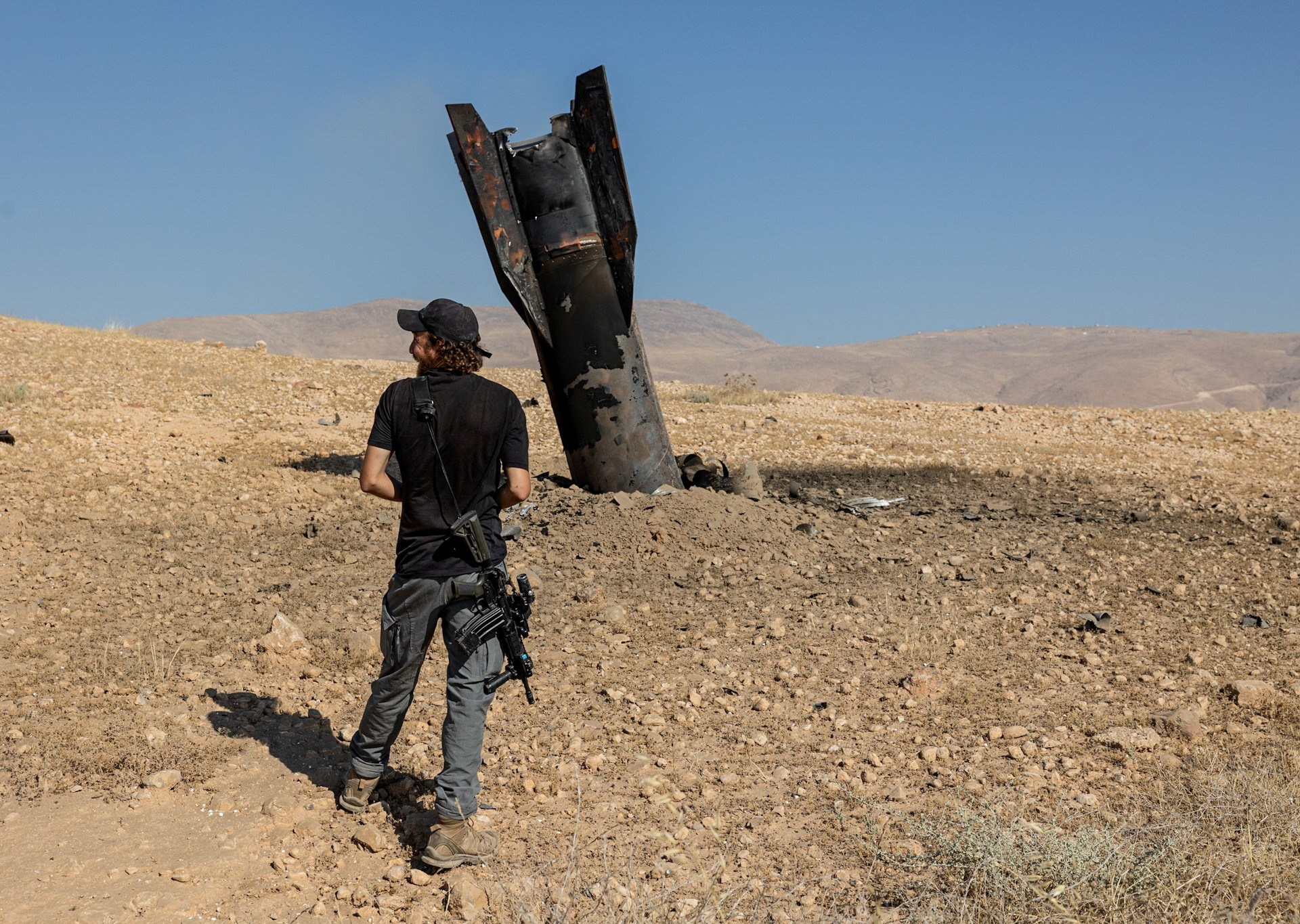
Israel and Iran exchanged missile and air attacks early Monday, threatening a fragile ceasefire as Yemen’s Houthi rebels also fired toward Israel and warned they would target Israel-linked shipping in the Red Sea.
Iran’s Islamic Revolutionary Guard Corps said it launched missiles at Israel’s Nevatim and Tel Nof airbases as part of Operation Nasr, or “Victory,” after Israeli air attacks on radar sites in Iran. Israel’s military said it detected a new barrage of missiles from Iran, and explosions were heard in central Israel as air defenses tried to intercept incoming fire. Missile sirens also sounded in neighboring Jordan.
Israel said it struck targets in central and western Iran, including several targets at a petrochemical complex in Mahshahr in southwestern Iran. Iranian state media reported explosions in Tehran, Isfahan, Karaj and Tabriz, while the semiofficial Fars and Mehr news agencies said Israeli strikes hit a petrochemical factory in Mahshahr, in Khuzestan province. Iran closed airspace around Tehran’s Imam Khomeini International Airport after the Israeli attack.
The crossfire followed Iranian missile fire at northern Israel on Sunday, which Israel said caused no injuries. Tehran said that attack was retaliation for Israeli strikes on Beirut’s southern suburbs. Israel said it was targeting positions of Hezbollah, the Iran-aligned Lebanese group. The attacks were the first on Lebanon’s capital since Washington announced a ceasefire extension in Lebanon last week.
Iran’s Central Command spokesperson, Ebrahim Zolfaghari, accused the United States of giving Israel permission to attack Beirut. Tehran has said a truce with Washington includes a halt to hostilities in Lebanon. Israel has continued striking Lebanon, saying it is acting against Hezbollah fighters who continue to fire rockets and drones at northern Israel.
The latest fighting marks the most serious exchange since an April 8 ceasefire, NPR reported. NPR also reported that Monday was the 100th day of the Iran war, launched Feb. 28 when Israel and the United States killed Supreme Leader Ayatollah Ali Khamenei and other senior Iranian leaders.
Diplomatic efforts were underway Monday to save the ceasefire, according to NPR, which cited two regional officials speaking on condition of anonymity. Officials from Egypt, Saudi Arabia, Turkey, Pakistan and Qatar urged Washington to pressure Israel to rein in strikes on Iran and Beirut, and urged Iran to stop attacking Israel. One official involved in mediation said Pakistan-led mediators told the U.S. administration that the Israeli strike on Beirut was meant “to disrupt our efforts to reach a deal” and that “Trump has to stop Netanyahu’s reckless maneuvers.”
U.S. President Donald Trump has not publicly commented on the latest attacks. NPR reported that a senior U.S. official said Trump called Israeli Prime Minister Benjamin Netanyahu on Sunday to urge him not to retaliate immediately for the Iranian missile attack. The official said Trump believed he had convinced Netanyahu to wait. “Trump got Bibi to hold off for the time being,” the official said.
Trump told Fox News he wanted Iran to stop firing missiles and return to negotiations, and said Israel’s strikes in Lebanon were not coordinated with Washington. “I’m not happy about it,” he said. In an interview with the Financial Times, Trump said Netanyahu did not control the war. “I call the shots. I call all the shots. He doesn’t call the shots,” Trump said.
The Houthis said they fired a salvo at Israel and would ban Israeli maritime navigation in the Red Sea. NPR reported that the group also warned Israel-affiliated vessels would again be targets in the Red Sea, Gulf of Aden and Bab el-Mandeb Strait. During the Israel-Hamas war in Gaza, Houthi attacks killed at least nine mariners and sank four ships in more than 100 attacks, NPR reported.
The fighting also hit energy markets. Washington and Tehran have been discussing an extension of the ceasefire aimed at reopening the Strait of Hormuz and easing energy prices. Brent crude rose above $97 a barrel after Monday’s exchange.





Be First to Comment