Key takeaways:
- Trump ordered Interior Secretary Doug Burgum and other officials to install temporary signs outside the National Museum of American History criticizing its exhibits.
- A July 4 White House report accused the Smithsonian of “ideological capture” and said the museum could not be trusted to tell America’s story honestly.
- Smithsonian Secretary Lonnie Bunch said the report was not a fair characterization and defended the institution’s commitment to scholarship, accuracy and nonpartisanship.
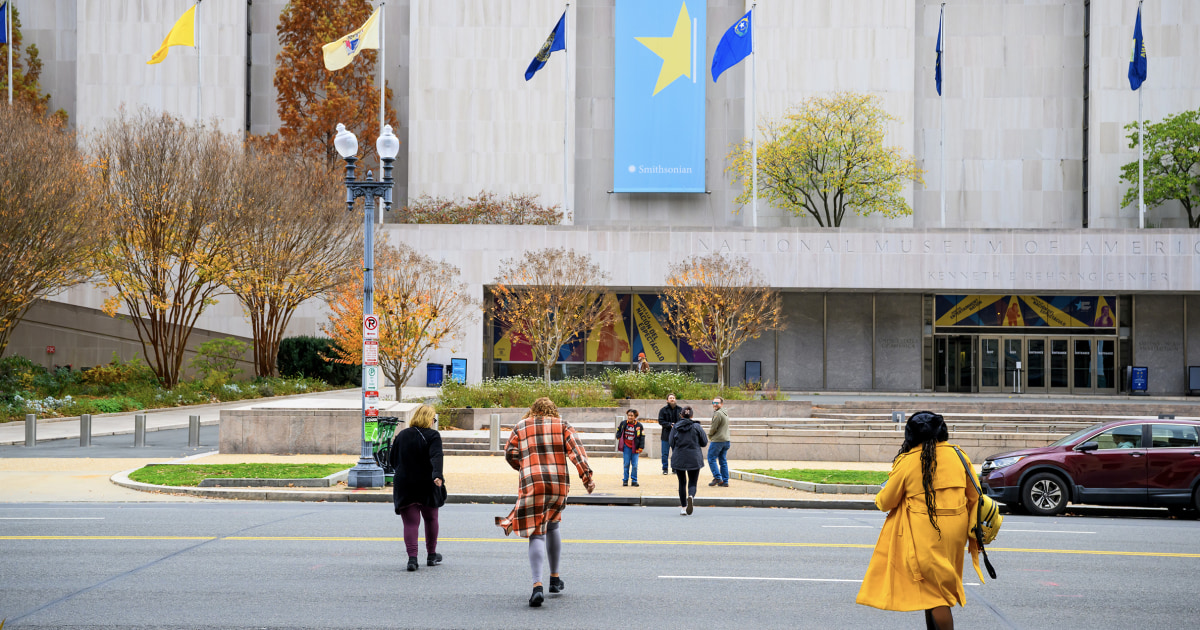
President Donald Trump on Friday ordered federal officials to place temporary signs outside the Smithsonian’s National Museum of American History accusing the museum of presenting inaccurate information, escalating his effort to reshape how the institution portrays the nation’s past.
The order directs Interior Secretary Doug Burgum to work with the National Park Service and Vince Haley, the assistant to the president for domestic policy, to install signage along National Park Service-maintained sidewalks and walkways used by visitors entering the museum. Trump said the signs should notify visitors that exhibits should be renovated in line with a White House report released July 4 and direct the public to “locations and resources for accurate information regarding America’s history.”
The order also calls for signs criticizing the Smithsonian for what it describes as insufficient commemoration of the Declaration of Independence during the 250th anniversary of its adoption, The Guardian reported. The White House did not immediately respond to The Guardian’s request for details about the signs’ wording.
The move follows months of pressure from Trump on the Smithsonian Institution. In March 2025, he signed an executive order targeting federal funding for programs that he said promote “divisive narratives” and “improper ideology.” On Friday, he wrote that Smithsonian leadership “does not present American history as a shared national inheritance to be taught and celebrated, but instead views American history as a ‘prime tool’ to advance ideas of social justice and the radical transformation of our society.”
Trump also wrote that the leadership of the Smithsonian and the museum “cannot be trusted to tell America’s story with honesty and gratitude.” He directed Burgum, Office of Management and Budget Director Russell Vought, the administrator of General Services and Haley to “use all available authorities” to advance the order’s policies.
The July 4 White House report, titled “Saving America’s Story,” accused the museum’s leadership of “ideological capture” and said the Smithsonian “cannot be trusted to tell America’s story honestly and in a way that is inspiring, unifying, and worthy of our great republic.” According to The Guardian, the report said the institution had “explicitly adopted an ideological framework that no longer treats the American story as a shared national inheritance to be taught or celebrated, but as a political instrument to divide, dispirit, and discourage our citizens.”
The Smithsonian declined to comment Friday, NBC News reported. Earlier this month, Smithsonian Secretary Lonnie Bunch defended the institution in an email to NBC News, saying the White House report “is not a fair characterization of the work and totality of the National Museum of American History.”
“At the Smithsonian, our work is driven by scholarship, accuracy and an uncompromising commitment to tell the fullness of America’s story,” Bunch wrote. He said the institution remains “focused on what grounds us: a steadfast commitment to scholarship, nonpartisanship, independence, accuracy, and integrity.”
Museum director Anthea Hartig also defended the museum’s work during congressional hearings earlier this month, according to The Guardian, citing The New York Times. Responding to Republican criticism that included allegations of “some overtly sexual things up there” and claims that she encouraged “self-loathing,” Hartig said: “We honor the declaration, the revolution, the constitution, our national symbols. And we tell the truth about the times that the country fell short of its own founding ideals. Telling our story fully is a form of respect for the American people and a commitment to constantly being in pursuit of a more perfect union.”
The American Historical Association, a professional historians’ group, also backed the Smithsonian’s “commitment to scholarship and accuracy” earlier this month. “Political interference in professional museum work threatens the accuracy of historical interpretation and erodes public trust in one of our nation’s most important institutions,” the group said.








Be First to Comment