Key takeaways:
- The Supreme Court struck down federal caps on coordinated party expenditures in a 6-3 ideological ruling authored by Justice Brett Kavanaugh.
- The challenge was brought by JD Vance, Steve Chabot, the National Republican Senatorial Committee and the National Republican Congressional Committee.
- For the 2026 cycle, the FEC limits had ranged from $65,300 to $130,600 for House campaigns and from $130,600 to $4 million for Senate candidates.
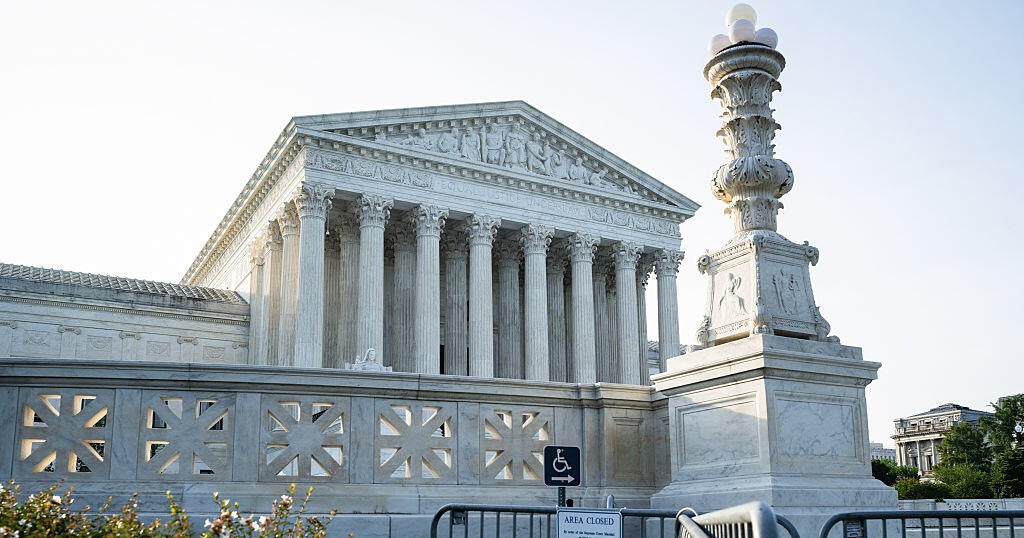
The Supreme Court on Tuesday struck down federal limits on how much national political party committees can spend in coordination with candidates, dismantling a long-standing campaign finance rule just months ahead of the midterm elections.
In a 6-3 decision along ideological lines, the court’s conservative majority held that the caps on coordinated party expenditures violate the First Amendment. Justice Brett Kavanaugh wrote the majority opinion in National Republican Senatorial Committee v. Federal Election Commission, a case brought by Republican committees and candidates, including JD Vance before he became vice president.
The ruling eliminates restrictions that had limited how much party committees could spend in direct cooperation with congressional campaigns. Those expenditures can cover activities such as hiring a venue or fundraising consultants, or paying for a candidate’s travel, according to court filings cited by NBC News.
Kavanaugh wrote that the decision “treats all political parties equally.” He said it would allow “all political parties — including the DNC and RNC and the respective Senate and House campaign committees, as well as other parties and party committees — to participate more freely and compete more fully in the political process, and to coordinate more closely with their candidates.”
The case challenged limits imposed under the Federal Election Campaign Act, the post-Watergate law passed in 1974 to regulate federal campaign financing. For the 2026 election cycle, party committees could spend between $65,300 and $130,600 in coordination with House campaigns, and between $130,600 and $4 million with Senate candidates, according to the FEC figures reported by CBS News. Congress amended the law in 2014 to allow unlimited coordinated spending on certain activities, including election-recount lawsuits and other legal proceedings.
The lawsuit was filed in 2022 by Vance, then a Republican Senate candidate in Ohio; then-Rep. Steve Chabot, a Republican from Ohio who later lost his reelection bid; the National Republican Senatorial Committee; and the National Republican Congressional Committee. They argued that the limits improperly restricted political parties from associating with and advocating for their own candidates.
“It doesn’t make any sense to think of a party as ‘corrupting’ its candidates,” lawyers for the Republicans argued in a brief quoted by NPR, “because the very aim of a political party is to influence its candidate’s stance.”
The Federal Election Commission, under the Trump administration, sided with the challengers when the case reached the Supreme Court. Solicitor General D. John Sauer argued that the caps violate the First Amendment by restricting parties’ ability to engage in political speech in coordination with candidates. Because the FEC backed the challenge, the court appointed outside lawyer Roman Martinez to defend the limits. Democratic campaign committees also urged the justices to uphold them.
Martinez argued that ending the limits would effectively legalize quid pro quo political corruption, The Guardian reported. Democratic Party lawyers wrote that authorizing unlimited coordinated expenditures would “fundamentally reshape the campaign finance regime” and that “the potential for actual or apparent corruption is obvious.”
The decision overturns a 2001 Supreme Court ruling that had upheld an earlier version of the limits. It also extends a series of decisions that have reduced campaign finance restrictions, including the 2010 Citizens United v. FEC ruling, which allowed unlimited independent spending by outside groups, and a 2014 decision that struck down aggregate limits on how much an individual could contribute to federal candidates and committees in an election cycle.






Be First to Comment