Key takeaways:
- With 15% of the vote counted in Georgia’s Republican Senate runoff, Trump-endorsed Mike Collins led Derek Dooley 51.9% to 48.1%, according to The Guardian.
- With 20% of ballots counted in Georgia’s Republican gubernatorial runoff, Trump-backed Burt Jones trailed Rick Jackson 59.4% to 40.6%, The Guardian reported.
- In Alabama, Trump endorsed Rep. Barry Moore in a Republican Senate runoff against Jared Hudson after Moore led the May primary 39% to 26%.
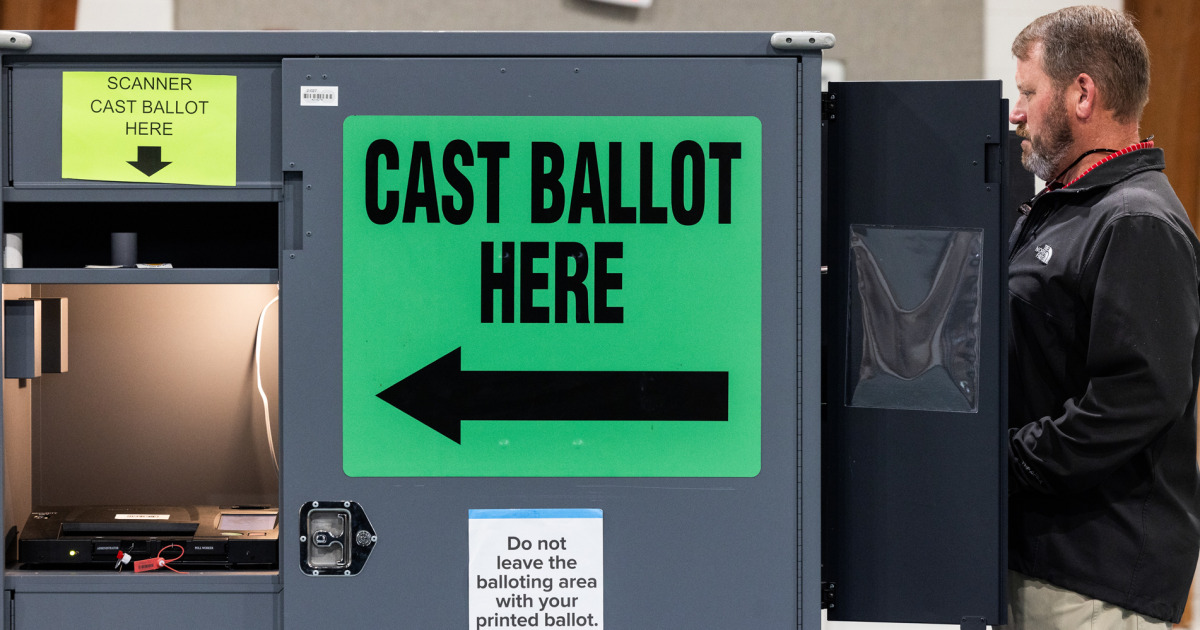
Donald Trump’s influence over Republican primaries faced fresh tests Tuesday as voters in Georgia and Alabama chose nominees in closely watched runoffs for Senate and governor, with early Georgia returns showing one Trump-backed candidate in a tight race and another trailing badly.
In Georgia, polling places closed at 7 p.m. local time in runoff contests that will determine the Republican nominees for U.S. Senate and governor. With 15% of the vote counted in the Senate runoff, Trump-endorsed Rep. Mike Collins led former University of Tennessee football coach Derek Dooley 51.9% to 48.1%, a margin of fewer than 6,000 votes, The Guardian reported. The winner will face Democratic Sen. Jon Ossoff in November.
Collins entered the runoff as the favorite after finishing first in the May 19 primary with 41% of the vote, ahead of Dooley’s 30%. NBC News reported that Collins showed broad geographic strength in that first round, winning a majority of Georgia’s 159 counties and finishing second everywhere else. That included the Savannah-based 1st Congressional District, where Rep. Buddy Carter, a third candidate in the primary, ran strongly. Collins finished second there, while Dooley struggled to reach double digits.
Dooley’s support was more concentrated around metro Atlanta, where he won large counties that together accounted for about a quarter of all statewide primary votes. NBC reported that Dooley would need strong margins in the Atlanta area and lower rural turnout to pull off an upset. The Guardian reported that Dooley was backed by Georgia Gov. Brian Kemp.
The Republican runoff for Georgia governor appeared more volatile. With the first 20% of ballots counted, Lt. Gov. Burt Jones, who was endorsed by Trump, trailed healthcare executive Rick Jackson 59.4% to 40.6%, according to The Guardian. Jones finished first in the May primary with 38%, followed by Jackson at 33%.
Jackson, a self-funding businessman and political newcomer, has spent heavily in the race. The Guardian, citing the Associated Press, reported that Jackson has put more than $93 million of his own money into the campaign, using it to run ads on television and online platforms.
NBC News reported that Kemp endorsed Jones over the weekend, a move that could matter in metro Atlanta, where some Republican voters have been less aligned with Trump. Secretary of State Brad Raffensperger, who finished third in the initial gubernatorial primary, had drawn his strongest support in that area. Raffensperger became a target of Trump after refusing to support Trump’s unfounded claims that Georgia’s 2020 presidential election result was illegitimate.
Donald Trump Jr. posted Monday that “no matter who wins tomorrow, it’s a victory for MAGA,” a sign, NBC reported, of the contest’s uncertainty.
In Alabama, Trump endorsed Rep. Barry Moore in the Republican Senate runoff against former Navy SEAL Jared Hudson. Moore led the May primary with 39%, while Hudson finished second with 26%. NBC reported that limited polling since then has shown a tight race. Trump has maintained his endorsement of Moore but has not attacked Hudson, who has described himself as a strong Trump ally.
The Alabama race also showed clear regional divisions in the first round. Moore performed strongly in southern Alabama, where his congressional district is based, while Hudson did well in and around Birmingham. NBC identified northern Alabama, including Madison County and fast-growing Huntsville, as a key area in the runoff.
Voters also cast ballots Tuesday in Oklahoma and Washington, D.C. In Oklahoma, Trump has backed Kevin Hern for the Senate seat previously held by Homeland Security Secretary Markwayne Mullin. The Guardian, citing the AP, noted that Oklahoma has not elected a Democratic senator since 1990. Washington, D.C., voters were also participating in primaries as the city prepares to elect a new mayor in November for the first time in more than a decade.



Be First to Comment