Key takeaways:
- Rick Jackson defeated Lt. Gov. Burt Jones in Georgia’s Republican gubernatorial runoff, leading 53% to 47% with more than 80% of the expected vote counted, according to NBC News.
- Jackson spent heavily from his personal fortune and emphasized his biography as a foster care and public housing survivor turned healthcare executive.
- Jackson will face Democratic nominee Keisha Lance Bottoms, a former Atlanta mayor and Biden administration official, in the November general election.
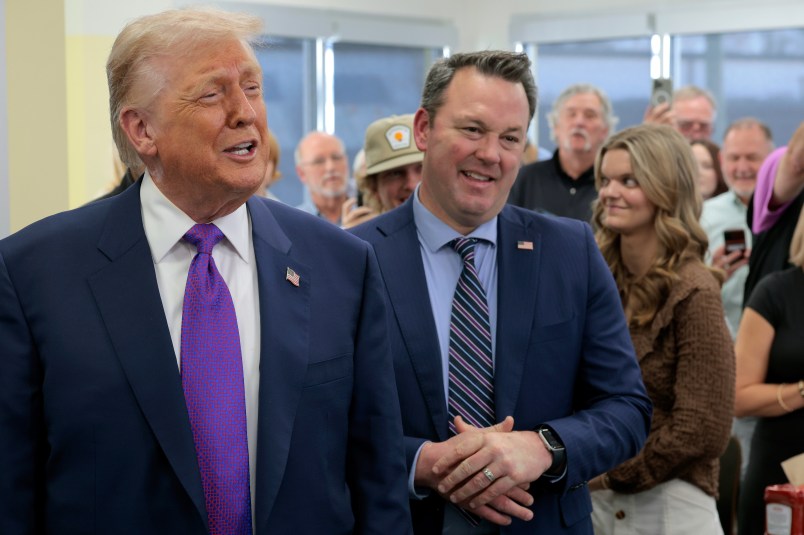
Billionaire healthcare executive Rick Jackson won Georgia’s Republican runoff for governor Tuesday, defeating Lt. Gov. Burt Jones and denying President Donald Trump’s endorsed candidate the nomination in one of the state’s most closely watched primary fights.
Jackson, a first-time candidate who spent heavily from his personal fortune, will face Democratic nominee Keisha Lance Bottoms, the former Atlanta mayor who also served in the Biden administration, in the November general election. NBC News projected Jackson leading Jones 53% to 47% with more than 80% of the expected vote counted.
The race moved to a runoff after neither candidate captured a majority in the May 19 primary. Jones entered the runoff with Trump’s backing and had led Jackson by six percentage points in the initial primary, Talking Points Memo reported. But Jackson reshaped the contest after entering in February, months after Jones, and poured money into television advertising that cast him as a conservative outsider in Trump’s mold.
Jackson spent more than $100 million of his own money on the campaign, according to NBC News. CBS News reported that he had pledged up to $50 million and that his campaign and allies spent more than $50 million on television ads alone heading into the runoff, citing AdImpact. NBC News, also citing AdImpact, reported that Jackson spent nearly three times as much on ads as Jones since the beginning of the year and nearly four times as much since the May primary.
Jackson’s ads highlighted his personal story — growing up in poverty, moving through five foster homes and 13 schools, and living in Atlanta’s Techwood Homes public housing projects — before building Jackson Healthcare. CBS News reported the company operates in all 50 states, serves more than 20 million patients annually and generates more than $3 billion in revenue.
He also repeatedly linked himself to Trump despite not receiving the former president’s endorsement. One ad described him as “the straight-talking, Trump-supporting self-made outsider.” In another, Jackson said, “Like President Trump, I don’t owe anybody anything, and like you, I’m sick of career politicians.”
Jones leaned heavily on Trump’s “complete and total endorsement,” which first came in August and was reinforced through tele-rallies and social media posts. Trump praised Jones during a Thursday tele-rally as a “fanatic when it came to election fraud,” adding, “He battled very strongly, tooth and nail, frankly, for the election integrity in your state.”
Jones, a sixth-generation Georgian, former University of Georgia football letterman and lieutenant governor since 2022, was part of the alternate slate of presidential electors who cast votes for Trump at the state Capitol after Georgia’s official count confirmed Joe Biden’s 2020 victory.
Jackson also drew support from Attorney General Chris Carr, who endorsed him after failing to advance from the May primary, and from Republican Sens. Rick Scott of Florida and Ted Cruz of Texas. Cruz campaigned with Jackson on the eve of the runoff. “Rick’s rich,” Cruz said Monday. “Rick doesn’t have to do this. He could sit back and play golf all day long and never have to enter this fray.” Cruz also described Jackson as “an outsider, a businessman,” adding, “I don’t know anyone in politics like that.”
Donald Trump Jr. praised Jackson on X as one of “the patriots building up MAGA and an America First economy,” but stopped short of endorsing him. Outgoing Gov. Brian Kemp endorsed Jones on Sunday night, after early voting had ended, but the late support did not change the result.
The primary was contentious. CBS News reported it produced two lawsuits, a defamation claim and a mobile billboard circling metro Atlanta. Jackson sued Jones in federal court over a Georgia campaign finance mechanism known as a leadership committee, arguing it gave Jones an unconstitutional fundraising advantage. A federal judge temporarily blocked Jones’ leadership committee, which had accumulated about $15.9 million, from raising or spending money while the case proceeded.
Jackson also filed a defamation lawsuit in Fulton County Superior Court after Jones’ campaign alleged on social media that Jackson had made his fortune recruiting for Planned Parenthood and helping doctors perform transgender procedures on minors. Jackson called the allegations knowingly false. Jones’ campaign continued its attacks through a website and mobile billboard, CBS News reported.
Bottoms won the Democratic nomination decisively and has framed both Republicans as aligned with Trump. At an Atlanta event in May, she said, “They don’t see Trump’s reckless policies as a problem, they see them as a playbook. We already know we’re running against Trump’s do-boys.”
Georgia has become a key battleground in recent federal elections, but voters there have not elected a Democratic governor since 1998. In Georgia’s Republican Senate runoff, Trump-backed Rep. Mike Collins defeated former football coach Derek Dooley.






Be First to Comment