Key takeaways:
- Eight police officers and three civilians were injured when an explosives-laden truck detonated beside a police station in Cucuta.
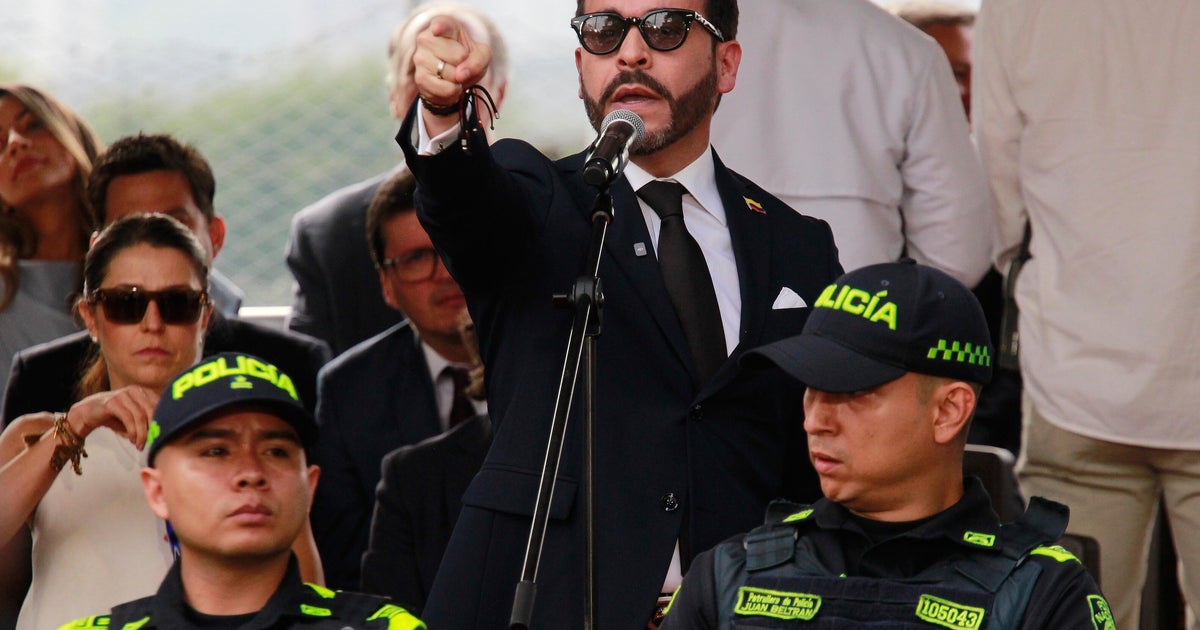
- President-elect Abelardo de la Espriella condemned the bombing and said terrorism would not intimidate Colombia.
- Authorities offered a reward equivalent to more than $32,000 for information leading to those responsible.
A truck packed with explosives detonated beside a police station in the Colombian border city of Cucuta on Saturday, injuring at least 11 people less than a week before President-elect Abelardo de la Espriella is due to take office.
The blast hit the northern city near the Venezuelan border, damaging building facades and setting the vehicle ablaze. Local officials said the wounded included police officers and civilians.
“At this time, we have eight police officers and three civilians who have been injured,” George Quintero, security secretary for the department of Norte de Santander, told reporters. “This was an atrocious, violent act… and what happened is regrettable.”
No group immediately claimed responsibility. Al Jazeera reported that several armed groups remain active in the area, including the National Liberation Army, or ELN, dissident factions of the Revolutionary Armed Forces of Colombia, or FARC, and the criminal group Clan del Golfo.
De la Espriella condemned the attack in a post on X, calling it a “cowardly terrorist attack carried out in Cucuta against our National Police.” He said he rejected the bombing “in the strongest terms” and added: “Terrorism will not intimidate Colombia or break Colombians’ determination to live in peace and security.”
Authorities are offering a reward equivalent to more than $32,000 for information leading to the capture of those responsible, CBS News reported.
The bombing comes six days before de la Espriella, a right-wing millionaire lawyer and businessman, is scheduled to replace outgoing President Gustavo Petro, Colombia’s first left-wing president. De la Espriella has never before held public office, according to Al Jazeera, and his campaign was backed by the administration of U.S. President Donald Trump.
His election marks a sharp political shift after Petro pursued negotiations with armed groups and sought to move away from the U.S.-led “war on drugs” model. De la Espriella has pledged a tougher campaign against guerrillas and criminal organizations tied to drug trafficking. Colombia is the world’s largest producer of cocaine.
During the campaign, de la Espriella promised to deepen Colombia’s military alliance with the United States. CBS News reported that he also plans to forge a military alliance with Israel. Al Jazeera reported that he echoed hardline approaches associated with Trump and Salvadoran President Nayib Bukele, including pledges to build megaprisons and target suspected drug traffickers.
“Any plane that takes off loaded with drugs — as commander-in-chief, I will order the Air Force to shoot it down,” de la Espriella told The Associated Press during the campaign, according to Al Jazeera. “Any boat that sets out loaded with drugs, I will order it sunk with the people on board.”
The campaign unfolded amid escalating political violence and armed conflict, including bombings, explosive-laden drones and attacks on security forces. In 2025, right-wing presidential hopeful and senator Miguel Uribe Turbay was shot at an event in Bogota and later died. Al Jazeera reported that his mother, journalist Diana Turbay, was killed in 1991 after being kidnapped by criminal forces.
De la Espriella has repeatedly alleged that there is a plot to assassinate him. He initially sought to be sworn in at a military garrison in the conflict-hit department of Cauca, but Petro did not authorize that plan. CBS News reported that the inauguration was moved to Cali, while Al Jazeera reported that he will be sworn in at City Hall in Bogota. Both outlets reported that about 11,000 soldiers and police officers are expected to be involved in security for the ceremony.
Petro has not commented on the attack. CBS News reported that he traveled Friday to Havana to meet Cuban President Miguel Diaz-Canel and discuss the United States’ “policy of strangulation” against Cuba, as well as Trump administration attacks on vessels in the Caribbean allegedly involved in drug trafficking.

Be First to Comment