Key takeaways:
- Brent crude touched $105 a barrel, while UK wholesale gas rose above 203p a therm, the highest since December 2022.
- The European Central Bank raised its main interest rate to 2.5% and said eurozone inflation is expected to average 3% this year.
- UK 10-year gilt yields hit 5.36%, their highest since August 2007, as borrowing costs rose across major economies.
Oil prices climbed to $105 a barrel and government borrowing costs jumped across major economies as intensified fighting between the US and Iran in the Gulf heightened fears of a prolonged energy shock and faster inflation.
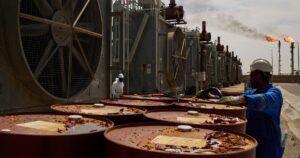
Brent crude moved back above $100 a barrel on Wednesday and continued rising Thursday, touching $105 before easing to about $104.50, up 3.3% on the day, The Guardian reported. Natural gas prices also surged. In the UK, wholesale gas rose above 200p a therm for the first time since late 2022, reaching more than 203p, while the Dutch wholesale gas price, the European Union benchmark, passed €80 per megawatt hour for the first time since January 2023.
The rises followed the latest US and Iranian attacks on ships in the Strait of Hormuz, a key Gulf route for energy supplies. The BBC reported that the war has led to the effective closure of the strait, preventing supplies of oil and gas from the Gulf from reaching global markets.
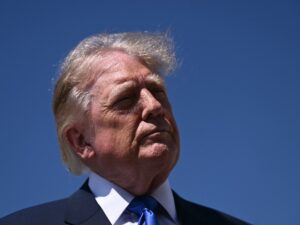
Speaking at a Republican Party convention in Texas on Wednesday, President Trump said he did not think the fighting would end until after the US mid-term elections in November.
The jump in energy prices has increased concern that inflation will accelerate, pushing bond yields higher. In the UK, the yield on benchmark 10-year government bonds, known as gilts, hit 5.36%, the highest level since August 2007. The BBC reported that yields on 20- and 30-year UK bonds reached levels not seen since 1998.
Borrowing costs also rose in Europe and the US. Germany’s 30-year government bond yield rose 2.5 basis points to 5.08%, the highest since December 2003, while its 10-year yield reached 3.45%, the highest since April 2011. France’s 10-year government bond yield rose to 4.344%, its highest since October 2008. The yield on 10-year US Treasuries rose to a three-year high after investors judged a planned $6bn US debt buyback as too small to ease pressure in the bond market.
The European Central Bank raised its main interest rate from 2.25% to 2.5%, the highest since March last year, and warned that the risk of higher inflation over the next year had increased. The bank lifted its forecast for eurozone economic growth in 2026 to 0.9%, from 0.8% in June, and said it now expects inflation to average 3% this year.
ECB President Christine Lagarde said: “We believe inflation will be longer lasting than we had anticipated.” She added that food inflation, which had remained low at 1.2%, was likely to increase in response to higher oil and gas prices. Lagarde also said gas prices could rise further because of supply disruptions or an unusually cold winter combined with low storage levels.
European gas storage is much lower than usual for this time of year. Recent data cited by The Guardian showed EU gas stores at 67% full, compared with a five-year average of 84%. The need to refill reserves before winter has added to price pressure, with UK and continental European buyers having delayed purchases in the expectation that the Middle East conflict would ease and prices would fall.
In the UK, households are shielded from short-term wholesale gas price spikes by Ofgem’s price cap. But the BBC reported that if prices stay high for a prolonged period, consumers still face steeper bills. The cap is already due to rise by 3.6% at the start of October, with the next change scheduled for January.
Higher bond yields mean more expensive borrowing for governments already facing pressure on public finances. They can also affect households directly through some financial products, including fixed-rate mortgages.
Lagarde said headline inflation was expected to return to around target toward the end of 2027, supported by higher interest rates. Asked about the ECB’s next step, she said: “We have not debated at all any kind of future path. Markets do what they have to do and we do what we have to do – which is to provide price stability.”








Be First to Comment