Key takeaways:
- Trump said every adult U.S. citizen would receive $5,000 if Republicans retain control of both chambers of Congress in November.
- Estimates in the reports put the cost between about $1.2 trillion and $1.3 trillion before administrative expenses.
- Tariff revenue cited as a possible funding source is far below the payout’s estimated cost, according to figures from the Bipartisan Policy Center and Tax Policy Center.
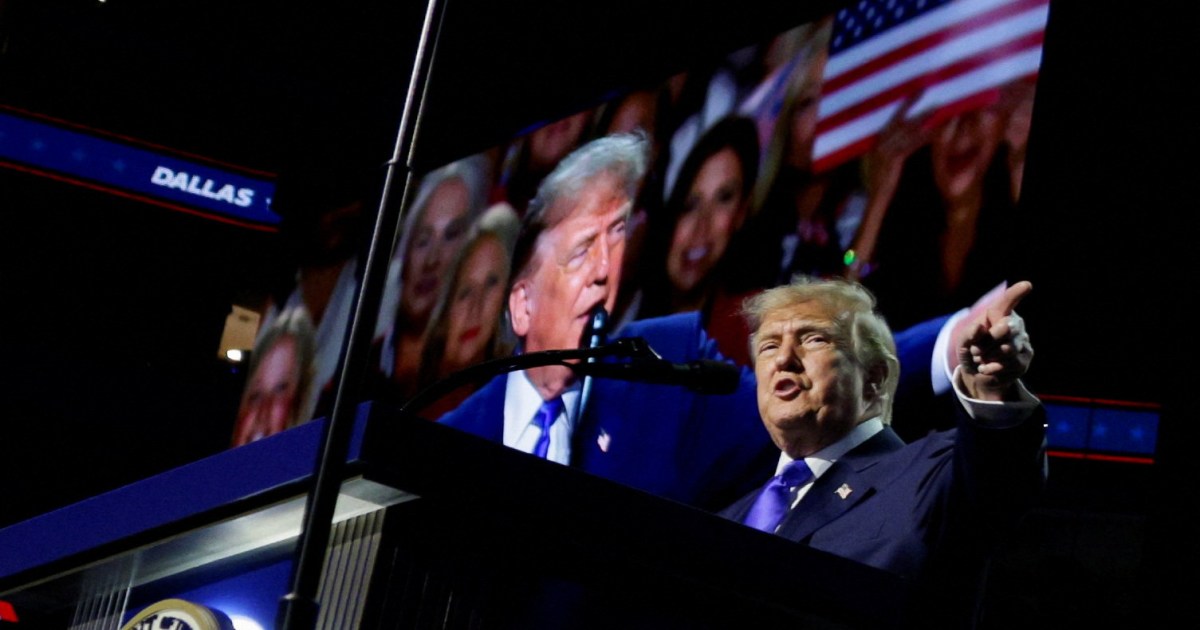
President Donald Trump has promised a $5,000 payment to every adult U.S. citizen if Republicans hold their narrow control of Congress in November’s midterm elections, a proposal that drew cheers at a Dallas convention and immediate questions over its cost, legality and impact on the national debt.
“If the Republicans win, you win with us and you get $5,000,” Trump told supporters at the Republican midterm convention. “It will be called the Trump dividend.” He also said, “Because we’ve done so well and because our country is making so much money, that only I can make you this promise.”
Trump did not specify when the payments would be made or how they would be funded. He said recipients would have to spend the money in the United States. “We don’t want you going to Canada to spend the money,” he said.
The price tag would be enormous. The Guardian, citing roughly 240 million adult U.S. citizens, reported the plan would cost about $1.2 trillion. Al Jazeera reported there are up to 270 million adult U.S. citizens, putting the potential cost at about $1.3 trillion before administrative expenses.
The pledge comes as the U.S. national debt has exceeded $40 trillion for the first time. The federal government spent about $7 trillion in fiscal year 2025 and took on about $2 trillion in debt, The Guardian reported. Al Jazeera reported that the U.S. pays about $1.1 trillion annually to service its debt, slightly more than it spends on defense.
Vice President JD Vance suggested the payments could come from tariff revenue, telling Fox News: “What the president is talking about is fundamentally a dividend for American workers. We’re taking in an extraordinary amount of revenue because the president of the United States is actually standing up to both foreign companies, but also foreign countries who’ve been taking advantage of America’s workers. I don’t think it’s a controversial idea.”
But tariff revenue appears far short of the amount needed. The Bipartisan Policy Center has tracked tariff revenue since Trump began raising rates in 2025 and found that, as of Sept. 8, the U.S. had collected about $210 billion in tariff and excise tax revenue in 2026, The Guardian reported. At $21 billion a month, the government would have to collect tariffs for nearly five years to cover a $5,000 payment if every dollar went to the program. Al Jazeera cited the Tax Policy Center as projecting tariffs would raise about $1.7 trillion from fiscal years 2026 through 2036, including $177 billion in 2026.
Fiscal analysts warned the plan would likely add to borrowing. Marc Goldwein of the Committee for a Responsible Federal Budget wrote on X that it “would cost about $1.2 TRILLION in just one year” and said the result would be “a huge spike in the deficit, and almost certainly in the inflation rate.”
Some Republicans expressed skepticism. Rep. Chip Roy of Texas told Politico, “Well – I would like to know how they would plan to pay for … back of envelope … well over $1tn.” Sen. Bernie Moreno, an Ohio Republican, backed the idea, writing on X: “I will get a bill ready so that we can get the Trump Dividend passed immediately after the November 3rd election.”
Democrats sharply criticized the proposal. California Gov. Gavin Newsom said, “After making you sicker and poorer with his war, Donald Trump now wants to buy your vote with $5,000 in taxpayer-funded blood money.” Kendall Witmer, the Democratic National Committee’s rapid response director, called it another “empty promise.”
Criminal defense lawyer John W. Day told The Associated Press the promise appears legal because it is not a direct payment in exchange for a specific vote, Al Jazeera reported. But he said Congress would have to approve any one-time payment: “It doesn’t just exist out there in a slush fund for the president to hand out.”









Be First to Comment