Key takeaways:
- Kimmel said his interview with James Talarico will be posted on YouTube rather than air on ABC television.
- The FCC issued January guidance saying daytime and late-night talk shows must comply with equal-time rules for candidates.
- Disney sued the FCC last month after the agency required early broadcast license renewals for eight ABC owned-and-operated stations.
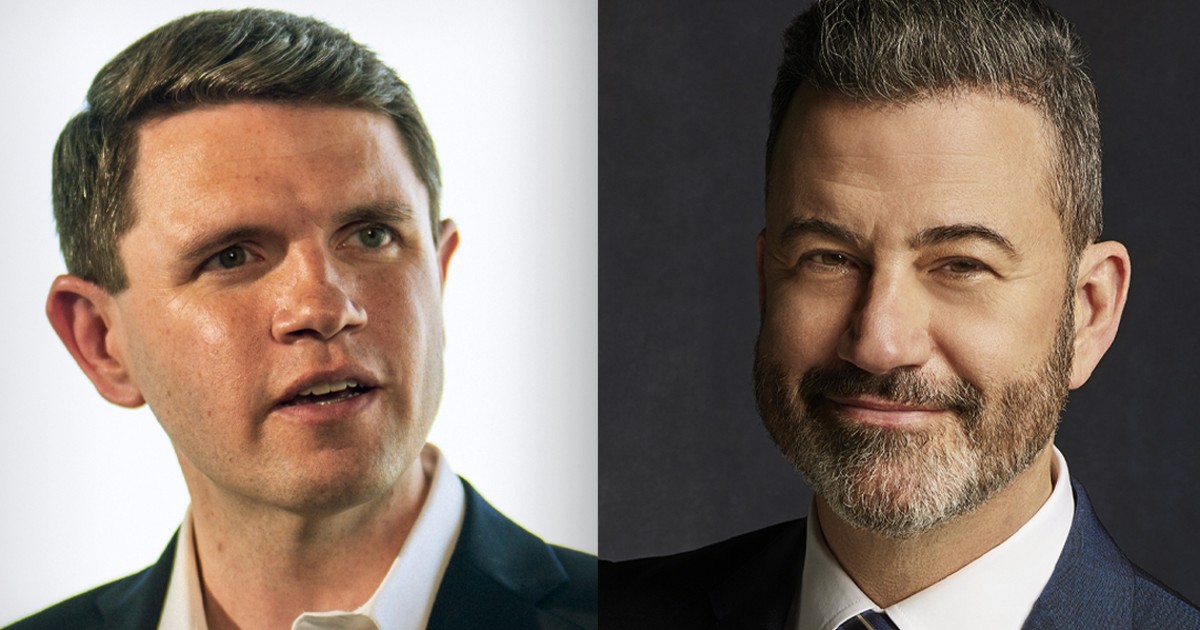
Jimmy Kimmel said his upcoming interview with Texas Democratic Senate candidate James Talarico will not air on ABC television, citing what he described as threats from the Federal Communications Commission against his show, the network and local affiliates.
Kimmel announced the change during his Wednesday monologue on “Jimmy Kimmel Live!” He said the interview, scheduled for Thursday, would be posted on the show’s YouTube channel instead of airing on television.
“Tomorrow night I’ll be interviewing James Talarico under unusual circumstances,” Kimmel said. He said that over more than 20 years, his show has interviewed Americans running for office “with no problem at all,” including Hillary Clinton, Ted Cruz and Donald Trump.
“I interviewed Donald Trump when he was running for president in 2015,” Kimmel said, adding that Trump returned for another interview shortly before becoming the Republican nominee in 2016. “At that time, when he was the one sitting next to me, he seemed to have no problem with the idea of talk show hosts interviewing candidates.”
“But for some reason, and I can’t seem to figure out what that reason is, something has changed,” Kimmel said. “Now that he is president, his FCC has threatened me, threatened our show, threatened our network, ABC, our affiliates, our local stations based on simple traditional editorial decisions, guest bookings it would seem they don’t like.”
He continued: “Out of consideration for our local stations, especially our ABC affiliates in Texas, who would have to deal with this nonsense, my interview tomorrow with James Talarico will not air on television. It will be posted on YouTube instead.”
Talarico, a Democratic Texas state representative, is running for U.S. Senate against Ken Paxton, the Republican candidate and Texas attorney general. NBC News reported that Talarico’s campaign and the FCC did not immediately respond to requests for comment, and ABC Entertainment declined to comment. The Guardian also reported that the FCC did not immediately respond to a request for comment on Kimmel’s remarks.
The decision comes as the FCC under the Trump administration has increased scrutiny of broadcast television. In January, the agency issued guidance saying daytime and late-night talk shows must comply with the equal-time rule, which requires broadcasters to offer equal opportunities to other qualified candidates running for the same office. NBC News reported that the memo marked a change from an FCC decision 20 years earlier indicating that late-night and daytime talk shows were exempt from the rule. The Guardian, citing the Hollywood Reporter, reported that talk shows have generally qualified for exemptions since the FCC granted one to Jay Leno’s “Tonight Show” in 1996.
Kimmel’s announcement follows a similar case involving Stephen Colbert. In February, Colbert said CBS did not air a planned interview with Talarico because of concerns about the FCC. “We were told in no uncertain terms by our network’s lawyers, who called us directly, that we could not have him on the broadcast,” Colbert said at the time. CBS said then that “the show was provided legal guidance that the broadcast could trigger the FCC equal-time rule for two other candidates.” That interview also ran on YouTube.
ABC temporarily pulled Kimmel’s show last year for nearly a week after his comments about the fatal shooting of conservative activist Charlie Kirk. When the show returned, Kimmel said “it was never my intention to make light of the murder of a young man.”
The dispute also comes amid litigation between Disney, ABC’s parent company, and the FCC. The agency, led by Chairman Brendan Carr, announced in April that Disney’s eight ABC owned-and-operated local television stations needed to file broadcast license renewals early. Disney sued last month. The Guardian reported that the complaint accused the administration of waging “a retaliatory campaign against ABC for a single reason: it disapproves of what ABC broadcasts.”
Carr called the lawsuit “meritless” in an August interview with The New York Times, according to The Guardian. “Holding a broadcaster accountable to their public interest obligations and statutory obligations is not a violation of their first amendment rights,” he said, “and that is what the FCC is doing.” The FCC asked the court last week to dismiss the lawsuit.





Be First to Comment