Key takeaways:
- France estimated 320,000 protesters nationwide Saturday; NBC News reported that French officials planned to deploy 70,000 police.
- German organizers reported more than 100,000 protesters nationwide, while Berlin police estimated about 5,000 in the capital.
- Clashes broke out near the end of the Paris march and in several German cities; thousands marched peacefully over housing costs in Lisbon.
About 320,000 people marched across France on Saturday in a third weekend of youth-led protests over education and living costs, according to the French government. Demonstrations also drew crowds in Germany and Portugal, while police in several cities confronted protesters as rallies wound down.
France’s Interior Ministry estimated that 70,000 people joined the main Paris march. Authorities reported 296 arrests nationwide by 6 p.m. local time, NBC News reported. The government put turnout at 410,000 the previous weekend and more than 500,000 on Oct. 17, according to NPR. Organizers’ estimates were higher. French officials said they would deploy 70,000 police on Saturday, NBC News reported; NPR described about 70,000 police and gendarmes as deployed across the country.
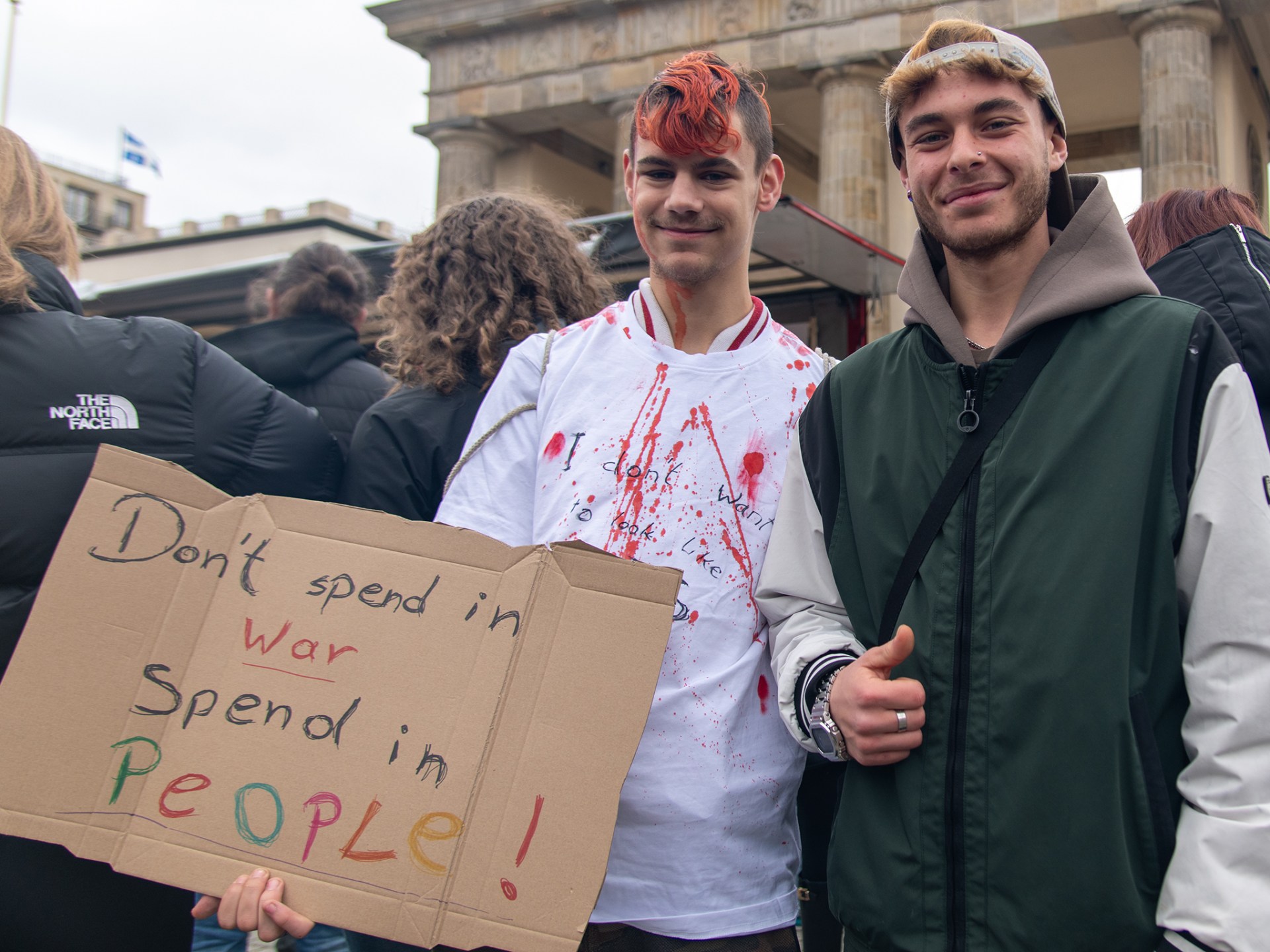
The French protests began last month with high school students objecting to neglected buildings, teacher shortages and a university admissions system they consider unfair to disadvantaged students, NPR reported. Labor unions and others later joined with a range of demands. NBC News reported that the Yellow Vests movement had also joined the broader protests.
Interior Minister Laurent Nuñez warned of a “very high risk” of disorder. Police moved the main Paris march to the edge of the capital to reduce the risk of unrest around government buildings and tourist sites. At Porte de Bagnolet, students led thousands of marchers while union security stewards watched the crowd. A banner read: “We do not need tear gas for our future to be blurry.”
The Paris march was peaceful for hours, but clashes broke out near its endpoint at Porte de Charenton, NPR reported. Protesters threw bottles and fireworks at police, who responded with stun grenades and tear gas. Many marchers left coughing and in tears. NBC News reported that videos it verified showed large crowds and fires in Marseille. Earlier French demonstrations were largely peaceful but were also marred by looting and damage to shops and public buildings.
In Germany, the group Gen Z Regelt organized rallies in 34 cities. Its demands included more investment in education, housing, health or social services and climate protection, action on living costs, and opposition to a return to mandatory military service, according to NBC News, NPR and Al Jazeera. Al Jazeera reported that nearly 180,000 people had signed up to participate by Saturday morning. Organizers later said more than 100,000 protested nationwide, while Berlin police estimated about 5,000 in the capital; organizers put Berlin’s crowd at about 10,000.
“We call for more money to be invested in social services and education, as well as in climate protection — in short, in our future,” Berlin high school student Lara Breitenbach told NPR. Berlin’s demonstrations were largely calm, police said. In Cologne, Hamburg and Frankfurt, protesters used stones or pyrotechnics against police. Officers used water cannons in Cologne and Hamburg; police said several officers were injured in Frankfurt, one severely.
Thousands also marched peacefully over housing costs in Lisbon. In Italy, crowds protested in Rome and other cities on Friday. Luca, a 20-year-old medical student in Rome, told NBC News that wages were failing to keep pace with inflation and living costs. Italy’s government said it would deploy 500 troops alongside police in Milan through the end of the year after earlier looting and attacks on police, NBC News reported.







Be First to Comment