Key takeaways:
- Spain’s CNI warned officials on July 29 that social media groups with about 180,000 followers were promoting crossings into Ceuta the next day.
- More than 72,000 migrants crossed from Morocco into Ceuta on July 30 and 31, and at least 100 people died, according to Ceuta’s mayor.
- Sánchez says the warnings did not show the scale or probability of the crisis, while opposition politicians say the government failed to act on available information.
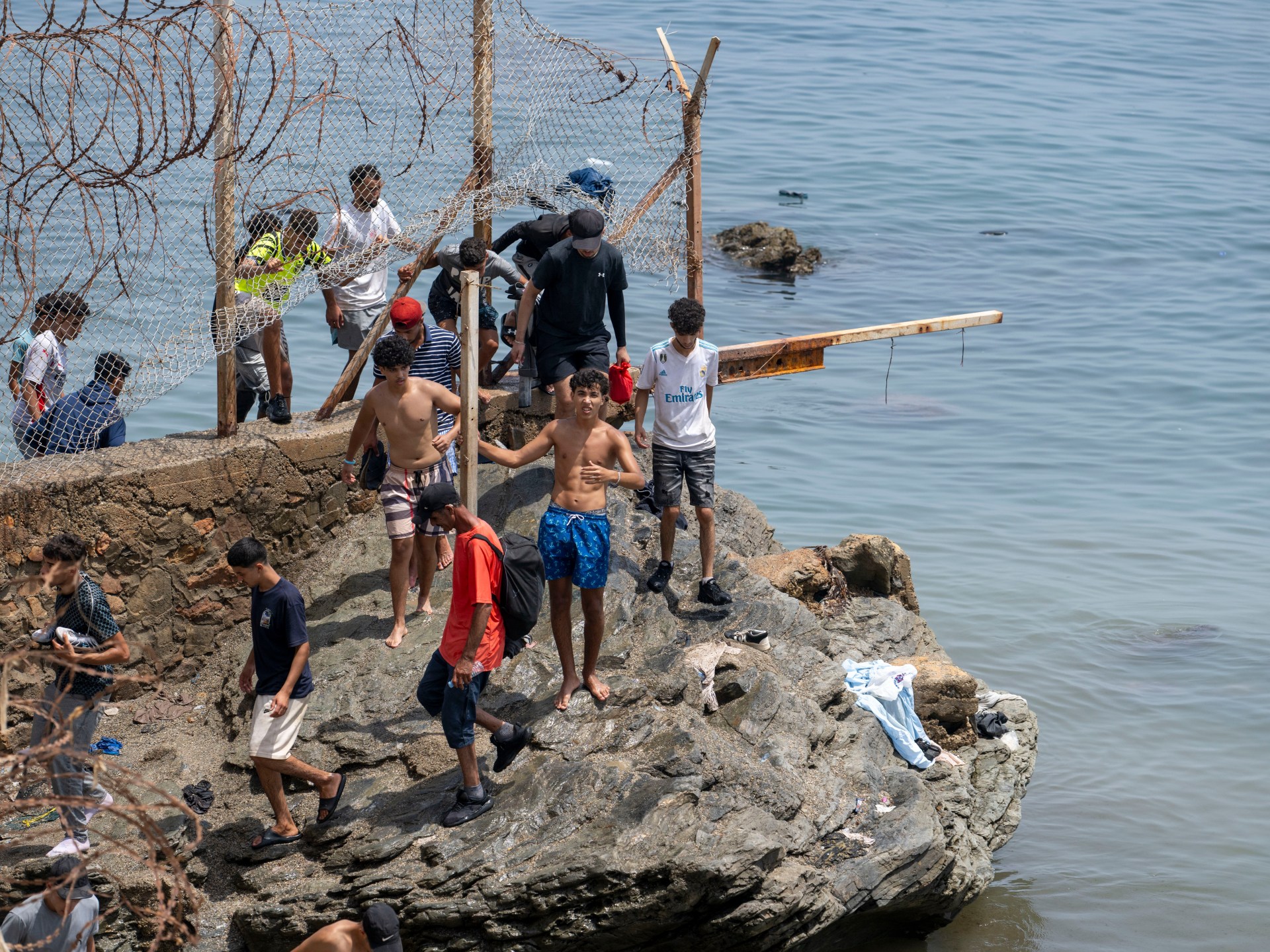
Spanish intelligence officials warned authorities in Spain and Morocco about social media calls for a mass crossing into Ceuta the day before more than 72,000 migrants entered the Spanish enclave, newly declassified government documents show.
The documents, released Wednesday after pressure on Prime Minister Pedro Sánchez’s government, have intensified a political dispute over whether Madrid failed to anticipate or fully explain the scale of the late-July border crisis. Sánchez has insisted the mass arrival was not foreseeable at the level that unfolded on July 30 and 31.
Spain’s National Intelligence Center, known as the CNI, told Moroccan intelligence services and officials in Ceuta on July 29 that WhatsApp and Facebook groups were encouraging migrants to reach the Spanish territory the following day, either by swimming around the border fence or crossing it. One message cited in the documents said: “Whoever wants to cross has the last chance on Throne Day [30 July] at 8 the authorities will be distracted with the celebrations and parades.”
Another declassified message, sent by WhatsApp to the Spanish government’s delegation in Ceuta, referred to calls on social media “for an assault on the fence and by sea tomorrow at 8 pm.” It added: “There are two different groups with a total of 180,000 followers, just to give you an idea of its scale.”
The CNI also warned Morocco’s DGST and DGED intelligence agencies that the planned crossings could take advantage of Morocco’s national Throne Day celebrations on July 30.
At least 72,000 people crossed from Morocco into Ceuta on July 30 and 31, most by swimming around a border fence. At least 100 people died during the crossing, according to figures from Ceuta’s mayor. Although many migrants returned, thousands remain in the city. The Spanish government says about 5,000 migrants and asylum seekers, including 1,200 minors, are still in Ceuta, while local officials put the number as high as 10,000. Some are staying in makeshift camps or sleeping on streets and beaches.
The situation has led to unrest in the autonomous Spanish city in North Africa. Residents have raised safety concerns, and some have destroyed shelters and blocked aid deliveries to migrants. Madrid has pledged $357 million in aid.
Sánchez has rejected claims that the documents prove his government had advance warning of a crisis on the scale that occurred. He previously told parliament there was “no information that conveyed the magnitude” of the crisis Spain would face in the final two days of July. On Wednesday, he wrote on X: “The existence of this campaign was known to other institutions and was being monitored, but in no way did it constitute or could it be interpreted as an indicator of the scale, nature, or probability of what happened afterward.”
Foreign Minister José Manuel Albares said he was “not aware of any report that might have forseen the magnitude of what happened on July 30.” A government source said the documents showed the information available before the crossing did not allow officials to anticipate the scale of the crisis or prepare the necessary response in time.
Miguel Ángel Pérez Triano, the central government’s delegate in Ceuta, said the messages sent to his office did not amount to a formal warning. “The Whatsapps from [July] 29 do not constitute an alert or a report,” he said. “It is nothing more than an exchange of information.”
Opposition parties accused the government of ignoring clear signals. “The government knew everything that was happening… They had the information. They are directly responsible for the invasion of Ceuta,” Ester Muñoz, a spokeswoman for the conservative Popular Party, told reporters.
Questions also remain over Morocco’s role. Sánchez has said there is no evidence that Morocco was involved in organizing the crossings, despite a leaked Spanish police report in July that alleged “total permissiveness” by Moroccan police. A CNI document issued at midday on July 30 said it was “highly likely that the Moroccan authorities are not actively encouraging the migratory wave, but have so far acted in a negligent and passive manner.” Morocco did not immediately comment, Al Jazeera reported.










Be First to Comment