Key takeaways:
- Spain’s Interior Ministry said more than 25,000 migrants who reached the Ceuta border area had been sent back to Morocco.
- Ceuta’s president Juan Jesús Vivas said at least 34 people died, including migrants who drowned and others caught in a crush near Tarajal beach.
- France ordered stronger checks at its border with Spain, while Italy’s Giorgia Meloni threatened extraordinary measures including suspension of Schengen arrangements with Spain.
Spain sent troops and police reinforcements to Ceuta on Friday after tens of thousands of people crossed from Morocco into the Spanish enclave, leaving at least 34 people dead and triggering a political backlash across Europe.
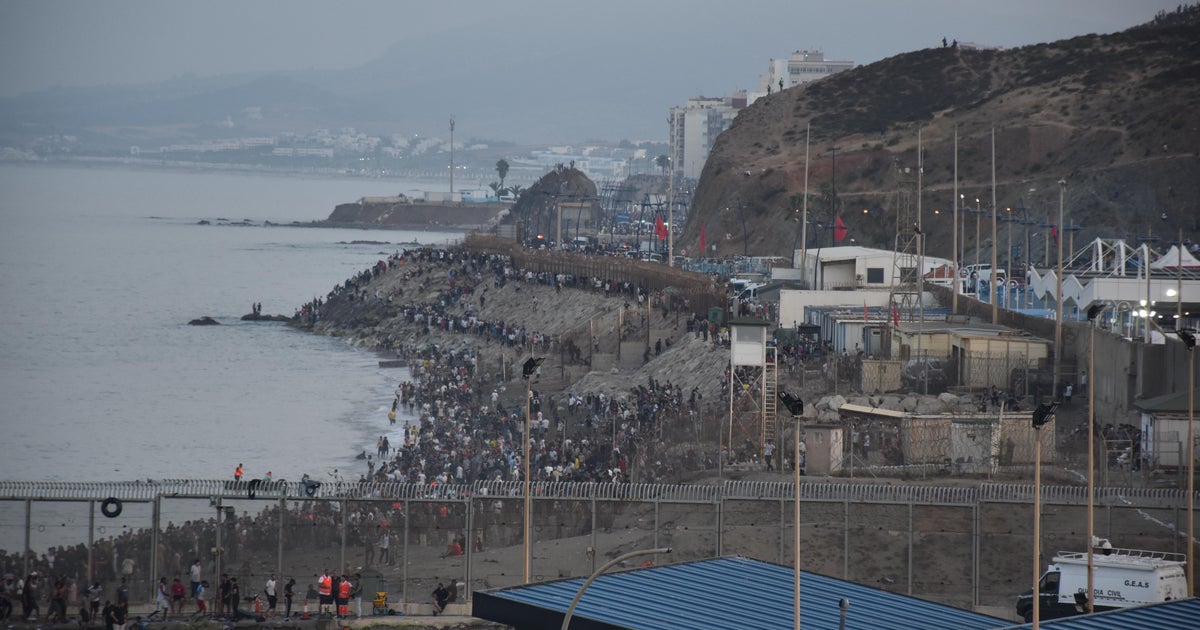
The scale of the arrivals overwhelmed the tiny North African territory, one of the European Union’s only land borders with Africa. Spain’s Interior Ministry said more than 25,000 migrants who had reached the border area had been sent back to Morocco, with more than 150 people being removed from Ceuta per minute. The ministry told NBC News that about 50,000 people entered Ceuta on Thursday and that around half had returned by Friday. Prime Minister Pedro Sánchez said about 60,000 people had entered over several days, more than half the enclave’s population.
Ceuta’s president, Juan Jesús Vivas, said at least 34 people died. Authorities and humanitarian activists said many drowned while trying to swim around barriers, while others died in a crush at the breakwater fence near Tarajal beach. Vivas called the situation “absolutely unsustainable” and said Madrid’s response had come “too late and insufficiently.”
Images and video from the border showed large groups, mostly young Moroccan men but also families with women and children, moving around breakwaters and onto roads inside Ceuta. Some people swam or floated on tubes from the Moroccan side, while others broke through a land gate. Reuters footage cited by Al Jazeera showed the remains of a burned bus and seven cars near the border after clashes between security forces and crowds.
Spain deployed the army, extra police, diver teams and Maritime Service vessels. Sánchez said he had ordered buoys to create a “physical barrier” and increased troop numbers. Morocco also deployed security forces and water cannon to push back crowds approaching the border, Al Jazeera reported.
“Ceuta is a Spanish city, and what happened yesterday deserves our full reproach, our condemnation at the strongest possible level,” Sánchez said. He called the surge “an attack” and “a violation of Spain’s territorial integrity,” adding that Spain would defend Ceuta “as if it were Madrid.”
Authorities in Ceuta and Madrid linked the crossings to a Spanish Supreme Court ruling this month that makes it harder to immediately return migrants intercepted after arriving by sea without due process. The ruling does not apply to people entering by land. Sánchez accused “human trafficking mafias” of exploiting the decision and said legal changes may be needed “to guarantee these repatriations at the border in the most efficient way possible.” Some migrant rights activists in Morocco questioned that explanation, saying many migrants would not have known about the ruling.
Sánchez said Morocco was cooperating with Spain. “We have spoken with Moroccan authorities. They are willing to cooperate to facilitate these repatriations of citizens to their country of origin,” he said.
Ceuta and Melilla, another Spanish enclave on Morocco’s northern coast, are the EU’s only land borders with Africa. Morocco does not officially recognize them as Spanish territory and often refers to them as occupied lands.
The surge quickly reverberated across Europe. French Interior Minister Laurent Nuñez said he had ordered officials “to immediately step up checks at the Spanish border.” Italian Prime Minister Giorgia Meloni said Italy was prepared to take “extraordinary measures” to defend borders and public safety, including suspending the Schengen Area with Spain. Italian Foreign Minister Antonio Tajani called for “closing the Schengen Area to Spain,” while former EU foreign policy chief Josep Borrell said no EU member state can unilaterally suspend another from Schengen.
European Commission President Ursula von der Leyen said, “The images coming from Ceuta are unacceptable,” adding that dangerous crossings must stop, smuggling networks must be dismantled and returns must be swift under EU rules.









Be First to Comment