Key takeaways:
- The MV June Aster left Manila with 117 passengers and 17 crew members before catching fire near Coron on Wednesday evening.
- Authorities reported at least five deaths, with rescue totals varying between 42 and 43 people and more than 80 still unaccounted for.
- The Philippine Coast Guard said the cause remains under investigation, while preliminary survivor interviews suggested the fire began in the cargo hold.
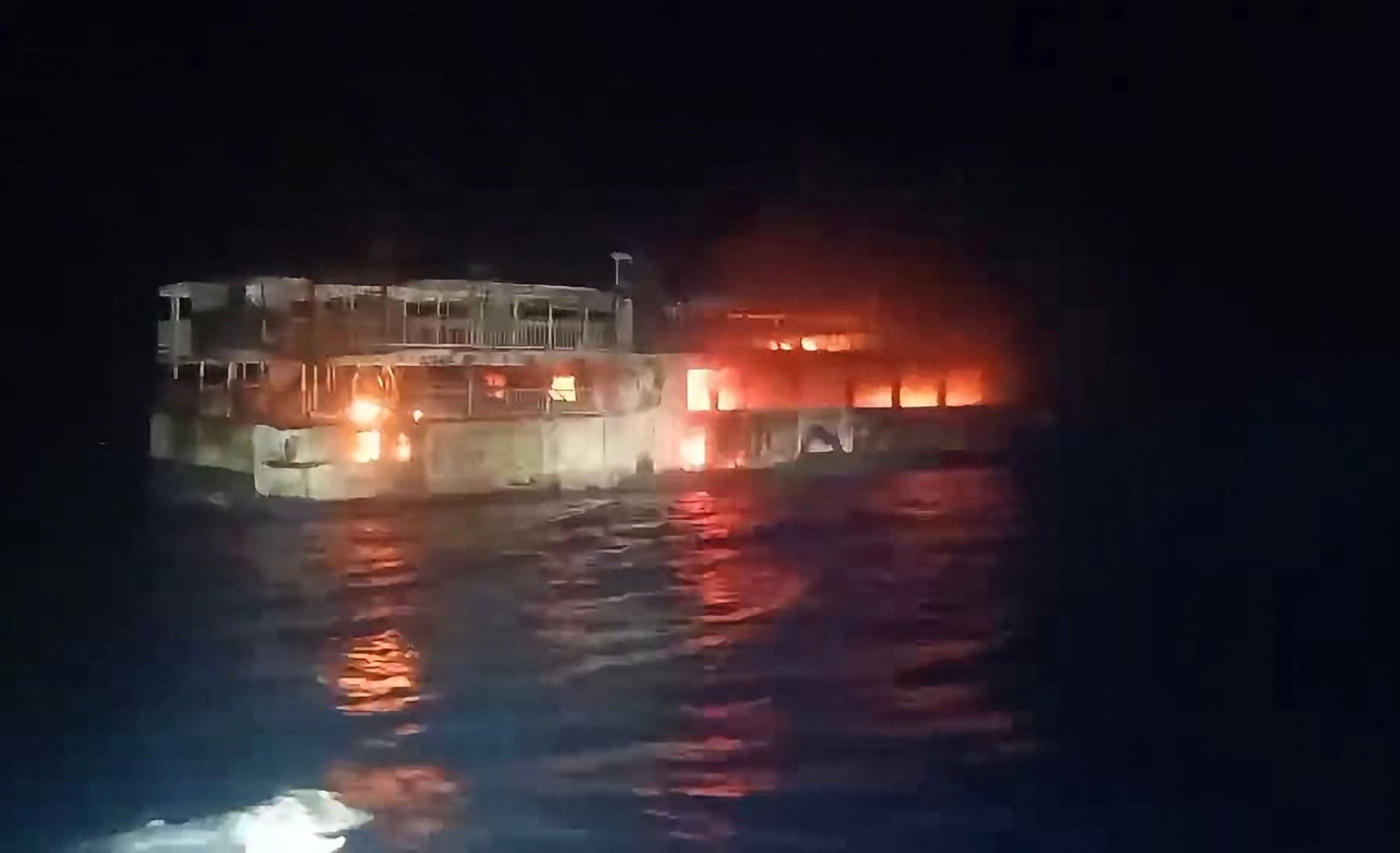
At least five people died and dozens remained missing Thursday after a ferry caught fire near the Philippine tourist destination of Coron, forcing passengers into the sea as rescuers battled thick smoke, strong currents and flames that continued to burn for hours.
The MV June Aster had sailed from Manila with 117 passengers and 17 crew members and was nearing Coron, in Palawan province, when the fire broke out at 6:45 p.m. local time Wednesday, the Philippine Coast Guard said. The vessel was about 2.2 kilometers, or 1.3 miles, offshore, Al Jazeera reported, citing the coastguard.
Authorities gave slightly different figures as rescue work continued. The BBC reported that five people were dead, 43 had been rescued and 86 were missing. Al Jazeera, citing Coast Guard Captain Noemi Cayabyab and the AFP news agency, reported that 42 people had been rescued and 87 were unaccounted for, while noting that Reuters had reported 43 rescues as of Wednesday night.
“Just to make it clear, this is live data and may change, as our search and rescue operations are ongoing,” Cayabyab told a local radio station, according to AFP. She said those rescued included 38 passengers and four crew members, but added: “However, we have not yet been able to obtain information from the rescued individuals because we have not been able to speak with them.”
The coastguard said the blaze was still burning as of 11 a.m. Thursday. Video clips shared by the agency showed the ferry engulfed in flames and people being pulled from the water into rescue boats.
One survivor, Roland Lerma, told the BBC he spent two hours in the sea before being rescued. “It was cold. If the rescue was delayed, I would definitely have died,” he said.
The cause of the fire remains under investigation. The coastguard said preliminary interviews with survivors suggested the blaze started in the cargo hold, where containers and goods are stored. It also said some passengers were not wearing life vests.
Seven survivors were taken to a hospital in Culion, a larger neighboring island with more hospital beds and more comprehensive medical services, according to the BBC. Other survivors were brought to an evacuation center in Barangay Turda, north of Marcilla. The number and severity of injuries remained unclear.
A first responder told the BBC they had never seen such a disaster in Coron and called it “really heartbreaking.” The responder said the ferry was about an hour from its destination and that they helped carry casualties to the hospital Wednesday night.
Families waited for word of the missing. Anelyn Magbanua told the BBC her husband, Marlon, had been returning from Manila after visiting their two children, who attend school in the capital. She said she last heard from him when the ferry was passing a village about two hours from Coron’s port.
“I couldn’t describe what I am feeling right now. I have been crying and praying since last night,” she said from outside a hospital in Coron, where she had hoped to find him among survivors. “My two-year-old son and I are outside the hospital as we speak. We have nothing but ourselves.”
Another resident, Rai Garcia, said three family friends were missing: Mae Lorraine Galera-Navoa, her husband Elyzer Navoa and their three-year-old daughter Hiraya Joy. The family had traveled to Luzon for Mae’s father’s funeral and were heading home to El Nido in Palawan, Garcia told the BBC. “We still hope and pray for their safety,” Garcia said.
Sea accidents are common in the Philippines, an archipelago of more than 7,000 islands where ferries are a cheap way to move people and cargo between islands, including places not easily reached by air. Past accidents have been linked to severe weather, poor maintenance, overcrowding and uneven enforcement of safety rules. In 2023, 31 people died after a ferry fire in the country’s southwest, and Al Jazeera reported that a ferry carrying more than 350 people sank off Baluk-baluk island in January, killing at least 18.




Be First to Comment