Key takeaways:
- Warsh said recent inflation readings were better than expected but did not show that underlying trends had meaningfully improved.
- CBS News reported CME Group’s FedWatch tool showed a 55% likelihood of a rate increase at the Fed’s Sept. 15-16 meeting after the speech.
- Warsh defended reducing the Fed’s use of forward guidance, saying the practice had “overstayed its welcome.”
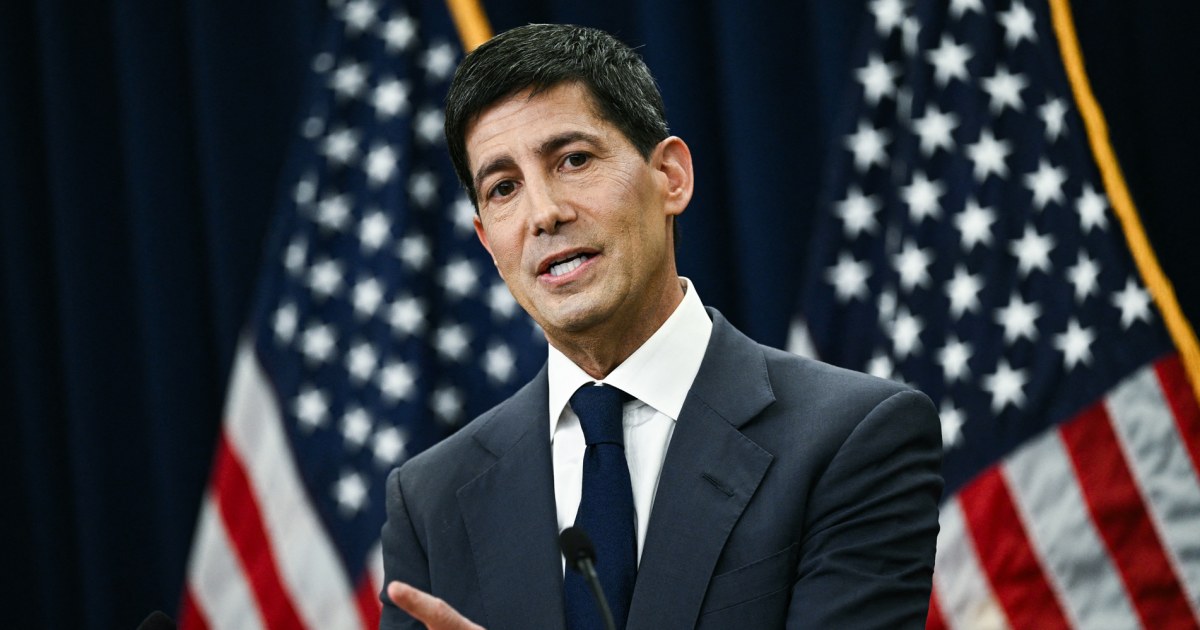
Federal Reserve Chair Kevin Warsh warned Friday that inflation remains too high and said the central bank will have “work to do” if price pressures do not keep moving toward the Fed’s target, stopping short of committing to an interest rate increase at the Fed’s annual retreat in Jackson Hole, Wyoming.
The closely watched speech came after a rocky start to Warsh’s tenure and amid questions from economists, investors and Wall Street analysts about how he would respond to stubborn inflation. Warsh, who succeeded Jerome Powell, has been more tight-lipped than his predecessors and used the address to defend a less communicative approach to future policy decisions.
Recent government data has shown inflation cooling, Warsh said, but not enough to convince him that the problem is resolved. “They do not tell me that underlying trends have meaningfully improved,” he said of this summer’s inflation readings, which he described as better than expected.
Inflation has eased in recent months after reaching a three-year high in April, CBS News reported, but prices remain above the Fed’s 2% annual target. Warsh did not say how the central bank would respond if inflation continues running above that level, but he underscored that rate hikes are the Fed’s main tool for cooling prices.
“We must be confident that underlying inflation is moving to our objective, clearly and at sufficient speed,” Warsh said. “Otherwise, we have work to do.”
Warsh also pointed to strength in the broader economy. He said the labor market looks “stable,” a condition he described as one reason price pressures are “more concerning.” He also said he was “impressed by the overall performance of the economy,” citing measures including the unemployment rate, which stood at 4.1% in July.
The remarks came as President Donald Trump has repeatedly called for lower interest rates, a step that could stimulate the economy but also risk fueling further inflation. Some economists, including officials within the Fed, have called for a rate hike. After Warsh’s speech, expectations rose that the Fed could lift its benchmark rate next month. CBS News reported that CME Group’s FedWatch tool showed a 55% likelihood of a rate increase at the Fed’s Sept. 15-16 meeting.
Warsh also reiterated his preference for what NBC News described as a “quieter Fed,” moving away from the regular use of “forward guidance,” the practice of signaling the likely path of monetary policy to markets and the public.
“Forward guidance as a regular practice was adopted by my colleagues and me during the Global Financial Crisis,” Warsh said. “It was essential at the time, and we introduced it with much fanfare. But, as with other legacies of crises past, I believe that the practice has overstayed its welcome.”
He argued that relying too heavily on advance signals can make both policymakers and investors less responsive to changing conditions.
“If markets rely materially on the Fed’s guidance and the Fed relies on market prices, we are all more likely to be blinded to new developments, more likely to be caught unprepared for a turn of events, and more likely to commit errors in policymaking,” Warsh said.
Jasmine Yu, chief investment officer at Bryn Mawr Trust, told CBS News that Warsh has been less interested in telling markets what the Fed will do and more focused on explaining how the central bank reacts to changing conditions.



Be First to Comment