Key takeaways:
- Nepal police said the country’s death toll rose to 469 on Friday, while China reported five deaths in Tibet, according to CBS News.
- Authorities warned that an upstream lake formed behind debris from the disaster was overflowing and could send more floodwater into affected areas.
- Nepal’s Department of Tourism said 668 tourists from 34 countries had been out of contact since Wednesday morning, Al Jazeera reported.
Nepalese authorities temporarily halted rescue operations Friday in the Himalayan border region with China, warning that an overflowing lake formed by debris from this week’s catastrophic flood could unleash another surge through already devastated valleys.
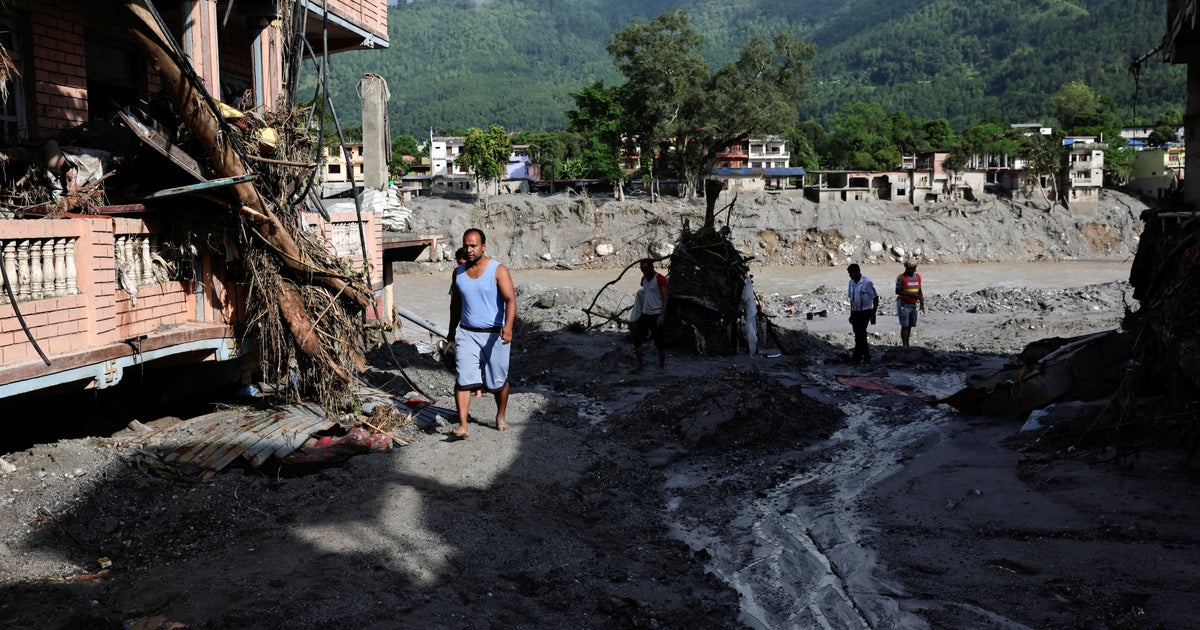
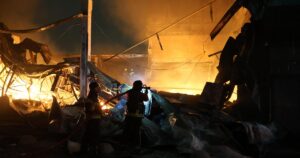
The death toll in Nepal rose to 469, police said Friday, up from 390 a day earlier as rescue teams recovered more bodies from mud and wreckage. China raised its reported death toll in Tibet to five, CBS News reported, while Al Jazeera reported at least three deaths there. Together, Nepal and China have said more than 1,500 people remain missing.
The flood struck Wednesday morning along the Nepal-Tibet border after what experts and the United States Geological Survey described as a glacial collapse and debris flow, not an earthquake-triggered flood as officials initially suspected. Nepal’s National Disaster Risk Reduction and Management Authority said the “glacier-inclusive flood” began in the Lhende Khola after “an ice-rock avalanche on the Nepali side,” according to geologist Prakash Pokhrel. The surge fed into the Bhotekoshi and Trishuli rivers, carrying mud, rock and water through towns and valleys. Al Jazeera reported that water levels in the Trishuli rose by as much as 9 meters, or 27 feet, in 30 minutes.
Nepali and Chinese officials warned Friday that a newly formed upstream lake behind a natural dam of debris was overflowing. China’s Ministry of Water Resources said Thursday the lake held about 70 million cubic feet of water and was expected to receive another 106 million cubic feet over three days. Chinese state broadcaster CCTV said the barrier was more than six miles from Gyirong Port, the border crossing engulfed by mud and floodwater, and that the lake sat at an elevation of 9,680 feet, about 3,280 feet above the port.
Authorities urged people in potentially affected areas to move to safer ground. Nepal’s army sent a team to inspect the Bhotekoshi River, while rescuers faced damaged roads, destroyed bridges, poor weather and high river flows.
Nepal’s disaster authority said 3,253 people had been airlifted by helicopter from the disaster area by Friday. Al Jazeera reported that more than 5,000 army and police personnel had joined rescue operations, with helicopters dropping tents, food and medicine, including supplies provided by India. Nepal News reported, according to Al Jazeera, that the army rescued 350 workers and residents trapped in a tunnel at the Upper Trishuli hydropower project. CBS News reported that an army team had been deployed there after reports people were trapped, with army spokesperson Brig. Gen. Raja Ram Basnet saying, “It is complicated to find the entry and exit points of the tunnel because everything has been covered by mud. Our first priority is rescuing the stranded people.”
Foreign trekkers and pilgrims are among the missing. Nepal’s Department of Tourism said Thursday night that 668 tourists from 34 countries had been out of contact, Al Jazeera reported, including 177 from India, 90 from the United States, 34 from Australia, 33 from the United Kingdom and 25 from Canada. CBS News reported that Nepal’s Tourism Board said at least 65 Americans were missing, while the U.S. State Department said it was aware of about 90 Americans who may be affected and was not aware of any U.S. deaths. The department said three U.S. citizens had been safely rescued.
Survivor Karbir Gaire, a customs officer in Timure, told CBS News he felt the ground shake before seeing “a black storm” coming. “I think those 10 or so seconds saved some of us,” he said. Fifteen of his colleagues are missing. “It was like a Hollywood movie scene. I don’t call it a flood, it was a tsunami.”
U.S. President Donald Trump said Washington had offered Nepal support. “Nobody’s ever seen anything quite like that, where very powerful, strong, well-built buildings were wiped out like they were toothpicks,” he said. “It’s a terrible thing.”





Be First to Comment