Key takeaways:
- Nepali police say at least 162 people have died, while Chinese state broadcaster CCTV reported 558 people missing in Tibet’s Gyirong County, including 260 foreign nationals.
- The United States Geological Survey said the seismic signal first described as an earthquake was generated by the landslide itself, while investigators examine whether a glacier collapse and river blockage triggered the floods.
- More than 5,000 Nepalese army and police personnel have been mobilised, and international assistance has been pledged by India, the United Nations, the United States, the European Union and the Red Cross network.
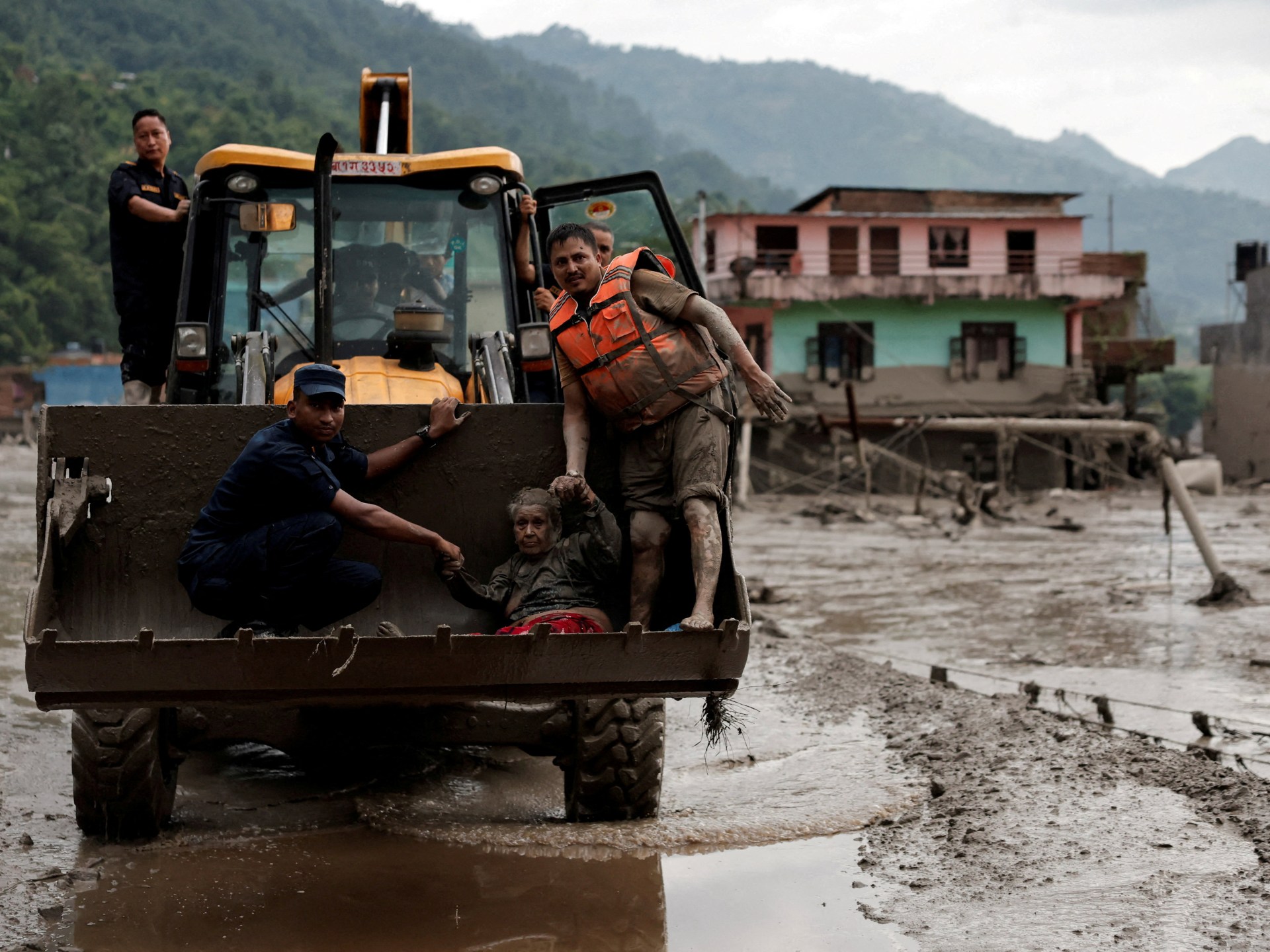
Rescuers are searching by helicopter, drone and dog teams after catastrophic floods and landslides tore through the Nepal-Tibet border region, killing at least 160 people and leaving hundreds more missing, including large numbers of foreign tourists and pilgrims.
The disaster struck Wednesday morning in a mountainous area north of Kathmandu, sending a fast-moving surge of water, mud, rock and debris through river valleys, villages and border infrastructure. Footage showed buildings, roads and vehicles being swept away as people fled. One video showed a wall of water and mud rushing down a gorge along the Trishuli River and engulfing the Rasuvagadhi border checkpoint, a multistorey building.
Authorities are still working to confirm the scale of the losses. Nepali police say at least 162 people have died, the BBC reported, including 64 bodies found downstream in Chitwan district and 26 in Nawalparasi East. Al Jazeera reported at least 157 deaths in Nepal and three in Tibet. Chinese state broadcaster CCTV said 558 people were missing in Tibet’s Gyirong County, including 260 foreign nationals, while the death toll there remained at three.
Figures for the missing vary and may overlap. Nepal had earlier said about 579 tourists were missing, including 466 foreigners, the BBC reported, while Al Jazeera said 826 people were missing in Nepal, including almost 600 foreigners, according to police and tourism officials. Across Nepal and Tibet, Al Jazeera reported nearly 1,500 people missing, including at least 800 foreign nationals.
The missing include travelers from several countries. The BBC reported that official figures listed at least 291 foreigners among the missing, including 142 Indians, 53 Ukrainians, 33 Britons, 24 Canadians, 54 Americans and at least 34 Australians, with smaller numbers from South Korea, South Africa, Portugal and the Netherlands. Al Jazeera reported different figures for some nationalities, including 177 Indians, 63 Americans, 34 Australians, 33 Britons and 25 Canadians missing in Nepal. Many of those caught in the disaster were pilgrims traveling toward Kailash Mansarovar in Tibet, Al Jazeera reported.
The cause remains under investigation. Nepal’s foreign minister earlier said an earthquake had been reported near the Tibet-Nepal border shortly before the landslide, suggesting it may have triggered the disaster. But the United States Geological Survey later said its analysis indicated there was no earthquake and that the seismic signal had been generated by the landslide itself. Al Jazeera reported that satellite imagery showed part of a glacier collapsed at about 5,200 metres, plunged onto the valley floor and sent rock and sediment into the Lhende River, temporarily blocking it before the natural dam burst.
Scientists are examining satellite images, rainfall data, possible glacial lake drainage and river blockages to reconstruct what happened. Climate change is known to be accelerating glacier melt in the Hindu Kush Himalaya region, but scientists say it is too soon to determine whether it played a role in this event.
The floodwaters hit Nepal’s Rasuwa district and moved through the Lhende Khola, Bhote Koshi, Trishuli and Narayani river systems. Al Jazeera reported that at least 19 bridges and about 40km of roads were washed away, while water levels in the Trishuli rose by as much as 9 metres in 30 minutes. Severe flooding was also reported along the Bhote Koshi, Trishuli and Narayani rivers, with damage extending to Nuwakot and Dhading districts. In Tibet, mud and debris struck Gyirong Port in the Shigatse region.
More than 5,000 Nepalese army and police personnel have been mobilised, Al Jazeera reported. At least 65 injured people were being treated in local hospitals and in Kathmandu, and helicopters have evacuated survivors and delivered supplies to cut-off communities.
Nepal’s prime minister said “the entire nation has been left shocked and deeply distressed” and that officials would coordinate with China. Chinese President Xi Jinping urged an “all-out” search effort and called for stronger monitoring and early warning systems. Indian Prime Minister Narendra Modi said India was prepared to provide Nepal “all possible types of humanitarian assistance,” and Al Jazeera reported India had sent about 10 tonnes of emergency supplies.
UN Secretary-General António Guterres said he was “saddened by the severe flooding,” and UN teams and partners are mobilising supplies and personnel in Nepal. The United States has pledged $500,000 for emergency shelter, water, sanitation and other relief items. The European Union activated its Copernicus satellite mapping service, and the International Federation of Red Cross and Red Crescent Societies released 1 million Swiss francs in emergency funding, Al Jazeera reported.








Be First to Comment