Key takeaways:
- Authorities banned demonstrations planned for Thursday in parts of Paris, Lyon, Lille and Grenoble.
- The BBC estimated that about 550,000 people demonstrated across France on October 17; at least 2,500 people were arrested after disorder broke out, according to Al Jazeera and the BBC.
- Macron said “illegitimate” protests would be barred and approved union demonstrations could be offered alternative routes.
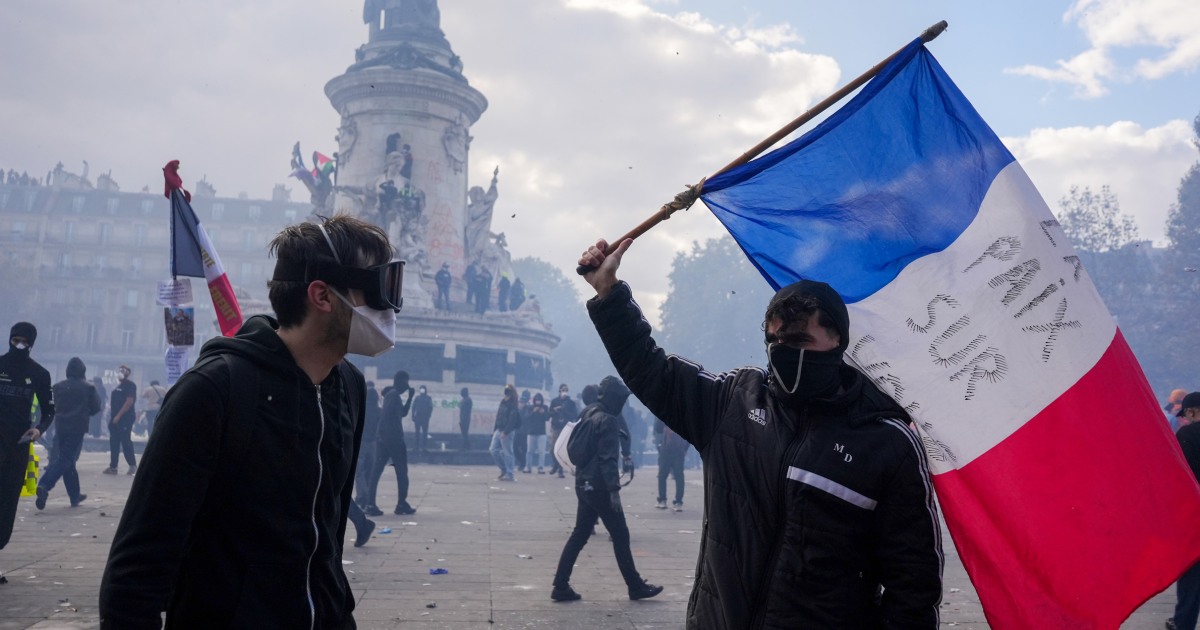
French authorities banned demonstrations in parts of several cities on Thursday after a weekend of riots and looting. President Emmanuel Macron blamed far-left groups for the violence and said “illegitimate” protests would not be allowed in the coming days.
“Last Saturday we had political and seditious acts by ultra-left groups whose aim is to bring down the Republic,” Macron said after meeting intelligence chiefs and ministers, according to NBC News. He said approved demonstrations organised by groups such as trade unions could proceed on alternative routes to protect businesses.
“The general recommendation is that there should be no demonstrations,” Macron said, according to the BBC. “Those who want to continue to demonstrate, when they are trade union organisations, will have alternative routes proposed by the prefects.” Al Jazeera reported that he planned to convene the defence council on Friday to take further action.
The Thursday bans covered parts of Paris, Lyon, Lille and Grenoble. In Paris, restrictions were to remain in force until 8 p.m. local time around the Élysée Palace, both houses of parliament, major train stations and downtown areas hit by looting. A police source told AFP, according to Al Jazeera, that the ban was necessary because of organisers’ “inability to prevent violence and vandalism.”
The BBC estimated that about 550,000 people demonstrated across France on October 17 against rising fuel prices and the cost of living, after weeks of student protests. Al Jazeera reported that more than half a million people gathered on Saturday in protests involving students demanding better school conditions and groups opposing high living costs. Many marches were peaceful, but rioters looted shops and damaged buildings. At least 2,500 people were arrested after disorder broke out, according to Al Jazeera and the BBC.
The BBC reported that demonstrators set fire to Lyon’s tourism office, housed in a 19th-century building. In Limoges, the clock tower and parts of the roof of city hall were engulfed in flames before collapsing. The BBC also reported vandalism at Paris’s Place de la République. NBC News reported that masked youths clashed with police and set cars alight.
Another large demonstration was planned for the following Saturday, with yellow-vest activists expected to join. The BBC reported that authorities in Lyon had imposed a blanket ban on demonstrations that day and that restrictions had also been announced in Toulon, Rouen and Grenoble. Prime Minister Sébastien Lecornu promised a “massive” police deployment. The BBC reported that law enforcement staffing would be 20% higher than during the previous weekend.
The education demonstrations began at a high school in Créteil, southeast of Paris, over staff shortages. Strikes and blockades spread nationwide as students raised concerns about underfunding and deteriorating facilities. The demonstrations then broadened to encompass the rising cost of living. NBC News reported that some students also sought changes to the university admissions system.
Union representatives said a meeting with Lecornu produced no concrete proposals. They called on public- and private-sector employees to join another day of action scheduled for November 5, according to Al Jazeera and NBC News.




Be First to Comment