Key takeaways:
- The French government estimated 550,000 people joined Saturday’s protests, and more than 1,200 were arrested.
- Prime Minister Sébastien Lecornu said 150 police officers were injured.
- A fire caused part of Limoges town hall to collapse, while Lyon’s tourist office also burned.
More than 1,200 people were arrested across France on Saturday after demonstrations over school conditions and the cost of living gave way to fires, looting and clashes with police. The government estimated that 550,000 people took to the streets, while Prime Minister Sébastien Lecornu said 150 police officers were injured.
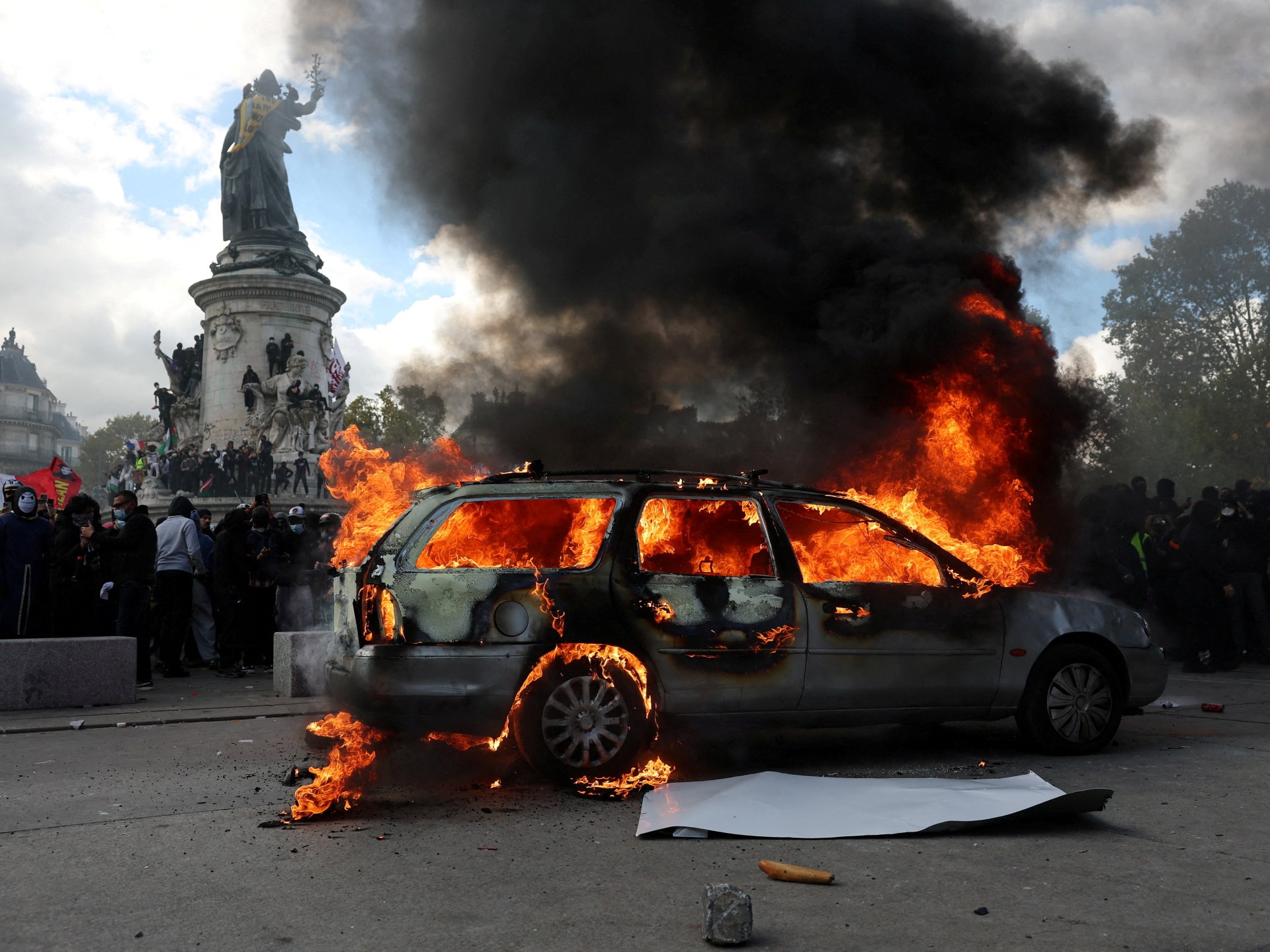
The main march in Paris appeared largely peaceful during the afternoon, but violence spread as the day wore on. Groups set fires in streets and torched vehicles, including near the Place de la République. Shops were ransacked and at least one restaurant was gutted by fire. Riot police used tear gas and water cannon; the BBC also saw officers charge a crowd and strike several people with batons.
A group of young demonstrators told the BBC they were “pacifists” who were “just trying to make things change, but nothing is moving”. Paris Deputy Mayor Emmanuel Gregoire said “whole streets have been devastated,” according to Al Jazeera, which reported that protesters hurled projectiles and set off fireworks.
The damage extended well beyond the capital. A fire at the town hall in Limoges caused part of the building to collapse. In Lyon, the tourist office burned; Mayor Grégory Doucet called it “a tragedy”, saying the historic building was well known and “it breaks our hearts”. Local police said “hostile individuals” had prevented firefighters from safely tackling the blaze.
Town halls, businesses and other buildings were targeted in several cities. The BBC reported that an Apple store in Lille was broken into and emptied, while Al Jazeera reported damage to a police compound in Bordeaux. In Saint-Étienne, Mayor Régis Juanico said a young man had lost a hand to a small explosive. Al Jazeera described him as 17 and said a crowd-control grenade had struck him.
The interior ministry described “targeted acts of violence” by “hooded individuals” in several places, including Paris, Marseille, Rennes, Toulouse and Angers. Lecornu said police had faced “violence of extreme intensity” and accused some groups of using the protests as a “warm-up” for the presidential election. “No-one will impose their political agenda through violence,” he said.
Hundreds of thousands of students have protested in recent weeks over staff shortages and deteriorating facilities in secondary schools. Trade union members and other groups, including yellow vest protesters, have joined them. Education Minister Édouard Geffray promised 3,000 extra supply teachers in an October 8 television interview, but the demonstrations continued.
With President Emmanuel Macron due to leave office next year, the violence also drew sharp exchanges among political leaders. Jean-Luc Mélenchon accused police of “unleashing” on protesters while condemning looting and arson. Lecornu called his remarks “dangerous and cynical”. Marine Le Pen said protesters’ “legitimate demands” had been “held hostage by the far left” and accused Mélenchon of fuelling the violence. Macron said those who attacked public buildings and businesses or looted town halls “will be prosecuted and punished”.





Be First to Comment