Key takeaways:
- Police chief Skender Hita said rubber bullets were used “in a limited manner” during Saturday’s protests.
- Authorities said 167 people had been arrested over five days and 132 police officers injured.
- Rama has refused to resign; his Socialist Party holds 83 of Albania’s 140 parliamentary seats.
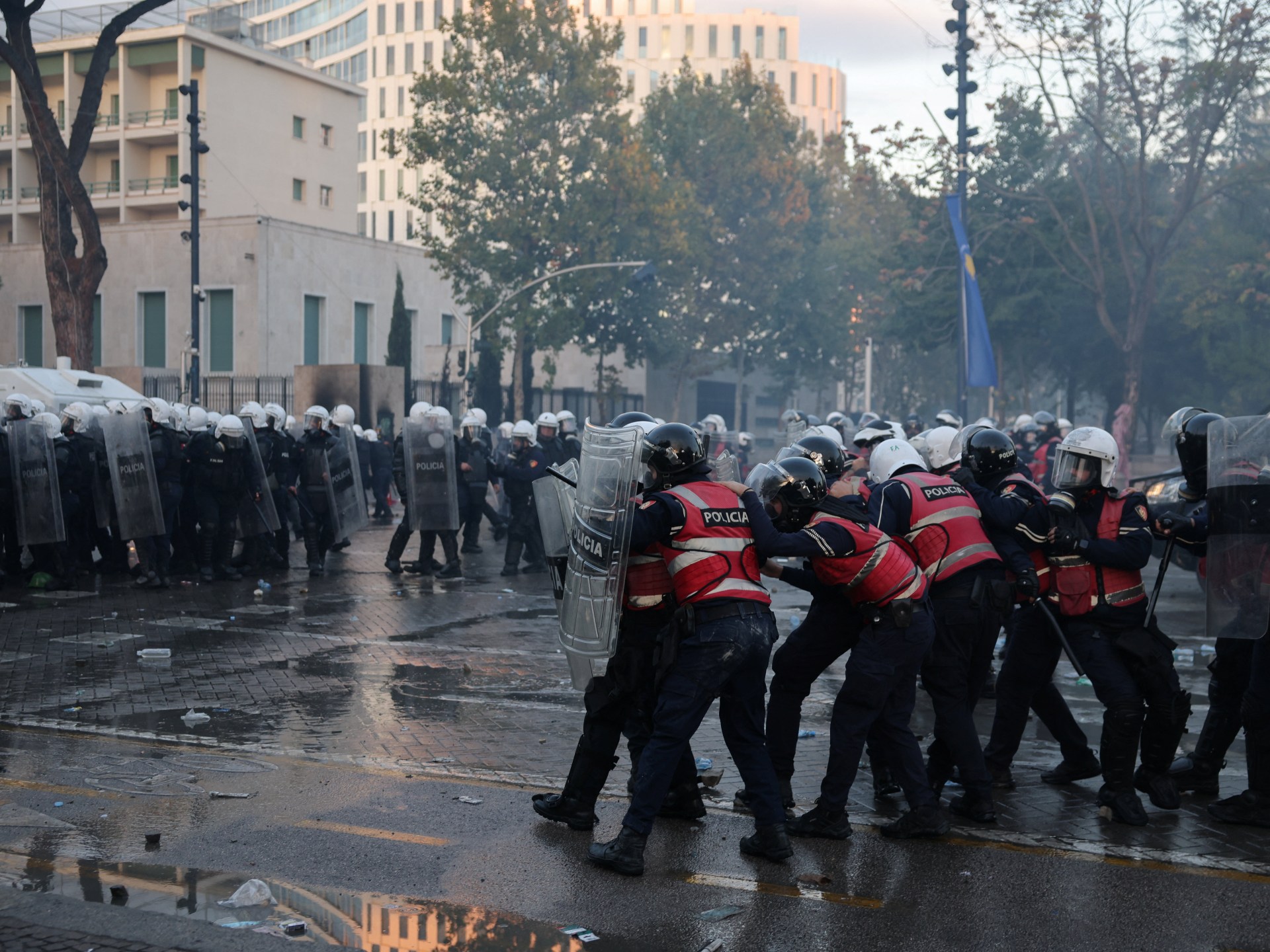
Albanian police fired rubber bullets at anti-government protesters in Tirana as five consecutive days of clashes intensified on Saturday, with students joining a broader movement demanding Prime Minister Edi Rama’s resignation.
Masked demonstrators threw rocks, petrol bombs and fireworks at police near the Education Ministry and Rama’s office. Officers responded with tear gas and water cannon, while Al Jazeera reported that police also used baton charges. Cars and rubbish bins burned in the streets. The BBC reported that crowds near the prime minister’s office grew far larger than on previous days, and that police special forces arrived as dusk fell.
National police chief Skender Hita confirmed that rubber bullets had been used “in a limited manner,” according to Al Jazeera. The Health and Social Welfare Ministry said nine protesters and four police officers received medical treatment on Saturday. Hita said 167 people had been arrested over five days and 132 officers injured. Seven officers were suspended pending investigations into allegations that they had exceeded their authority.
High school and university students have joined months of protests over education, employment prospects and alleged government corruption. Students have complained about high university fees and poor facilities. Al Jazeera reported that the demonstrations grew out of rallies by the Flamingo movement, which initially opposed a luxury tourism project on Albania’s southern coast linked to an investment company founded by Jared Kushner, the son-in-law of U.S. President Donald Trump.
“We are demanding our rights, our future and a better country,” journalism student Sinan Billa told AFP, according to Al Jazeera. The BBC quoted Klea, a 17-year-old university student, as saying: “All the students are boycotting their university classes and left school to fight for our rights.” She alleged that people smashing shops and banks were trying to discredit the demonstrations.
Another student, 19-year-old George, told the BBC he had joined the violence after months of peaceful protest. “Our government doesn’t want peace, so we are using violence,” he said.
Rama, whose Socialist Party has governed since 2013, has refused to resign. Al Jazeera reported that he visited damaged businesses on Saturday, promised to listen to students and defend their right to demonstrate, and warned against further destruction. He accused political opponents of encouraging the violence. In a social media post cited by the BBC, Rama also blamed what he called “the sinister agenda of foreign actors, intent on halting our progress” toward European Union membership. He did not identify them.
The BBC reported that separate investigations by Albania’s special prosecution service have added to pressure on Rama. Authorities recently arrested intelligence chief Vlora Hyseni, accusing her of helping businessman and former government official Ergys Agasi evade justice. Agasi, a friend of Rama, denied wrongdoing through his lawyer. Hyseni told prosecutors she contacted him to try to recruit him to the intelligence services. Rama has acknowledged knowing Agasi but denied knowledge of illegal transactions.
Rama’s party holds 83 of parliament’s 140 seats, and the next parliamentary election is not due until 2029. Journalist Osman Stafa told the BBC he wanted a neutral caretaker government to organise new elections.



Be First to Comment