Key takeaways:
- At least 270 people have died in Nepal, while China reported three deaths and two rescues on the Tibet side of the border.
- More than 1,500 people are missing across Nepal and Tibet, including hundreds of foreign nationals and pilgrims traveling to Kailash Mansarovar.
- Destroyed bridges and nearly 40 kilometres of damaged roads have hampered rescue work, prompting helicopter evacuations and international aid pledges.
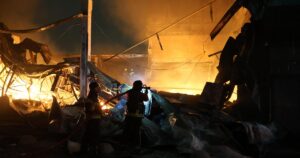
Rescue teams are searching mud-choked valleys along the Nepal-China border after a glacier collapse unleashed flash floods that killed at least 270 people in Nepal and left more than 1,500 people missing across Nepal and Tibet.
The floods struck early Wednesday, sweeping away roads, bridges and entire villages in the Himalayan region. The U.S. Geological Survey said a glacial collapse triggered the disaster, after initially reporting the event as a 4.4 magnitude earthquake. In China, authorities said three people have died and two people have been rescued.
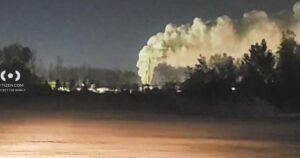
Chinese surveillance footage from the Tibetan side of the border showed a wall of mud and debris crashing over buildings and engulfing roads as people fled. CCTV, China’s state broadcaster, reported that a mudslide near the Gyirong land border crossing left surrounding areas covered in mud more than 1.5 metres, or 5 feet, deep on average, with some road sections buried under more than 2 metres, or 6 feet.
In Nepal, officials said rescue work has been slowed by the destruction of dozens of bridges and damage to nearly 40 kilometres, or 25 miles, of roads. Nepali army helicopters rescued more than 100 people from flood-affected areas on Thursday, army spokesman Brigadier General Raja Ram Basnet said. At least eight foreign nationals were airlifted to Kathmandu, and army teams evacuated people trapped in facilities linked to the Trishuli hydropower project, he said.
Bodies have been found about 100 kilometres, or 60 miles, downstream from the disaster zone in Chitwan district. Dozens of injured people have been taken to Kathmandu for advanced medical care.
“The focus has shifted from rescue to large-scale relief operations” in flood-hit districts, said Bishal Kumar Bhandari, chairperson of the Nepal Red Cross Society. He said about 1,200 people had been displaced from at least three villages.
Many of the missing are foreign nationals and pilgrims. According to figures from the Nepal Tourism Board cited by NPR, 644 overseas nationals have not yet been located in Nepal, including 65 U.S. citizens, 178 people from India, 33 from the United Kingdom, 35 from Australia and 25 from Canada. Chinese officials said 558 people are missing on the Tibet side of the border, including 260 foreign nationals. Many were Hindu pilgrims traveling to Kailash Mansarovar, a high-altitude site in Tibet revered by Hindus and Buddhists.
Santa Tamang, a 25-year-old university student who lives in one river valley, told NPR her family escaped to higher ground while carrying her elderly grandmother, but their home was washed away. “Everything is gone. My childhood, my family, my community,” she said.
Aid officials said access remains a major obstacle. Riaz Lodhi, the World Food Program’s country director in Nepal, said rescue workers were trying to dig people out of the mud while the Nepalese government deployed helicopters. “It’s all happening in the mountainous region where road access is always challenging, but under these circumstances, as far as we know at the moment, it is impossible,” Lodhi told NPR.
Dhruba Gurmachhan of World Vision said the group expects more than 30,000 households to be affected. “We are very much worried about children, women and people with a disability. They are in the open sky. They don’t have anything to eat, they don’t have sanitation,” he told NPR.
International aid has begun to move. The U.S. State Department said it would provide $500,000 in assistance and deploy a disaster response adviser. India said it had sent helicopters to Nepal with tents, food and emergency supplies. U.N. Secretary General António Guterres said U.N. teams and partners were mobilizing supplies and personnel, while Britain, Canada and Australia said they were monitoring the situation or offering support.
Experts cited by NPR pointed to warming temperatures and unstable ice systems in the Himalayas. Mohammad Farooq Azam of the International Center for Integrated Mountain Development said the region is warming faster than the global average, destabilizing many of its 60,000 glaciers. Arun Bhakta Shrestha, a hydrologist who studies Himalayan glaciers, said the frequency of deadly events has been increasing. “Everything probably, directly or indirectly, is pointing the finger towards global warming,” he said.









Be First to Comment