Key takeaways:
- The US Geological Survey said the seismic signal was caused by a glacial collapse and debris flow, not an earthquake triggering the flood.
- The International Centre for Integrated Mountain Development said downstream river levels rose by seven to nine metres within 30 minutes.
- Reported death tolls differ: the BBC reported at least 177 deaths, while Al Jazeera reported more than 270 deaths and more than 1,500 people missing.
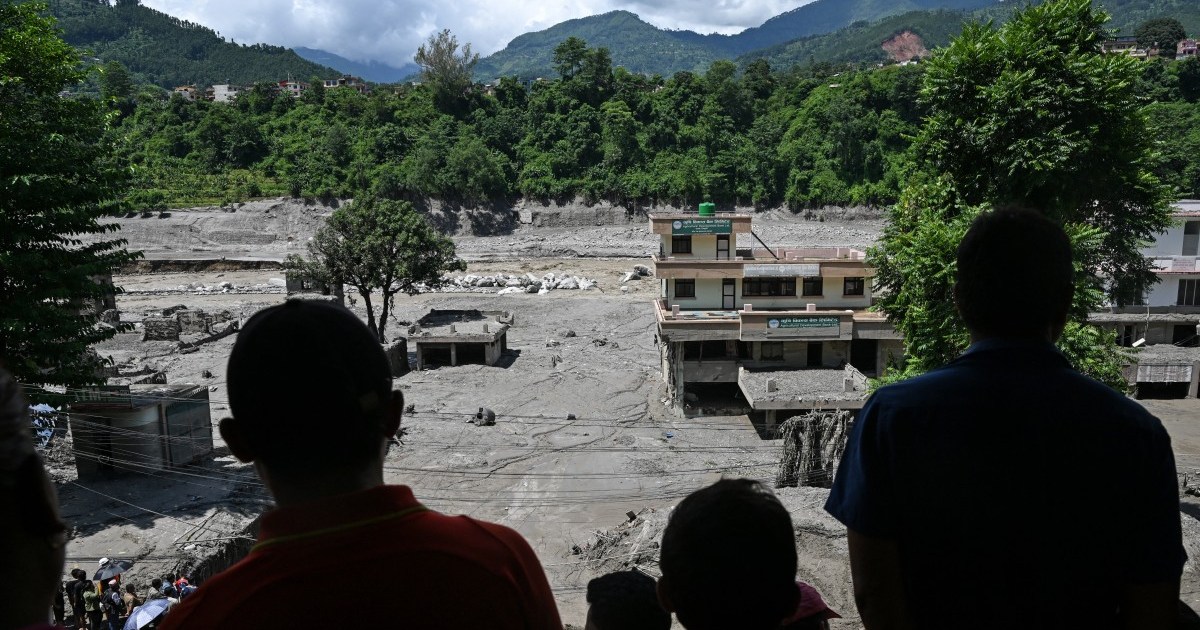
A collapsed glacier likely triggered the catastrophic floods that tore through the Nepal-Tibet border region, scientists say, shifting attention from early reports of an earthquake to the growing dangers posed by unstable Himalayan ice.
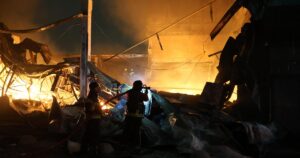
The floods have killed at least 177 people, the BBC reported, while Al Jazeera reported that more than 270 people had died and more than 1,500 people were missing across Nepal and China’s Tibet, including more than 800 foreign tourists. Officials said the toll was expected to rise as rescuers tried to reach areas cut off by destroyed bridges and highways.
Initial reports suggested a magnitude 4.4 earthquake may have caused a landslide and flood. But the United States Geological Survey later said the seismic signal was not the cause of the disaster. Instead, experts said it was produced by “a glacial collapse and debris flow that caused subsequent catastrophic impacts downstream.” The force of the glacier striking the valley floor registered as a magnitude 5.2 event, according to USGS data and scientists who analyzed it.
Dr. Simon Cook, a glacier expert at the University of Dundee, told the BBC his team detected the collapse of the lower part of a glacier in Nepal near Langtang Lirung peak, about 15km west of the flood site. He estimated the glacier collapsed northwest and then moved westward downstream.
The International Centre for Integrated Mountain Development said its analysis found there may have been “an ice-rock avalanche originating from a high-altitude area,” sending a large volume of ice and rock debris into the Lende Khola, a tributary of the Bhote Koshi river. That surge carried water, sediment and boulders downstream. The centre said water levels in downstream rivers rose by seven to nine metres in 30 minutes, damaging or washing away several monitoring stations.
Al Jazeera reported that Nepal’s National Disaster Risk Reduction and Management Authority described the event as a “glacier-inclusive flood” in the Lhende River caused by “an ice-rock avalanche on the Nepali side,” citing geologist Prakash Pokharel. Earth scientist Dan Shugar of the University of Calgary said imagery appeared to show that a large amount of snow had melted in the 24 hours before the disaster and that “the lower part of a glacier broke off at about 5,200 metres and crashed onto the valley floor about 1,200 metres below.”
Survivors described a fast-moving wall of mud. “It was a huge gush of mud coming straight towards us,” said Keshav Prasad Baral, 68, who was treated in a Nepali hospital. “As it got closer, it kept rising higher and higher. When I saw it enter our home, I tried to grab my wife’s hand and take her to the terrace. But she was swept away by the mud.” He was evacuated by helicopter four hours later. “My wife is still somewhere beneath the mud,” he said. “She’s gone.”
Scientists said the exact trigger remains unclear. Mike Searle, a professor of earth sciences at Oxford University, told the BBC the process may have unfolded over hours or days, with debris damming a river before it burst. “The sheer wave of debris suggests there could have been a landslide first; the water built up, dammed the river, and then it burst in one huge great flood,” he said.
Searle said steep valleys around Langtang Lirung may have accelerated the water. He also pointed to long-term tectonic uplift and rising temperatures as factors that can destabilize glaciers. “These floods happen all the time, but not at this scale,” he said.
Experts cautioned that it is too soon to say whether climate change caused this specific disaster. But they said warming is increasing risks in the Himalayas. ICIMOD has found that Hindu Kush Himalayan glaciers are losing ice at double the rate recorded since 2000, while Al Jazeera reported that the range lost ice 65 percent faster between 2011 and 2020 than in the previous decade. Cook said warming can drive “more landslides, debris flows, glacial meltwater, lake outbursts, glacier collapses,” because it destabilizes high mountain environments.







Be First to Comment