Key takeaways:
- The Federal Reserve is widely expected to keep interest rates unchanged at Kevin Warsh’s first meeting as chair.
- Consumer inflation rose above 4% in May, while wholesale business inflation surpassed 6%, according to NBC News.
- Warsh has criticized the Fed’s dot plot and forward guidance, and major bank economists expect he may decline to submit rate forecasts.
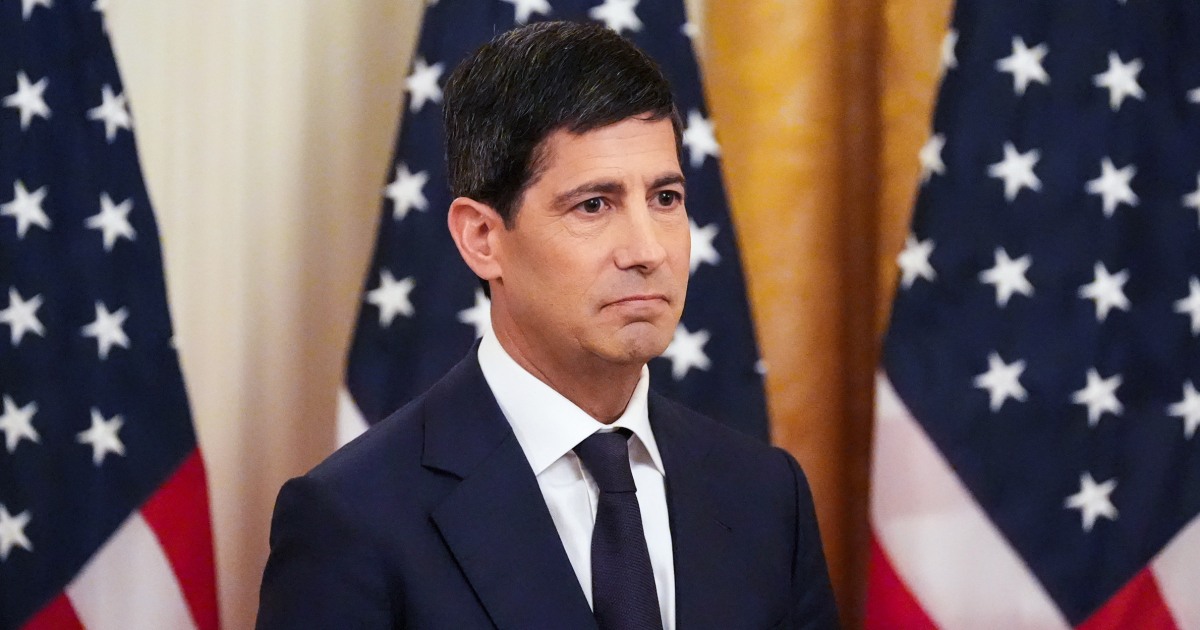
Kevin Warsh takes the helm of the Federal Reserve’s rate-setting committee Wednesday with inflation climbing, oil prices still elevated and investors looking for signs of how the new chairman will steer the central bank.
The Federal Open Market Committee is widely expected to leave interest rates unchanged at Warsh’s first meeting as chair. But the decision comes at a sensitive moment: The U.S. and Iran said days ago they had reached a peace deal that has not yet been signed, and NPR reported the two countries agreed to extend a ceasefire after a conflict that disrupted tanker traffic in the Strait of Hormuz, a key energy shipping corridor.
Oil prices have fallen in recent days, easing some pressure on the Fed. Even so, NBC News reported that oil remains 30% higher since the start of the year, while gasoline prices are still more than a dollar a gallon above where they were before the war began, according to NPR.
Those energy costs have pushed inflation higher. Wholesale business inflation surpassed 6% in May, and consumer inflation rose above 4%, according to NBC News. NPR reported the cost of living was up 4.2% from a year earlier in May, the biggest annual increase since 2023.
That complicates the lower-rate hopes that accompanied Warsh’s nomination. President Donald Trump told NBC News in February that he would not have nominated Warsh unless he believed Warsh would lower rates quickly. More recently, Trump said he told Warsh he was free to “do your own thing” on interest rates.
For now, lower rates appear unlikely. The Fed typically avoids changing policy in response to volatile energy prices, and its main inflation tool — raising interest rates — does not create more oil or gasoline. But until inflation cools, the central bank is not expected to cut rates. Some Fed officials have signaled their next move could be a rate increase, NPR reported, and markets increasingly expect higher rates by year’s end.
The meeting’s 2 p.m. statement and Warsh’s first news conference as chair will be watched closely for clues about his approach to inflation, interest rates and Fed communications.
“We expect the press conference to be pivotal,” UBS economists wrote in a Monday note. “This will be Kevin Warsh’s first public appearance as Chair of the Federal Open Market Committee. That creates considerable uncertainty.”
UBS said the statement could offer an early sign of Warsh’s appetite for changes at the Fed, adding, “We expect statement changes [to] reflect the heightened inflation risks.”
Another focus will be the Fed’s “dot plot,” the quarterly chart showing where individual policymakers expect rates to go in coming years. The chart is part of the Summary of Economic Projections, which also includes forecasts for inflation, unemployment and economic growth.
Warsh has criticized the Fed’s use of forward guidance and has argued that the central bank gives too much guidance to markets and the public. NPR reported that he believes the dot plot limits the Fed’s maneuvering room, even though policymakers have said the projections are estimates, not a roadmap.
“I was never the world’s biggest fan of the dot plot,” former Fed Chair Jerome Powell said in April. “But you can’t beat something with nothing.” Powell remains on the Fed’s rate-setting committee as a governor after his term as chair ended last month, a move NPR described as highly unusual.
Bank of America economists said they expect the dot plot to be released Wednesday but said “it is likely that Warsh declines to submit forecasts.” Goldman Sachs economist David Mericle wrote, “We assume that Chairman Warsh will not submit dots in light of his past criticism of forward guidance.”
The last dot plot, released in March, showed officials still expected one rate cut in 2026, unchanged from December. But policymakers were divided: seven projected one cut, seven saw no cuts, two expected two cuts, two expected three cuts and one projected four cuts.
This time, the projections could move higher because of persistent inflation and a labor market that has remained more resilient than many expected, NBC News reported. That would suggest officials see a need to keep rates higher for longer — and some may consider the possibility of rate hikes.






Be First to Comment