Key takeaways:
- Canada’s new retaliatory tariffs on $20 billion in U.S. exports will take effect Sept. 8 and range from 15% to 50%.
- The Trump administration’s new 50% tariffs on Canadian goods took effect over the weekend after trade talks broke down.
- Trump said he is considering renaming Lake Ontario as Lake America, while Canada’s Dominic LeBlanc said the government would not respond to daily social media posts.
Canada announced new retaliatory tariffs on Tuesday targeting $20 billion worth of U.S. exports, escalating a trade fight with the Trump administration after negotiations between the longtime allies collapsed.
The Canadian government said the new duties, ranging from 15% to 50%, will take effect Sept. 8. Canada’s finance ministry said the counter-tariffs will focus on sectors “such as steel, dairy, appliances, agricultural equipment, pulp and paper, and electronics, that are most impacted by U.S. tariffs.”
“We stand united in fighting for Canada,” Finance Minister François-Philippe Champagne said. “As the Prime Minister has said, we will support our workers, our businesses, and our industry with whatever it takes for as long as it takes.”
Champagne said Canada’s response was designed to “match the American tariff on the same type of Canadian good.” He added that “our existing counter-tariffs, including those on automobiles, will remain in place.”
The move follows new U.S. tariffs of 50% on Canadian goods that took effect over the weekend after weeks of trade talks broke down. NBC News reported that the U.S. measures applied to scores of Canadian products. Al Jazeera reported that the tariffs covered $20 billion in Canadian goods, including wine, furniture, dairy products, cement, clothing, fishing rods and hockey equipment, representing 5.5% of Canadian exports to the United States.
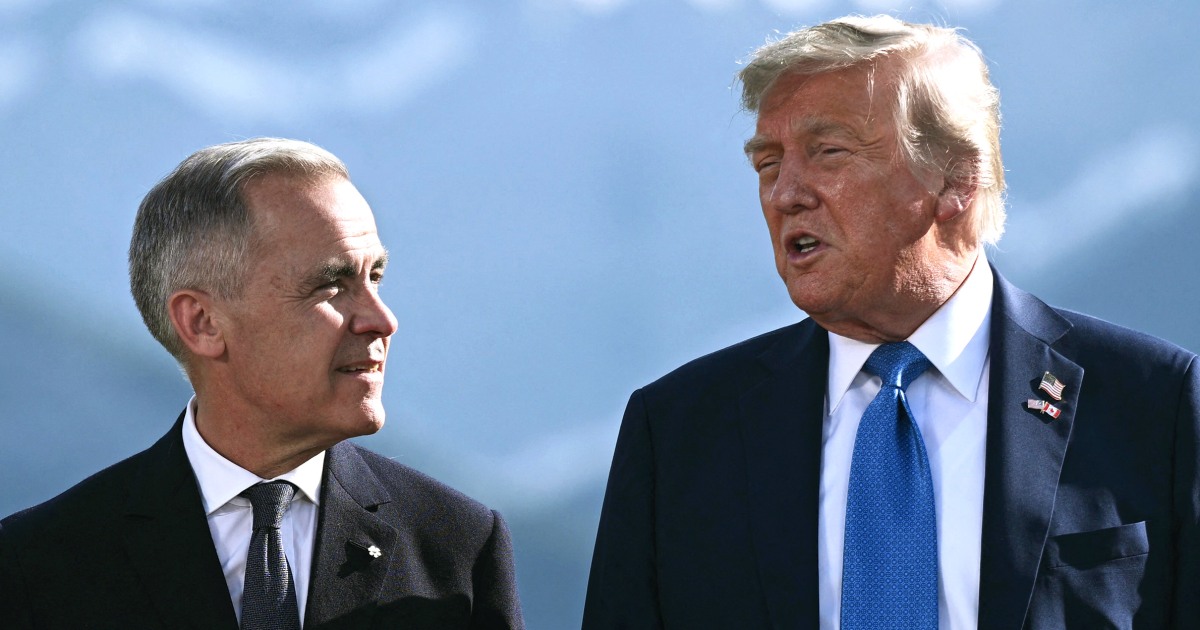
Prime Minister Mark Carney said he ended the negotiations late Friday after Washington proposed terms he called “unfair” and “uneconomic.”
“We could not accept what the U.S. had offered, nor could we give what they asked,” Carney said.
U.S. officials disputed that account. U.S. Trade Representative Jamieson Greer told CNBC on Monday that he had “sought to accommodate the Canadians by… cutting tariffs in half on steel, on aluminum, and extensively reducing them on, on autos and even on things like, like softwood lumber.”
“They simply wanted more,” Greer said.
The tariff dispute has been accompanied by increasingly sharp public comments from leaders on both sides of the border. Ontario Premier Doug Ford, who has backed Carney’s response, told a Canadian radio show Monday that Trump could “kiss my ass.”
“We’re going to go at him full steam,” Ford said.
Trump responded on social media, referring to “lots of ‘bluster’ from Doug Ford” and writing, “Someone should get these clowns to ‘fall in line’ or, the consequences for Canada will be far WORSE!” Within hours, Trump threatened a second wave of 50% tariffs on Canadian autos and steel.
Ford later called Trump the “king of bankruptcies” and said, “I’m not going to take the bait. This guy’s a loser.”
On Tuesday, Trump said he was considering renaming Lake Ontario as Lake America. “The United States is giving serious consideration to changing the name of Lake Ontario to Lake America in that we don’t expect to be doing much business with Ontario any longer,” he wrote on Truth Social.
Lake Ontario borders both the Canadian province of Ontario and the U.S. state of New York. Ontario is Canada’s most populous province and home to the country’s car industry.
Asked about Trump’s comment, Dominic LeBlanc, Canada’s minister responsible for U.S. trade, told CNBC that Canada would not respond to social media posts from the U.S. administration.
“We’ve decided as a federal government months ago not to respond to sort of the daily social media posts of either the president or his cabinet secretaries,” LeBlanc said.
Al Jazeera reported that Trump also threatened new 50% tariffs on Canadian vehicles, car parts and steel, while Carney said U.S. trade demands showed Washington wanted to “destroy our major industries,” including cars, steel and aluminum.











Be First to Comment