Key takeaways:
- The new U.S. tariffs impose 50% duties on about $20 billion in Canadian imports, including hockey equipment, liquor, clothing, dairy and cement.
- Prime Minister Mark Carney suspended trade negotiations and said Canada will match the U.S. tariffs “dollar for dollar.”
- U.S. Trade Representative Jamieson Greer said Canada declined to finalize terms agreed earlier in the week, while Carney blamed last-minute U.S. changes he called “unfair” and “uneconomic.”
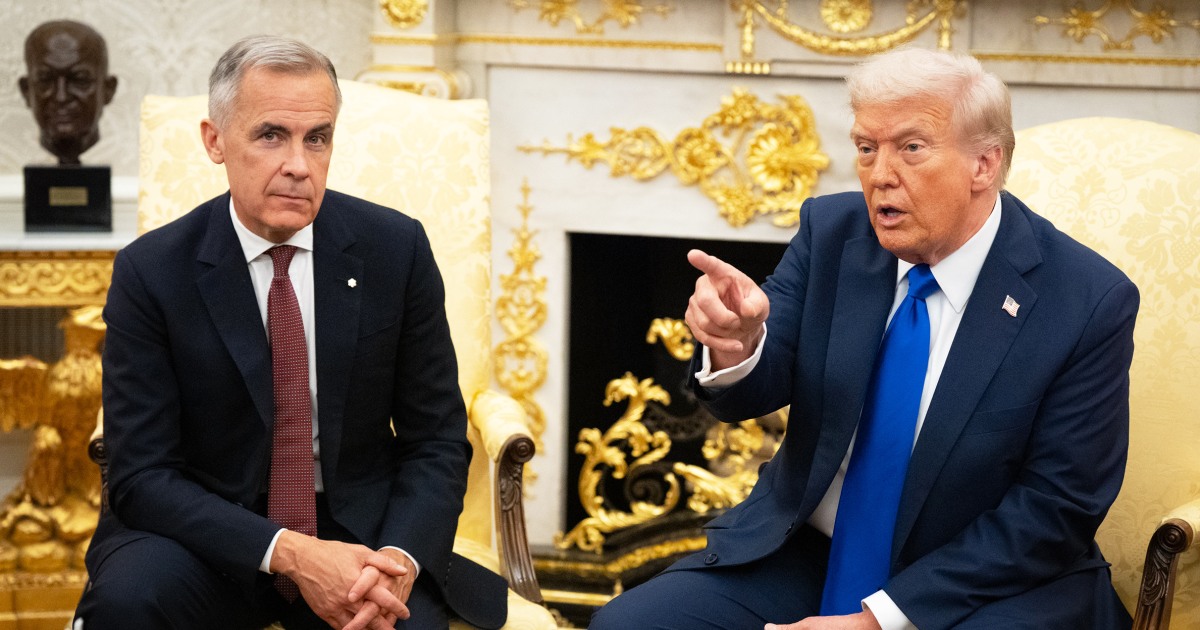
The United States imposed steep 50% tariffs on a broad range of Canadian goods early Saturday after last-minute trade talks collapsed, prompting Prime Minister Mark Carney to suspend negotiations and vow that Canada will retaliate “dollar for dollar.”
The duties took effect at midnight after nearly two weeks of intensive negotiations failed to produce a deal. They cover about $20 billion in U.S. imports from Canada, according to the U.S. Trade Representative’s office, and apply to products including hockey equipment, some building materials, liquor, clothing, dairy, cement and other goods. CBS News reported the tariffs affect about 5% of what Canada ships to the United States each year, including items ranging from hockey sticks to tongue depressors.
Carney announced the suspension of talks minutes before the deadline, saying negotiators had made “important progress” but that it had “not been enough to meet our objectives for Canadians.”
“As a result, this evening, I have decided to suspend trade negotiations with the U.S. and have directed Canada’s negotiators to return to Ottawa,” Carney said in a statement. “Canada will match those tariffs dollar for dollar to protect our workers and businesses.”
Carney said “last-minute changes in the U.S. proposed terms were unfair, uneconomic, and called into question the reliability of any deal.” He added: “We have recognised from the beginning that America has changed, and that we will not return to our old relationship. Canada has what the world wants. And we will not allow any nation to determine our future.”
U.S. Trade Representative Jamieson Greer gave a different account late Friday, telling reporters that Canada had declined to finalize a trade deal under terms agreed to earlier in the week, CBS News reported. The White House and the U.S. Trade Representative’s office did not immediately respond to NBC News requests for comment.
The breakdown came after officials on both sides had signaled optimism. President Donald Trump had temporarily paused the tariffs earlier in the week, saying the countries were close to signing a deal that was “very good” for both. Canadian negotiators met with U.S. counterparts Thursday and Friday, with talks continuing past 10:30 p.m. Friday at the U.S. Trade Representative’s office.
“We’re very close, we continue to make progress and we’re going to stay here and do the work that is necessary until we get to that point,” Dominic LeBlanc, the Canadian minister responsible for U.S. trade relations, told reporters Thursday after meeting Greer.
The BBC reported negotiators had been discussing a deal that would reduce U.S. tariffs on Canadian steel and aluminum from 50% to 25%, and on Canadian autos from 25% to 15%. NBC News reported that Canadian officials had also sought to persuade the White House to drop the new tariffs imposed under Section 338 of the Tariff Act of 1930, a Depression-era law that allows duties of up to 50% on trade partners deemed to discriminate against U.S. commerce. NBC reported the authority has never been used before and that the new tariffs are all but certain to face court challenges.
The new duties come on top of existing U.S. tariffs on Canadian steel, aluminum, autos and lumber. The United States had asked Canada for concessions including removal of retaliatory tariffs on American autos, changes to dairy quotas to allow greater access for U.S. cheese producers and an end to provincial bans on U.S. alcohol sales. Carney had asked provincial premiers to restore U.S. alcohol to store shelves, a request that drew varied responses.
Ontario Premier Doug Ford backed Carney after the announcement, writing on X that the prime minister had his “full support for a strong response—tariff for tariff, dollar for dollar.” Ford said Canada “needs to stand together more united than ever before.”
The U.S. Chamber of Commerce warned this week that “higher tariffs would damage both economies, drive up costs for U.S. families, further disrupt critical supply chains, and risk the 13 million American jobs that depend on” trade under the U.S.-Mexico-Canada Agreement.











Be First to Comment