Key takeaways:
- The Trump administration plans 50% tariffs on about $20 billion to $20.2 billion in Canadian goods unless a deal is reached before Wednesday.
- The tariffs would use Section 338 of the Tariff Act of 1930, a provision that has never before been applied.
- Canada wants relief from U.S. tariffs on steel, aluminum and softwood lumber, while Washington is seeking concessions including military purchases and access to critical minerals.
The United States and Canada are trying to defuse a trade fight before a Wednesday deadline that could bring 50% U.S. tariffs on about $20 billion in Canadian goods, a sharp escalation between two countries whose economies are deeply intertwined.
The tariffs are set to take effect at 12:01 a.m. Wednesday unless negotiators reach a last-minute deal. They would hit a broad range of Canadian exports, including hockey sticks, tongue depressors, electronics, industrial machinery, furniture, dairy products and wine. The Center for Strategic and International Studies puts the targeted goods at about $20.2 billion, or roughly 5% of U.S. imports from Canada.
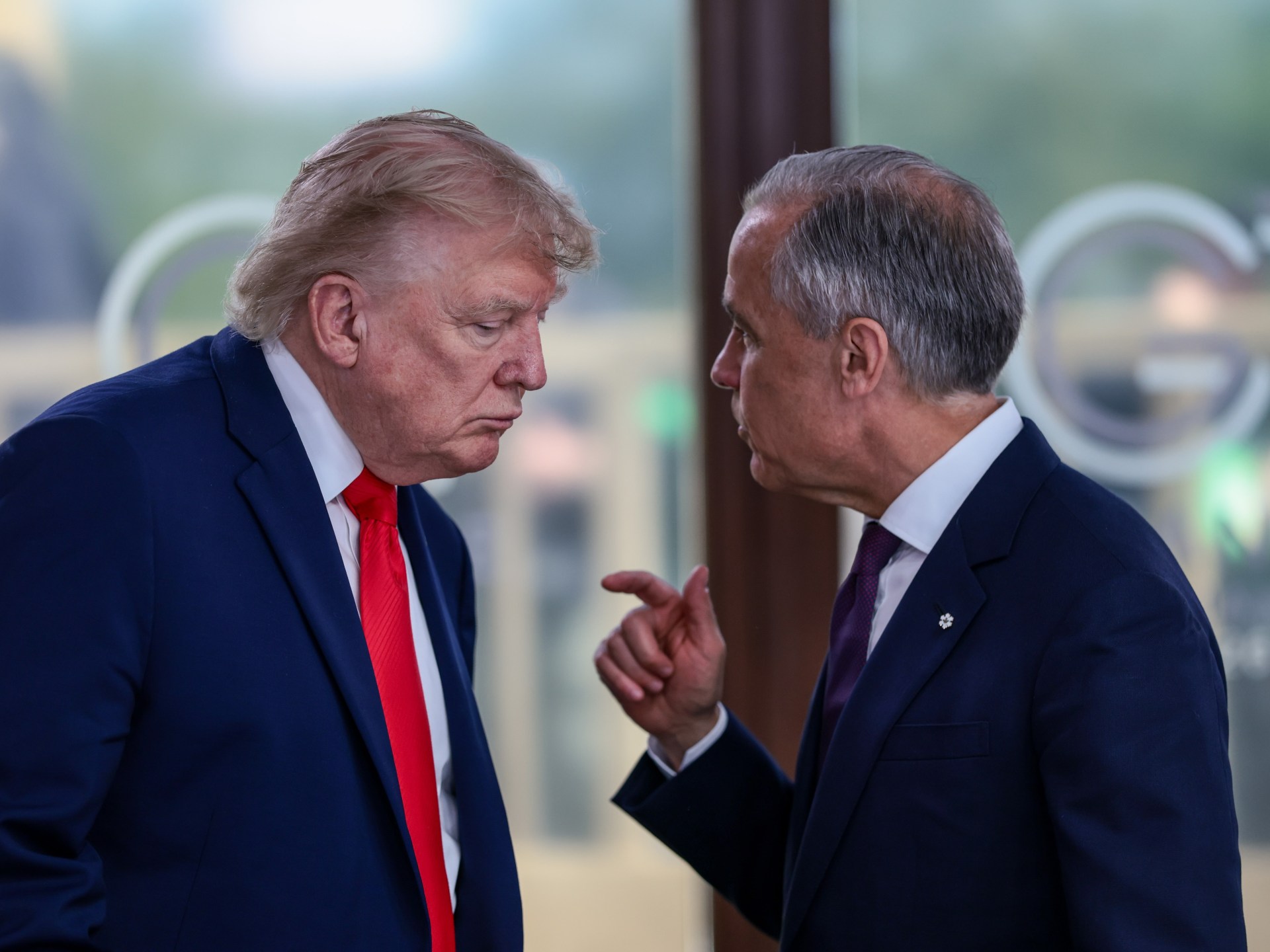
“We are negotiating,” Canadian Prime Minister Mark Carney told reporters Monday in French. “The negotiations are very intense and delicate. This is not the time to talk about negotiations in public.” He also said Canada was negotiating from “a position of strength” and added, “I have plans for any situation that may arise.”
Dominic LeBlanc, Canada’s minister for U.S. trade, met Monday with U.S. Trade Representative Jamieson Greer but gave little detail afterward. “The work is continuing,” he said. “We continue to do our job.”
President Donald Trump has justified the new duties by accusing Canada of discriminating against U.S. exports of autos, alcohol and cheese. Greer said Friday at the Iowa State Fair that Washington would respond to retaliation. “If a country retaliates against us, we’re obviously not going to tolerate that,” he said. “We’ll take action. My sense is the Canadians, they want to have a more conciliatory approach, but we’ll see.”
The new tariffs would be imposed under Section 338 of the Tariff Act of 1930, a Depression-era provision that has never before been used. It allows tariffs of up to 50% on imports from countries found to discriminate against U.S. businesses and does not require the type of investigation attached to some other trade laws. The measure is notable because it would apply to some goods that qualify for duty-free treatment under the United States-Mexico-Canada Agreement, the trade pact signed during Trump’s first term.
Existing U.S. tariffs on Canadian goods stand at 10%, though many imports are exempt because they comply with the USMCA. Al Jazeera reported that exemptions under the pact have allowed an estimated 85% of U.S.-Canadian trade to remain tariff-free despite Trump’s duties on sectors such as autos and steel.
The negotiations are unfolding against a backdrop of political strain. Trump has repeatedly suggested Canada could become the 51st U.S. state, comments that have angered many Canadians. A petition seeking the expulsion of U.S. Ambassador Pete Hoekstra, a Trump ally, has gathered nearly 218,000 signatures since July 21, accusing him of having “normalized” Trump’s annexation remarks.
Canada is especially exposed to the U.S. market. Nearly 72% of Canadian goods exported last year went to the United States, while Al Jazeera reported that about 70% of Canadian exports go to its southern neighbor. By contrast, the U.S. sends about 30% of its exports to Canada. Each day, nearly 330,000 people and $2 billion in goods cross the 5,525-mile border, and about 800,000 Canadians live in the United States.
The two sides are seeking different concessions. Ryan Majerus, a partner at King & Spalding and a former U.S. trade official, said Washington wants Canada to buy more U.S. military equipment, including F-35 fighters, participate in Trump’s “Golden Dome” missile defense plan and expand U.S. access to critical minerals. Canada wants relief from tariffs on steel, aluminum and softwood lumber.
“I don’t think either side really wants these tariffs to come into effect,” Majerus said. “There’s a pretty strong push on both sides to find an off ramp here.”
Canadian provincial politics could complicate any deal. Most provinces have blocked U.S. alcohol sales in retaliation for earlier U.S. trade actions, though some provincial leaders have said they are open to lifting restrictions if Trump backs down. Quebec Premier Christine Frechette has called Canada’s supply management system for dairy, eggs and poultry “non-negotiable.”
If no agreement is reached, Canada could retaliate, potentially widening the dispute as both countries prepare for renewed USMCA negotiations.









Be First to Comment