Key takeaways:
- The 50% tariffs on many Canadian goods are scheduled to take effect in 30 days and will exclude energy products, potash, fish and critical minerals.
- Trump used Section 338 of the 1930 Trade Act to impose the tariffs, arguing Canada discriminates against U.S. autos, alcohol and cheese.
- Canadian Prime Minister Mark Carney called the tariffs a violation of the USMCA but said Canada is ready to intensify discussions with Washington.
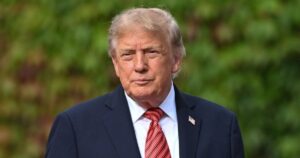
President Donald Trump imposed 50% tariffs on most Canadian goods Monday, escalating a trade dispute with one of the United States’ closest economic partners and opening a 30-day window for negotiations before the duties take effect.
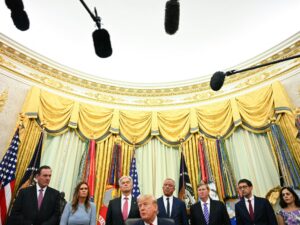
Trump signed three proclamations using Section 338 of the 1930 Trade Act, a Great Depression-era law, to target Canadian goods that the White House says benefit from unfair treatment compared with U.S. autos, alcohol and dairy products. The tariffs will apply to a broad range of products, including wine, hockey sticks and cement, The Guardian reported, and will also cover goods that had previously been protected from import taxes under the United States-Mexico-Canada Agreement.
The duties will exclude energy products, potash, fish and critical minerals. The Guardian reported that products already subject to national security tariffs, such as steel and aluminum, are also excluded.
A White House fact sheet said Trump is “taking action to hold Canada accountable for its continued discrimination against and unreasonable and unequal treatment of U.S. commerce that has burdened and disadvantaged hardworking Americans.” An administration official, speaking anonymously to preview the action, said Canada was one of the only countries besides China to retaliate against Trump’s earlier tariffs and “must be held accountable.”
Canadian Prime Minister Mark Carney said Ottawa remains prepared to negotiate but criticized the U.S. move. “This is the latest in a series of unilateral US trade actions that began with the US imposing a series of tariffs in direct violation of the Canada-United States-Mexico Agreement,” Carney said, according to The Guardian. In a separate statement, he said Canada believes in the “benefits of free and fair trade” and has signed “more than 20 new economic and security partnerships.”
“This trade dispute has raised costs for families, particularly in the U.S.,” Carney said. “Canada stands ready to engage intensively to address outstanding issues with the U.S. to the mutual benefit of our citizens.”
The tariffs could trigger further retaliation. Ontario Premier Doug Ford wrote on social media: “If these tariffs proceed, Canada should respond tariff for tariff, dollar for dollar.” Canada’s Conservatives called the tariffs “another unacceptable and unjustified attack on Canadian workers and our businesses,” adding: “Canadians are not a punching bag.” The leader of Canada’s New Democrats called them “the latest economic grenade thrown over the border by an out of control President who has lost touch with reality,” The Guardian reported.
Business groups urged both governments to seek a deal before the tariffs begin. Candace Laing, CEO of the Canadian Chamber of Commerce, called the move “regrettable” and said the 30-day period should be used “to make meaningful progress in advancing formal talks.” Chris Swonger, CEO of the Distilled Spirits Council of the United States, said, “We encourage policymakers on both sides of the border to pursue a negotiated solution that restores market access for U.S. spirits and avoids further harm to the U.S. hospitality sector.”
The use of Section 338 drew sharp warnings from trade and legal experts. Scott Lincicome, vice president of general economics at the Cato Institute, said the move could inject “massive uncertainty” into the global economy. “We crossed the Rubicon,” he said. “The invocation of 338 is the nuclear option for Trump tariffs.” Ilya Somin, a George Mason University law professor who helped challenge Trump’s “Liberation Day” tariffs, said the new duties rely on a provision of the 1930 Smoot-Hawley tariff law, which he said “severely exacerbated the Great Depression.”
Democrats also attacked the tariffs. Rep. Suzan DelBene of Washington, chair of the Democratic Congressional Campaign Committee, said, “These new taxes will raise prices on American families and likely lead to retaliation against the very industries Trump purportedly wants to protect.”
Trump’s proclamations cite Canadian treatment of U.S. automobiles, alcohol and cheese. His auto proclamation notes that Canada has maintained a 25% tariff since April 2025 on U.S. motor vehicles that do not qualify for preferential treatment under the USMCA. The White House also said all but two Canadian provinces and territories halted the purchase and retailing of American alcoholic beverages last year in response to Trump’s tariffs and remarks about making Canada the 51st state.
Separately, The Guardian reported that Democrats are urging Trump to reverse his resumption of the war with Iran after three U.S. troops were killed in Iranian strikes and related incidents. The Pentagon identified two soldiers killed Friday at Muwaffaq Salti air base in Jordan as First Lieutenant Tyler James Feehan, 25, of Ewa Beach, Hawaii, and Private Isabella Gonzales, 19, of Carrollton, Texas. A third service member was killed Saturday in northern Iraq during what U.S. Central Command called a “controlled detonation” of unexploded ordnance, and remains of a possible fourth service member were found over the weekend in Jordan.










Be First to Comment