Key takeaways:
- Treasury Secretary Scott Bessent is expected to announce new Iran sanctions Monday, including stronger secondary sanctions on entities and countries that transact with Tehran.
- Iranian official Mohsen Rezaei warned that countries backing the measures would be considered enemies and said oil exports from the Persian Gulf could be halted if the economic war continues.
- The Iranian rial fell to 2.03 million to the U.S. dollar, while NPR cited Iranian government data showing inflation near 90%.
The Trump administration is preparing to unveil a sweeping new sanctions campaign against Iran on Monday, escalating economic pressure on Tehran as the war with the United States enters its sixth month and ordinary Iranians face a deepening financial crisis.
Treasury Secretary Scott Bessent is scheduled to detail the measures at a 1 p.m. ET news conference at the Treasury Department. He has described the effort as the “single greatest financial offensive ever marshaled against an adversary,” while President Donald Trump has called it an “economic D-Day.”
The measures are expected to broaden the existing U.S. sanctions regime by threatening stronger secondary sanctions against entities and countries that continue to transact with Tehran. Banks, oil buyers and refiners, shipping companies, registries, ports, airports, exchange houses, front companies and potentially governments that facilitate Iranian trade could be exposed to penalties, Al Jazeera reported.
“Our objective is to sever every economic lifeline that sustains the tyrannical regime until Tehran stands alone,” Bessent wrote in the Financial Times. He said countries still trading with Iran should “consider the consequences of doing so.” China, Iran’s largest oil customer, is a key focus; Bessent criticized Beijing last week for historically buying about 90% of Iran’s oil.
Trump amplified the pressure Monday, writing on Truth Social: “IRAN IS COMPLETELY COLLAPSING!!!” CBS News reported that the president has repeatedly said Iran is close to collapse despite continued Iranian resistance to U.S. military efforts.
The sanctions are part of the administration’s attempt to use economic tools to pressure Iran to reopen the Strait of Hormuz and ultimately end the war, which officials initially said would last four to six weeks. The conflict is now in its sixth month. A U.S. naval blockade has cut off most goods to Iran from outside the country, and U.S. Central Command said Sunday that its forces have redirected 70 commercial vessels, disabled three and boarded two as part of the blockade, according to Al Jazeera.
Iran has vowed retaliation. Mohsen Rezaei, the new secretary of Iran’s Supreme National Security Council, warned countries that support the new U.S. measures that they would be treated as enemies of Tehran. “If the economic war continues, not a single drop of oil will be exported, neither through the Strait of Hormuz nor from anywhere in the Persian Gulf,” he said Sunday, according to Al Jazeera. NPR reported that Rezaei said Iran would retaliate in a “seismic manner” and could further target oil tankers transiting the Persian Gulf on the Omani side of the Strait of Hormuz.
Army chief Amir Hatami also struck a defiant tone Monday, telling commanders that Iranian forces are prepared to “fight for 10-20 generations” if necessary. President Masoud Pezeshkian, however, said it is better to end the war with the U.S. now from a position of strength, Al Jazeera reported.
Analysts questioned whether more sanctions can significantly alter Tehran’s behavior. Alan Eyre, a former U.S. diplomat who worked on Iran nuclear negotiations until 2015, told NPR that Washington has already targeted “the low-hanging fruit, the mid-hanging fruit, the high-hanging fruit, the tree,” adding that “there are no new sanctions that are effective.” Umud Shokri, an energy strategist and senior visiting fellow at George Mason University, told Al Jazeera that Iran has learned to survive under pressure, though “survival is not the same as avoiding economic damage.”
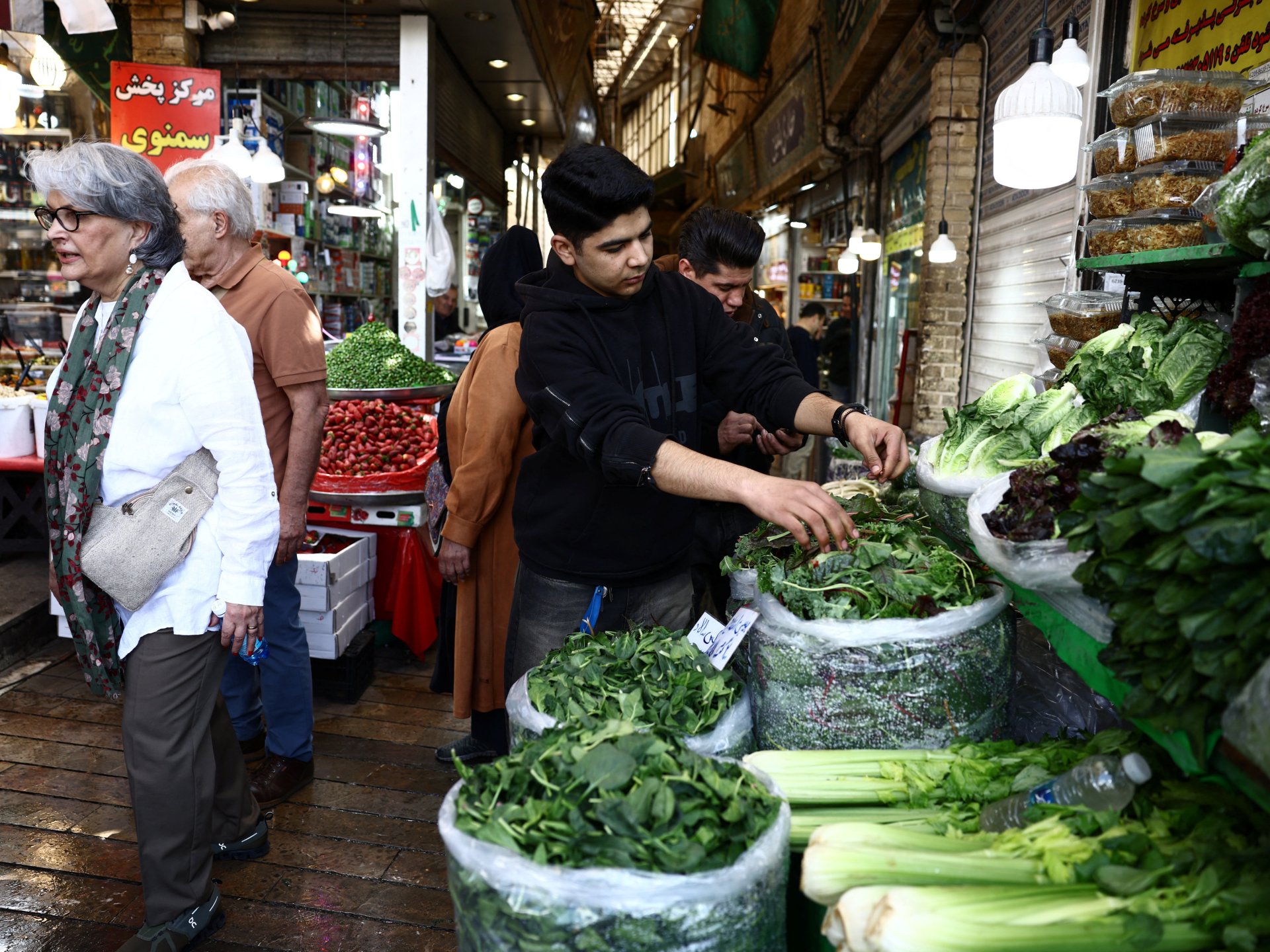
That damage is already severe. The Iranian rial fell Monday to a record low of 2.03 million rials to the U.S. dollar in Tehran’s open market, Al Jazeera reported. NPR cited Iran’s Statistical Center as saying inflation is nearly 90%. One 30-year-old Iranian woman told NPR that many people are buying food on credit because they lack cash. “Since I am in debt to the grocery store, I couldn’t even buy tomato paste to cook pasta,” she said, withholding her name for fear of government retaliation.
Treasury has repeatedly targeted Iranian financial networks. On Aug. 7, it sanctioned companies and individuals it accused of laundering hundreds of millions of dollars, including Shahr Bank and two Dubai-based exchange houses, Titan Exchange and Alps International. The department said those entities helped retrieve oil revenue for major Iranian exporters including the National Iranian Oil Company and Naftiran Intertrade Co.








Be First to Comment