Key takeaways:
- U.S. Treasury Secretary Scott Bessent is expected to announce new sanctions on Iran that he has described as “the toughest sanctions in history.”
- Iranian security chief Mohsen Rezaei warned that countries joining U.S.-led economic restrictions would be “regarded as an enemy” and could have their interests targeted.
- The United Arab Emirates suspended trade and financial transactions with Tehran last week, while France and Saudi Arabia are expected to discuss alternative routes to the Strait of Hormuz.
Iran’s president acknowledged mounting hardship at home as Tehran warned neighboring countries not to join a new U.S. effort to isolate its economy, raising the stakes in a months-long conflict that has disrupted shipping through the Strait of Hormuz.
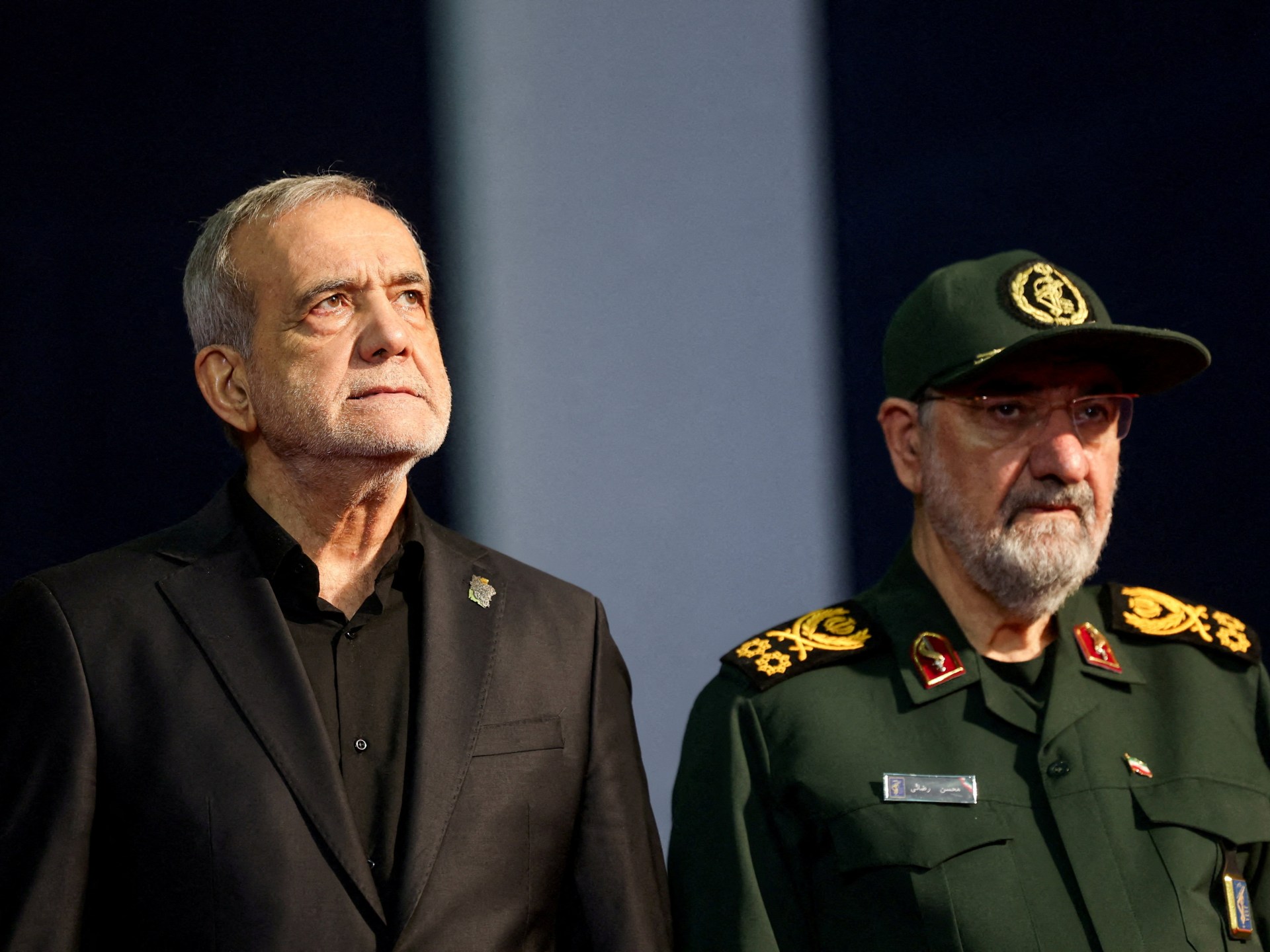
President Masoud Pezeshkian said Sunday that U.S. President Donald Trump had thrust Iran into “a full-scale economic, military and security war.” Speaking in a state television broadcast, he said the government was trying to manage rising pressure on ordinary Iranians.
“I understand we have many problems in society right now. We are trying to prevent these as much as we can,” Pezeshkian said. “We are striving with all our hearts to overcome inflation, livelihood problems, unemployment, and to secure the future of the people, so that they can live with dignity and pride.”
His remarks came a day before U.S. Treasury Secretary Scott Bessent is expected to announce new punitive measures against Iran. Trump has described the campaign as “the most crushing economic operation ever taken against any country,” while Bessent has called the pending measures “the toughest sanctions in history.” Bessent has also urged cooperation from China, which Al Jazeera reported buys more than 80 percent of Iran’s oil shipments.
Iran’s Foreign Ministry spokesperson, Esmaeil Baghaei, said Saturday that the expected sanctions amounted to an “assertion of extraterritorial sovereignty over every independent member state of the United Nations,” adding: “Such secondary sanctions find no foundation in international law.”
Mohsen Rezaei, the newly appointed secretary of Iran’s Supreme National Security Council, warned that countries taking part in U.S.-led economic restrictions would be treated as enemies. In an interview with the state broadcaster IRIB, he said Iran would first seek talks with those governments.
“Of course, we will first negotiate with them. We will hold talks and tell them to step aside and distance themselves from the United States,” Rezaei said. “But if they do not act, we will strike. We will target that country’s interests.”
Rezaei said any neighbor joining what he called the U.S. “economic war” would face retaliation and warned that “not even a drop of oil” would leave the Gulf region, including through alternative export routes away from Hormuz. The strait carried about one-fifth of the world’s oil supplies before the conflict, according to The Guardian, and one-fifth of global oil and gas exports in peacetime, according to Al Jazeera.
“So far, we have only targeted military bases, but if they want to impose economic sanctions on us, the United States has oil and economic companies around Iran and elsewhere, and we will strike them,” Rezaei said.
The United States has been carrying out what The Guardian described as Operation Economic Fury, a sanctions campaign aimed at cutting off Iranian funding, while a naval blockade in the Strait of Hormuz has sought to block Iranian oil exports. Iran has also imposed a blockade on Hormuz in response to the U.S. war, Al Jazeera reported, while the United States has put Iranian ports under a naval blockade.
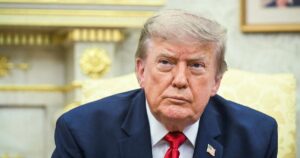
Trump has repeatedly suggested declaring the Strait of Hormuz U.S. territory. “We control it with the blockade, and I like the idea of declaring it a territory,” he told reporters Monday. On Friday, he said in South Carolina: “We don’t even know if we won, because I view the strait of Hormuz as an American territory right now.”
The pressure on Tehran comes after years of economic strain and protest. The Iranian government has faced several waves of mass demonstrations, often triggered by inflation, exchange-rate swings and falling purchasing power. The Guardian reported that a protest movement that began late last year over the rising cost of living turned into mass demonstrations denouncing those in power. Authorities reported more than 3,000 deaths and accused the United States and Israel of orchestrating the violence, while foreign-based nongovernmental organizations said Iranian officials carried out an indiscriminate crackdown that left thousands dead.
Regional governments are weighing their options. The United Arab Emirates, a major Iranian trading partner, announced last week that it was suspending all trade and financial transactions with Tehran until further notice. Al Jazeera reported that the UAE imposed a trade embargo after accusing Tehran of a missile attack, which Iran denies.
French President Emmanuel Macron and Saudi Crown Prince Mohammed bin Salman are expected to discuss alternatives to Hormuz during the Saudi leader’s two-day visit to Paris, according to French presidency officials cited by The Guardian. Proposals include expanding trade through Omani ports outside the Gulf, increasing pipeline capacity in Saudi Arabia and elsewhere, and developing new rail links.









Be First to Comment