Key takeaways:
- CENTCOM said the U.S. blockade of Iranian shipping through the Strait of Hormuz would begin Tuesday at 4 p.m. ET.
- Kpler said crossings through the strait fell to 22 ships last week, nearly 85% below prewar traffic, according to NPR.
- Experts told CBS News that fully securing the strait could require a major U.S. naval commitment and possibly tens of thousands of ground troops.
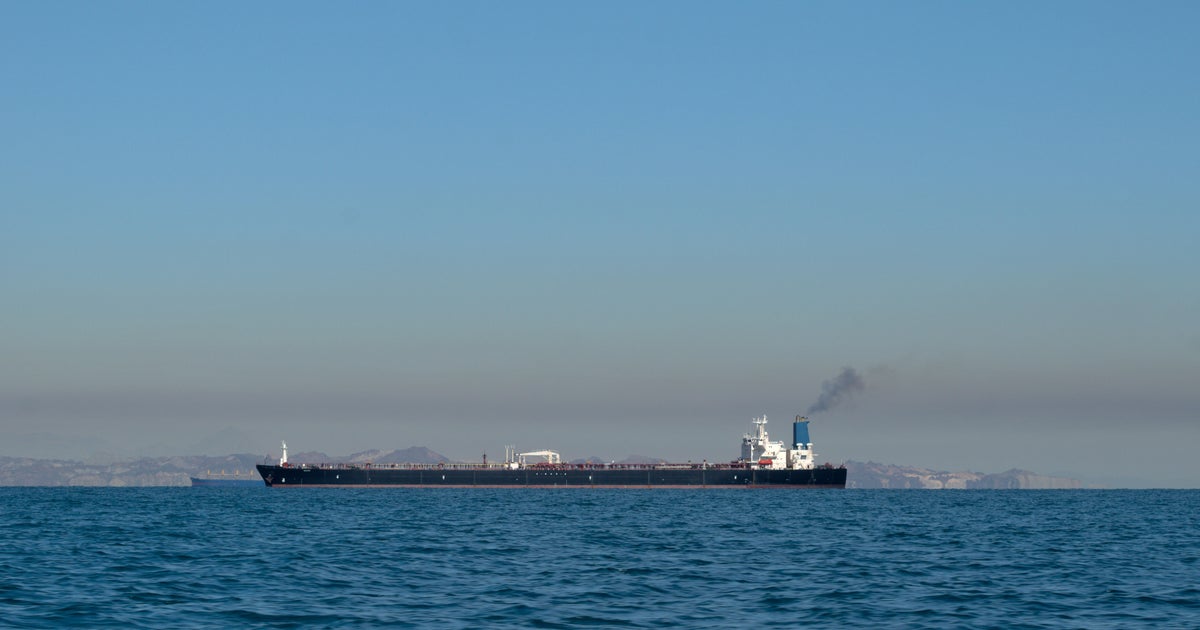
The United States is moving to reinstate a blockade on Iranian shipping through the Strait of Hormuz, escalating a contest with Tehran over control of one of the world’s most important energy corridors as attacks on tankers and military sites raise fears of a wider war.
U.S. Central Command said the blockade would begin Tuesday at 4 p.m. ET. The U.S. military last worked to block maritime traffic to and from Iranian ports from April 13 to June 18, NPR reported.
President Trump announced the move Monday, saying the blockade would target only Iran. “We are reinstating the THE IRANIAN BLOCKADE, so named because it is only stopping Iran’s ships or customers from entering or leaving,” Trump wrote on Truth Social. “All other countries will have fair and open use of the Strait.”
Trump also said the United States would “probably run” the Strait of Hormuz and impose a 20% fee on cargo shipments as reimbursement for providing security. CENTCOM did not mention fees but told mariners approaching the Gulf of Oman and the strait to contact U.S. naval forces on bridge-to-bridge channel 16.
Iran rejected Washington’s claim to control the waterway. Foreign Minister Abbas Araghchi wrote on social media that Trump was right to say safe passage should be compensated, but added: “Iran has always been the GUARDIAN of the Strait and will remain so FOREVER.” He also appeared to respond to Trump’s proposed fee, writing: “20% is of course too much. We will be fair.”
The strait, through which roughly 20% of the world’s oil or energy supplies normally move, has become the central point of contention between the two countries. Kpler, a data and analytics company that tracks commodity and shipping markets, said crossings dropped to 22 ships last week, an almost 85% decrease from prewar traffic, according to NPR.
The latest escalation followed an intensified exchange of strikes over the weekend. The U.S. military said it launched another wave of strikes Monday on Iranian defense systems, missile and drone sites and maritime capabilities to “degrade Iran’s ability to attack commercial shipping.” The Iranian Revolutionary Guard said Tuesday it had struck “two non-compliant” supertankers in the strait, according to Iranian state media cited by NPR.
The United Arab Emirates’ defense ministry said two of its tankers were targeted by Iranian cruise missiles while transiting Omani waters, killing one person. Bahrain authorities reported sirens and urged residents to head to safe places, while Jordanian state media said the country’s air defenses intercepted four Iranian missiles early Tuesday as they entered its airspace.
Experts said forcing the strait back to normal commercial traffic would be difficult. Jason H. Campbell, a senior fellow at the Middle East Institute and former Pentagon official, told CBS News that Iran has spent decades preparing for asymmetric conflict and can hide drones and missiles across a large country. “It’s very difficult to envision any scenario where you could satisfactorily secure the Strait of Hormuz absent ground forces,” Campbell said.
He said such an effort could require tens of thousands of U.S. troops to destroy hidden munitions and secure hundreds of miles of coastline and inland territory, with American forces likely facing insurgent attacks.
Another option would be a larger naval escort mission. Michael Eisenstadt, a former U.S. military analyst now at the Washington Institute for Near East Policy, said that would require “a very large chunk of the U.S. fleet” on an open-ended basis. He said the environment is more complicated than the 1980s, when the U.S. escorted Kuwaiti tankers during the Iran-Iraq war, because Iran now has advanced drone and missile capabilities.
Iran has insisted ships obtain permission and use approved routes near its coastline, while the U.S. has urged vessels to use a southern route along Oman under American overwatch. Capt. Tim Hawkins, a U.S. Central Command spokesman, told CBS News that mine clearance operations continue on some traditional routes and that “alternative pathways have been open.”
The confrontation has strained a 60-day ceasefire agreed in June under a 14-point memorandum of understanding. Critics say the deal’s language left room for competing interpretations. Michael Singh of the Washington Institute for Near East Policy told NPR that wording requiring Iran to make arrangements using its “best efforts for the safe passage” of commercial vessels appears to place responsibility for the strait in Iran’s hands rather than emphasizing it as an international waterway.
Araghchi said Monday that Iran remained in contact with mediators including Oman, Qatar and Pakistan to de-escalate the situation, though the status of talks with the United States remained unclear.







Be First to Comment