Key takeaways:
- Trump said the U.S. will seek reimbursement “at the rate of 20% on all cargo shipped” for securing the Strait of Hormuz.
- Iran’s joint military command said it would not allow the U.S. to interfere in management of the strait.
- The dispute centers on a June memorandum of understanding that the U.S. says opened the strait to all traffic, while Iran says it preserves Tehran’s control over passage.
President Donald Trump said Monday that the United States will reinstate its naval blockade of Iran and become “the guardian” of the Strait of Hormuz, escalating a dispute with Tehran over control of one of the world’s most important shipping lanes.
Trump said on Truth Social that the U.S. would be “THE GUARDIAN OF THE HORMUZ STRAIT” and would seek reimbursement “at the rate of 20% on all cargo shipped” for the costs of providing security in what he called a “very volatile section of the World.”
“The process and formation will begin immediately,” he wrote.
Trump also said the U.S. is reinstating what he called “THE IRANIAN BLOCKADE,” saying it is “only stopping Iran’s ships or customers from entering or leaving.” He said all other countries would have “fair and open use of the Strait” and that it would remain open “with or without Iran.”
In an interview with Fox News earlier Monday, Trump said the U.S. was “going to keep the strait, and we’ll probably run it.” He added, “We’ll become the guardian of the strait. Maybe we’ll call it the ‘Guardian Angel of the Strait.’ And we should be reimbursed for that.”
Trump did not identify which countries he expected to pay, but CBS News reported that he implied Persian Gulf energy producers should contribute. “The other nations are very wealthy; they’re on our side, and we can’t be expected to do that for nothing,” he told Fox News. He said the U.S. had guarded the strait “for 50 years, more” without payment.
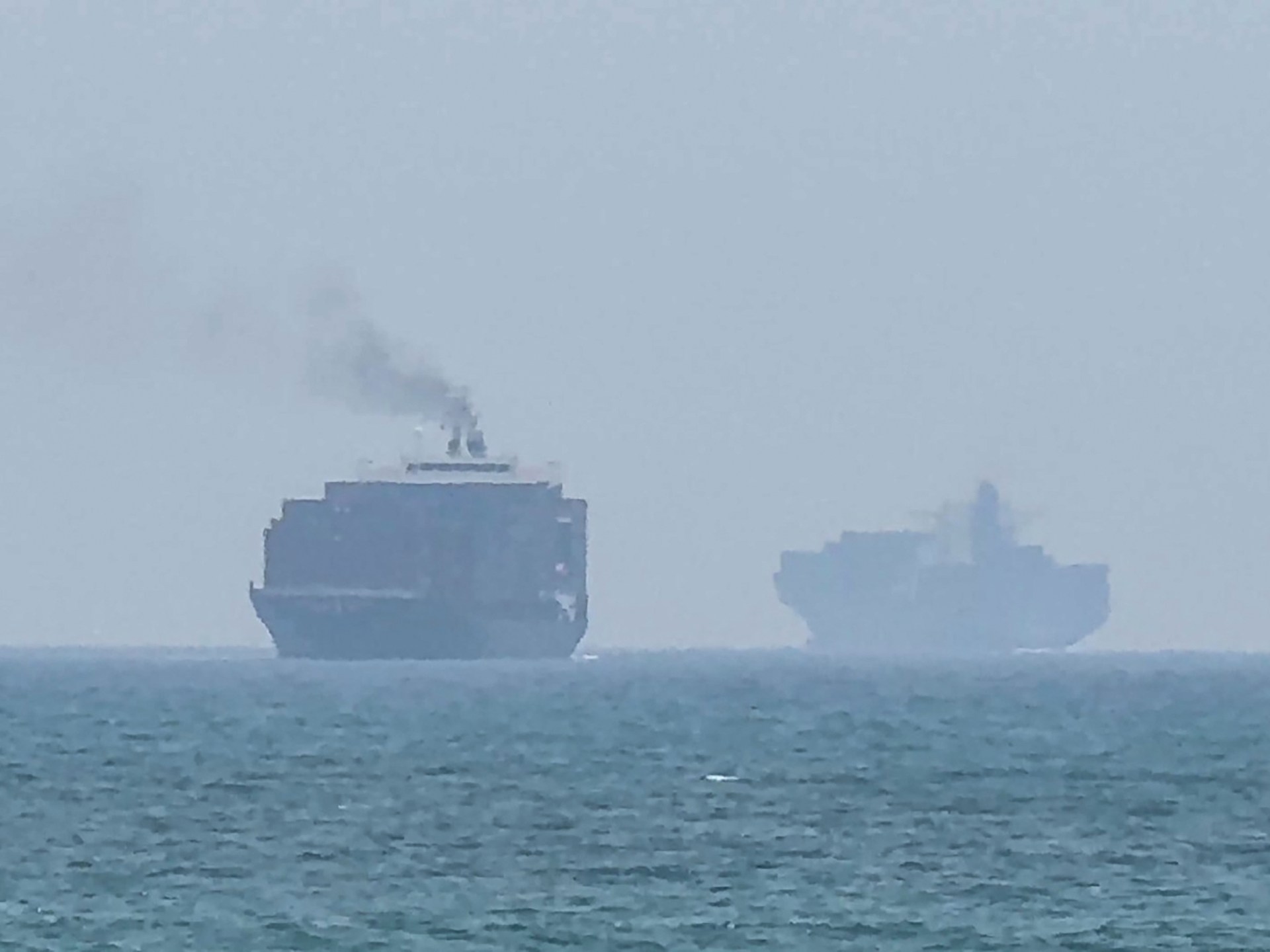
The comments came after the U.S. and Iran traded attacks in a confrontation that both CBS News and Al Jazeera reported has threatened negotiations aimed at ending their war. Al Jazeera reported that Iran said it had struck U.S. military sites in Bahrain, Kuwait, Oman and Jordan, while U.S. forces have primarily targeted port cities along Iran’s coast. CBS News reported that after Iran attacked several ships using a southern route near Oman last week and struck a container vessel near the western entrance to the strait Saturday, the U.S. launched multiple rounds of airstrikes on Iranian targets.
The U.S. and Israel launched the current war against Iran on Feb. 28, according to both outlets. Al Jazeera reported that fighting had largely been paused since April, when a preliminary agreement was reached. The strait was open to all vessels before the war, CBS News reported, but maritime traffic has been significantly reduced since then. Al Jazeera said about 20% of global oil and gas exports normally transit the strait.
The latest dispute centers on a memorandum of understanding signed by the U.S. and Iran in June. Al Jazeera reported that the initial agreement called for ending the fighting, lifting the U.S. naval blockade and opening the strait to shipping, while leaving issues such as Iran’s nuclear program, access to frozen assets and future administration of the strait for 60 days of negotiations.
Iran argues the agreement allows it to control shipping through the strait. The Trump administration says the agreement should open the strait to all traffic during negotiations and that Iranian attacks violate the memorandum.
Iran’s embassy in the United Kingdom accused the U.S. on Monday of having “done nothing but violate” the agreement “since day one,” specifically by “pushing vessels toward a dangerous southern parallel route” close to Oman’s coast. The embassy called that route “not only legally questionable but also unsafe, unreliable, and prone to accidents.”
A spokesperson for Iran’s Khatam al-Anbiya Central Headquarters, the country’s joint military command, rejected any U.S. role in managing the strait.
“As previously warned, we will not, under any circumstances, allow the US to interfere in the management of the Strait of Hormuz,” the spokesperson said, according to Al Jazeera.
Iran’s Persian Gulf Strait Authority later said on social media that “due to recent hostile actions by the US forces, passage through the Strait of Hormuz is currently unfeasible.” It said permit applications would resume when “stability and calm are restored” and reiterated that, in Iran’s view, passage permits must be obtained through its website.







Be First to Comment