Key takeaways:
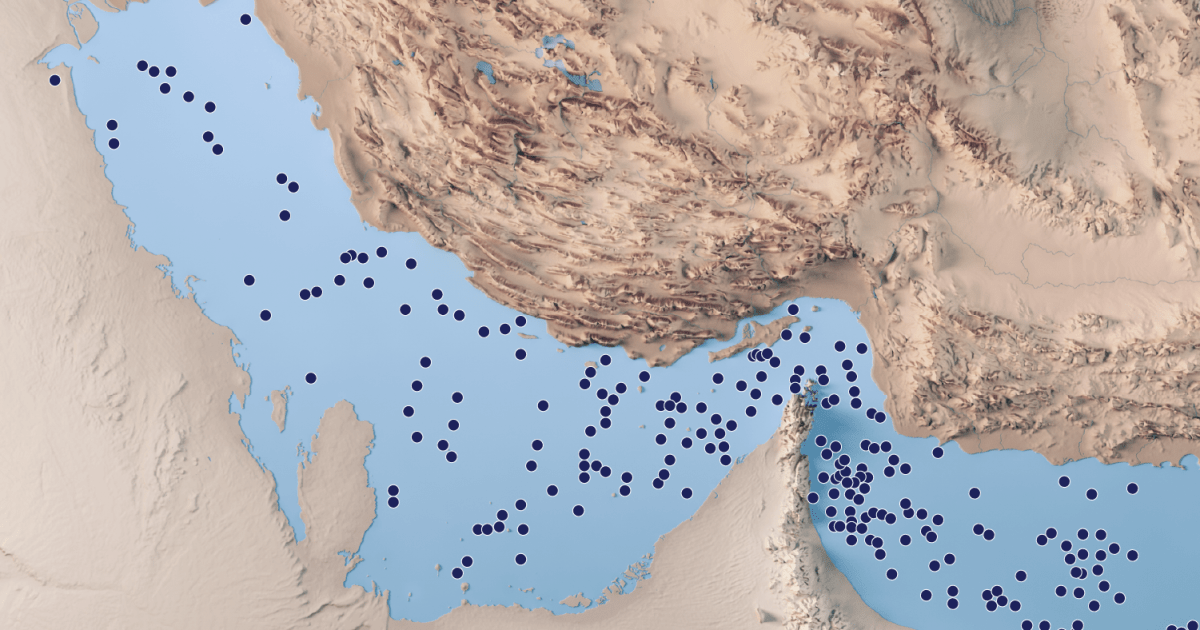
- Kpler said 23 tankers and cargo ships crossed the Strait of Hormuz on Wednesday, down from 47 a week earlier.
- Three vessels near the Omani route were attacked this week: a Qatar-owned LNG tanker, a Saudi-owned crude tanker and a Liberia-flagged crude tanker.
- The June 17 US-Iran memorandum called for safe passage with no charge for 60 days, but both sides now accuse the other of violating the agreement.
Commercial traffic through the Strait of Hormuz has fallen sharply after a new round of attacks on ships and retaliatory strikes between the United States and Iran, threatening the fragile reopening of one of the world’s most important waterways.
Just 23 tankers and cargo ships crossed the Gulf chokepoint on Wednesday, down from 47 a week earlier, according to maritime intelligence firm Kpler. The decline followed attacks on three vessels near the US-recommended route through Omani waters: a Qatar-owned liquefied natural gas tanker, a Saudi-owned crude oil tanker and a Liberia-flagged crude tanker.
The BBC reported that no ships used the Omani route on Wednesday, down from three the day before and an average of about 10 a day in the previous week. The route had briefly grown in use after a June 17 memorandum of understanding between Washington and Tehran aimed at ending the war and restoring passage through the strait.
The Strait of Hormuz connects the Gulf to global markets. Before the conflict, more than a fifth of the world’s oil and gas supplies, as well as fertilizer shipments and other goods, moved through it. The Joint Maritime Information Center, a multinational maritime group including the US, said an average of 138 ships crossed the strait each day before the conflict began. Al Jazeera reported a pre-war average of about 100 ships a day, roughly half of them oil tankers carrying a combined 20 million barrels of crude.
Traffic collapsed after the US and Israel launched strikes on Iran on February 28. Iran effectively closed the strait by attacking ships attempting to cross and laying mines, while the US later imposed a blockade on shipping to and from Iranian ports, the BBC reported. The June 17 agreement included steps to reopen the waterway, with Washington agreeing to lift its naval blockade and ease sanctions on Iranian oil exports.
The reopening has remained limited. Al Jazeera, citing PortWatch data, reported that 513 ships transited the strait in the first 18 days after it reopened, from June 18 to July 5, an average of 28 ships a day. About 6,000 seafarers remain stranded in the Gulf, according to the International Maritime Organization.
At the center of the renewed dispute is who controls shipping routes. Iran has insisted that vessels use lanes close to its coast and has said it plans to introduce transit fees after a 60-day transition period. The US, its Gulf allies and governments in Europe and Asia say passage through the strait must remain free and open.
“The only safe route for the passage of commercial ships and oil tankers in the strait is the route determined by the Islamic Republic of Iran,” Iran’s top military command, Khatam al-Anbiya Central Headquarters, said after this week’s ship strikes.
The June 17 memorandum committed Iran to use “its best efforts for the safe passage of commercial vessels with no charge for 60 days” and to hold talks with Oman on the future administration of the strait. Jennifer Parker, a maritime security expert at the University of New South Wales, said the agreement was unclear. “The MOU was vague, particularly on issues surrounding the Strait of Hormuz,” she said, “but even on a generous reading, it does not permit Iran to attack civilian shipping in Omani waters.”
US President Donald Trump accused Iran of a “foolish violation” of the truce after earlier attacks and said at the NATO summit on Wednesday that the memorandum was “over,” though negotiations could continue. Iran accused Washington of violating the deal after the US revoked a Treasury license that had temporarily eased sanctions on Iranian oil exports.
Iran’s Revolutionary Guard Corps warned Thursday that “foreign powers have no claim to this land or to the Strait of Hormuz” and said “any interference in determining shipping routes” would “provoke a crushing response” and “seriously disrupt the gradual reopening process.”











Be First to Comment