Key takeaways:
- Khamenei’s funeral procession reached Mashhad on Thursday after ceremonies in Tehran, Qom, Najaf and Karbala, with burial planned at the Holy Shrine of Imam Reza.
- Iran’s Health Ministry said U.S. strikes over two days killed at least 14 people and wounded 78.
- Jordan’s military said it intercepted eight missiles launched from Iran toward Jordanian territory, with no casualties or material damage reported.
Iran prepared to bury slain former Supreme Leader Ayatollah Ali Khamenei on Thursday as Tehran and Washington traded strikes for a second day, raising tensions around the Strait of Hormuz and across the region.
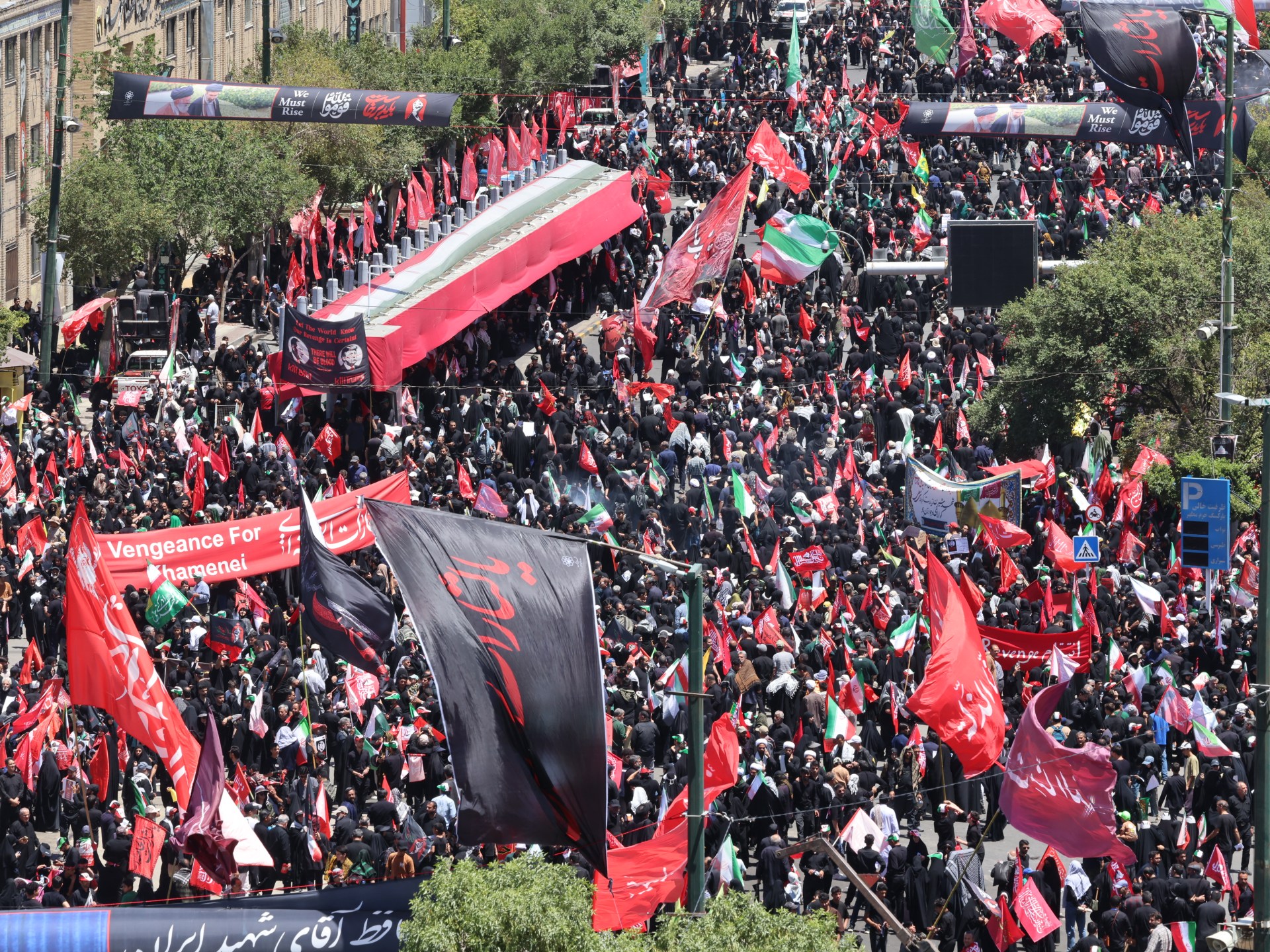
Huge crowds gathered in Mashhad, Khamenei’s hometown and a major eastern holy city, where his coffin was carried along Imam Reza Street toward the Holy Shrine of Imam Reza for burial. Iranian state media showed crowds lining the route and surrounding a truck carrying the coffin. Organizers said the shrine had reached capacity, and mourners were told they could follow the funeral prayer from surrounding streets.
Khamenei was killed on Feb. 28, the first day of the U.S.-Israeli war on Iran, in strikes on Tehran that also killed several relatives. His remains, along with those of four family members killed with him, had been taken through Tehran, Qom and the Iraqi holy cities of Najaf and Karbala before arriving in Mashhad, according to Iranian state media. The Popular Mobilisation Forces in Iraq said more than 2.3 million people attended the procession in Najaf alone. Tasnim and Press TV reported that millions attended the Tehran procession, which Iranian officials described as the largest public gathering in the country’s modern history.
In Mashhad, mourners waved Iranian flags, photographs of Khamenei and placards with revolutionary slogans, Al Jazeera reported. Some chanted threats against President Donald Trump, including, “I swear by the blood of the supreme leader, Trump, we will kill you,” while some women held placards reading “Kill Trump.”
Khamenei’s burial had been expected to cap a week of mourning and a period of reduced tension and negotiations, but the ceremony came after renewed U.S. and Iranian attacks. Iran’s Health Ministry said Thursday that U.S. airstrikes over the previous two days had killed at least 14 people and wounded 78, the first overall casualty figures released by the Iranian government. State media reported at least three people were killed Thursday in Khuzestan province, and authorities said a firefighter was killed in a strike at an airport in Iranshahr. At least nine members of Iran’s armed forces were killed in Wednesday’s strikes.
Iran’s IRNA state news agency, citing a deputy governor of Bushehr Province, reported that a U.S. projectile hit the perimeter area of the Bushehr Nuclear Power Plant on Thursday. Ehsan Jahangirian told IRNA that strikes also hit the Choghaddak military base and the Benoud fishing pier in Asaluyeh, where local fishing boats caught fire. He said no casualties had been reported in those Bushehr strikes.
The U.S. military’s Central Command said Wednesday night that recent attacks hit about 90 Iranian targets, including air defenses, drone and missile storage, naval targets and logistics infrastructure on Iran’s coast. Trump has said U.S. strikes would target small boats used by Iranian forces to lay sea mines in the Strait of Hormuz and nearby waters. He said Wednesday that Iran “wants to make a deal so badly,” but also threatened “much worse” strikes if Iran attacks ships again.
Jordan’s military said Thursday it intercepted eight “missiles launched from Iran toward Jordanian territory,” with debris falling but no casualties or damage reported. “We remain at the highest level of readiness to protect Jordanian airspace and defend the Kingdom’s sovereignty and territorial integrity,” the military said. The U.S. Embassy in Amman had earlier warned people to “shelter in place immediately” because of reports of incoming missiles, drones or rockets.
Traffic through the Strait of Hormuz appeared sharply reduced Thursday. CBS News reported that only three fuel tankers were visible transiting the waterway, two of them under U.S. sanctions over alleged ties to Iranian fuel shipments. Iran has threatened to close the strait and has attacked three vessels this week that were trying to use a southern route near Oman. The head of the United Nations’ International Maritime Organization said Monday that about 600 seafarers remained trapped in the Persian Gulf and surrounding waters.




Be First to Comment